

Amid rising concerns over kidnapping and other criminal activities in Nigeria, particularly in the South West region, several prominent Nigerians have urged the government to establish state police forces. They argue that state police would allow for more effective law enforcement tailored to the specific needs and challenges of local communities. Officers familiar with local culture, language, and geography would be better equipped to address crime and security issues efficiently.
Advocates of state police also believe it would enhance accountability, as officers would be directly answerable to state governments and local authorities. This call for state policing was made at the recently concluded Nigerian Bar Association conference in Lagos.
The proponents further argued that state police forces could respond more quickly to emergencies and security threats, unencumbered by the bureaucracy and delays often associated with a centralized police system.
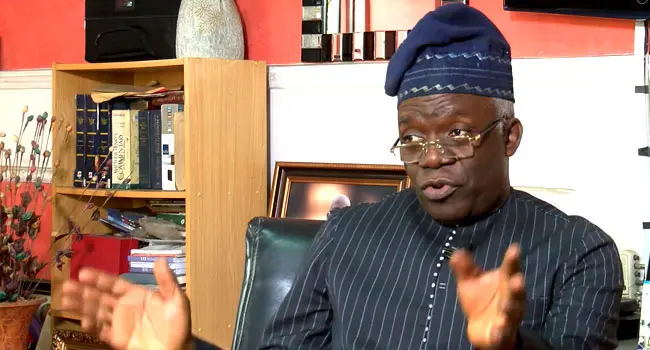
Prominent human rights lawyer Femi Falana accused state governors of “collectively and unconsciously” surrendering their constitutional authority over police powers to the president. He referenced Section 216 of the 1999 Constitution, which requires the president to consult the Nigerian Police Council before appointing or removing the Inspector-General of Police (IGP).
Falana emphasized that the Nigerian Police Council is tasked with administering, organizing, and supervising the Nigerian Police Force, and that the president should not hold sole control over it. He noted that since Nigeria’s return to civilian rule in 1999, successive presidents have unilaterally exercised police power, sidelining the roles of state and local governments in maintaining law and order.
Referring to Section 318, Falana clarified that the Constitution defines the government of Nigeria to include the federal, state, and local governments. He also highlighted ongoing security challenges across various states, stating that the absence of state police has left citizens vulnerable to “torture, kidnapping, and other offences.”
Addressing concerns about the potential misuse of state security outfits for political purposes, Falana pointed to the example of Amotekun in Ondo State, noting that it has not been used for political gains. “It is about security, and if it can work in Ondo State, I believe it can work all over the country,” he added.
Ondo State Governor, Mr. Lucky Orimisan Aiyedatiwa, also spoke at the conference, announcing that his administration has approved the creation of Amotekun Rangers. He stated that this new security unit has been given a specific mandate to combat criminal activities in the state’s forests and secure its seaside areas.


