

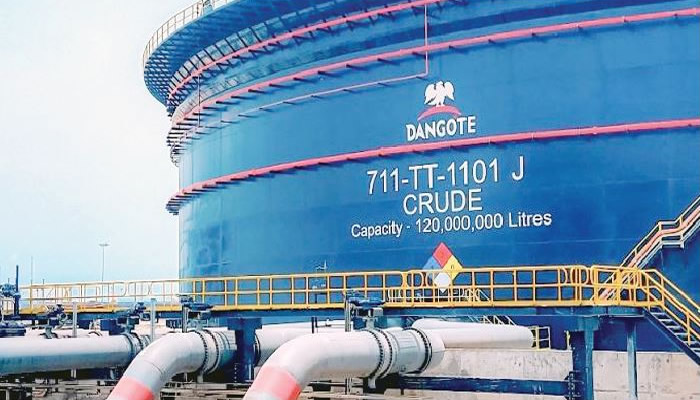
The Dangote Refinery has addressed recent accusations from the Independent Petroleum Marketers Association of Nigeria (IPMAN) and the Petroleum Products Retail Outlets Owners Association of Nigeria (PETROAN) concerning alleged overpricing of its Premium Motor Spirit (PMS) products. In a statement, the refinery defended its pricing and emphasized the quality of its domestically refined petroleum.
The controversy began after IPMAN and PETROAN claimed they could import PMS at lower prices than those set by the Dangote Refinery, sparking public concerns about domestic fuel costs. Anthony Chiejina, the Group Chief Branding and Communications Officer at Dangote Refinery, countered these claims, noting that the refinery’s pricing aligns with international benchmarks. He underscored that Dangote’s products prioritize quality and safety, highlighting that lower-cost imports may not meet Nigerian quality standards and could negatively impact public health and vehicle performance.
Chiejina raised concerns about insufficient regulatory oversight from the Nigerian Midstream and Downstream Petroleum Regulatory Authority (NMDPRA), which currently lacks the laboratory facilities needed to test for fuel quality. Without adequate quality checks, he warned, there is an increased risk of substandard fuel entering the market.
Amidst the current deregulated fuel market, the Nigerian National Petroleum Corporation (NNPC) initially set marine and truck PMS prices at N971 and N990 per liter, respectively. In response, Dangote Refinery recently adjusted its marine sale price to N960 per liter while maintaining N990 for truck sales to support affordability and local economic stability.
Chiejina also disclosed that a foreign trading company has acquired a nearby depot with plans to blend and distribute low-quality fuel in Nigeria, which he described as an attempt to undermine Nigeria’s refining industry. Citing protective economic measures in countries like the United States and across Europe, he argued that Nigeria’s local industries similarly require safeguarding against such external pressures.
“Our mission remains steadfast in providing Nigerians with affordable, high-quality, domestically refined fuel,” Chiejina affirmed, urging the public to ignore what he described as a “disinformation campaign” aimed at hindering Nigeria’s refining sector and maintaining reliance on imports.


