

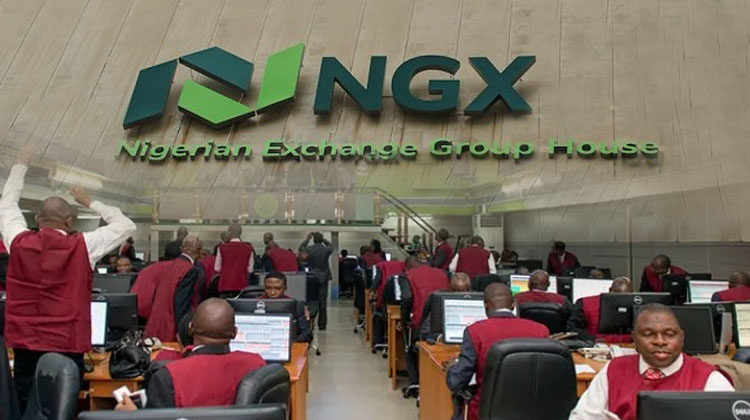
Nigeria’s financial markets are witnessing a significant pullback from foreign investors due to ongoing economic instability and currency fluctuations. According to the latest data from the Nigerian Exchange Limited (NGX), foreign capital inflows fell to N37.57 billion in July 2024, a 1.77% decrease from the N38.25 billion recorded in June, reflecting growing concerns over the country’s volatile economic environment.
The NGX’s Domestic and Foreign Portfolio Investment report highlights that domestic investors are now dominating market activities, with domestic inflows reaching N210.25 billion and outflows at N223.84 billion in July. Domestic transactions accounted for 88% of total market activity, leaving only 12% to foreign investors. The total value of transactions in the domestic equities market rose by 38.7%, from N354.55 billion in June to N491.61 billion in July, though this still represents a 30.07% decline compared to July 2023.
A deeper analysis of the data reveals contrasting behaviors between domestic and foreign investors. Domestic transactions increased by 59.38% from June to July, rising from N272.36 billion to N434.09 billion. Conversely, foreign transactions dropped by 30.02%, falling from N82.19 billion (about $55.88 million) in June to N57.52 billion (around $35.69 million) in July.
The decline in foreign participation is part of a broader, ongoing trend influenced by Nigeria’s unpredictable foreign exchange market and challenging global economic conditions. As a result, domestic investors are becoming increasingly vital to maintaining market activity on the NGX.
Adding to these challenges, Nigeria’s foreign exchange reserves have decreased for three consecutive weeks, with gross reserves falling by $63.50 million to $36.44 billion. While the naira briefly appreciated to N1,570.14/$1 in the Nigerian Autonomous Foreign Exchange Market (NAFEM), the overall turnover at the official window dropped by 16.2% to $664.29 million, with trades ranging from N1,470.00/$1 to N1,603.00/$1.
Market experts express growing concern over the long-term impact of these developments. Mike Eze, CEO of Crane Securities Ltd, warned that the increasing reliance on domestic investors could make the NGX more susceptible to fluctuations in domestic economic conditions. “The rise in domestic participation may signal confidence in the local market, but the drop in foreign inflows indicates a need for stronger economic stabilization efforts to attract foreign capital,” Eze noted.
Analysts from Cordros Research agree, predicting that domestic investors will likely continue to dominate the market in the near future. They highlighted that high yields in the fixed-income market and ongoing foreign exchange liquidity issues are likely to keep foreign investors away. Additionally, high interest rates in developed economies further deter foreign investment in Nigeria.
As Nigeria grapples with these economic challenges, the role of domestic investors will be crucial for sustaining market momentum. However, the urgent need for economic stabilization and confidence-building measures remains critical to attracting foreign investment and ensuring long-term stability in the financial markets.


