

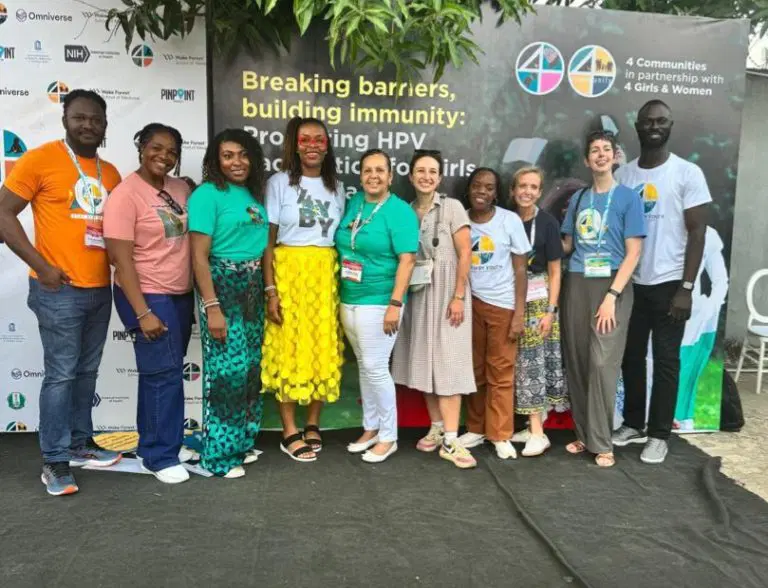
As the world marks International Women’s Day, 4 Communities by Communities (4CbyC) is highlighting the resilience of women battling cervical cancer. Through personal narratives, the organization aims to raise awareness about the disease, stressing the importance of early detection, vaccination, and community-driven healthcare solutions.
For Ene, the impact of cervical cancer became deeply personal following the loss of her aunt, Evelyn, and the declining health of her mother. Living in Awo-Kajola, their family’s once-vibrant evenings were shattered by grief. Fearing a tragic pattern, Ene sought answers at the One-Stop Shop for Health, where she met a clinician, Funke.
Funke’s explanation changed everything: cervical cancer was not a curse but a preventable disease. Testing confirmed Ene’s worst fears—her mother had Stage 3 cervical cancer. However, hope remained. Funke assured Ene that she and her sister, Blessing, could receive the HPV vaccine, preventing future cases.
Similarly, Jennifer’s story underscores the urgency of awareness and healthcare access. Misdiagnosed for years, her cervical cancer advanced unchecked, and by the time she received proper care, it was too late. Financial constraints and limited healthcare resources delayed her treatment, leading to her passing in 2020.
To prevent more cases like Jennifer’s, organizations like the SaliHoe Foundation are stepping in, offering free cervical cancer screenings, vaccinations, and education. Campaigns such as “Know Her, Save Her” are using digital platforms to spread life-saving information, while FemmeHealth connects women with screening and treatment options.
Directors of 4CbyC—Prof. Juliet Iwelunmor, Prof. Joe Tuckler, and Prof. Oliver Ezechi—emphasize the need for continued advocacy, early detection, and accessible healthcare.
“The fight against cervical cancer is not just about health; it’s about breaking down the barriers of stigma, access, and education,” they said. “Through collective action, we can create a world where no woman dies from a preventable cancer.”


