

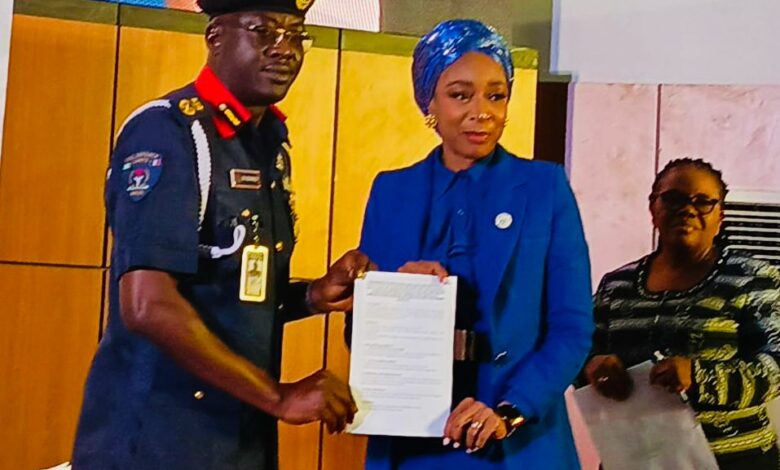
As Odumosu, FCT NSCDC Commandant, Highlights the Impact of Women’s Exclusion in Decision-Making
The Federal Capital Territory (FCT) Women Affairs Secretariat has formalized a partnership with the Nigeria Security and Civil Defence Corps (NSCDC) FCT Command to elevate the role of women in security efforts. This partnership was solidified through a Memorandum of Understanding (MOU) signed by Adedayo Benjamins-Laniyi, the Pioneer Mandate Secretary of the FCT Women Affairs Secretariat, and Olusola Odumosu, Commandant of the NSCDC FCT Command, during a two-day conference in Abuja focused on “Gender and Human Security.”
Commandant Odumosu, the keynote speaker, emphasized that women in leadership roles have the potential to outperform their male counterparts if given equal opportunities. He expressed concern over the persistent gender imbalance in Nigeria’s political system, particularly within the 10th Assembly, where women’s representation remains significantly low. Odumosu warned that neglecting this issue could undermine efforts to achieve gender balance in governance, ultimately impacting the security and well-being of women nationwide.
Addressing the conference theme, Odumosu highlighted the unique security challenges women in the FCT face, including gender-based violence, limited access to education and employment, and inadequate healthcare. He called for a comprehensive approach to empower women through education, economic opportunities, and stronger legal protections against gender-based violence. Odumosu also underscored the NSCDC’s commitment to fostering a safer environment for women, including the establishment of a gender desk office and collaboration with the FCT Women Affairs Secretariat.
Benjamins-Laniyi, in her remarks, stressed the crucial role of women in addressing security challenges and outlined strategies to empower women, starting with education and training. She advocated for initiatives that equip women with essential skills in conflict resolution, community policing, and cybersecurity, enabling them to actively participate in security discourse. She also called for leveraging technology for security purposes and stressed the importance of women’s representation in decision-making processes.
The event, held in collaboration with the Centre for Gender Security Studies and Youth Advancement at the University of Abuja, emphasized the need for collaborative efforts to create a safer and more inclusive FCT. Other speakers, including UN Women representative Peter Mancha and Esu Kwali, HRH Luka Nizassan III, reinforced the importance of women’s involvement in security and governance, noting that their exclusion only hinders societal progress.
This MOU marks a significant step towards ensuring that women’s voices are heard and their contributions recognized in the ongoing efforts to enhance security and human dignity in the FCT.


