

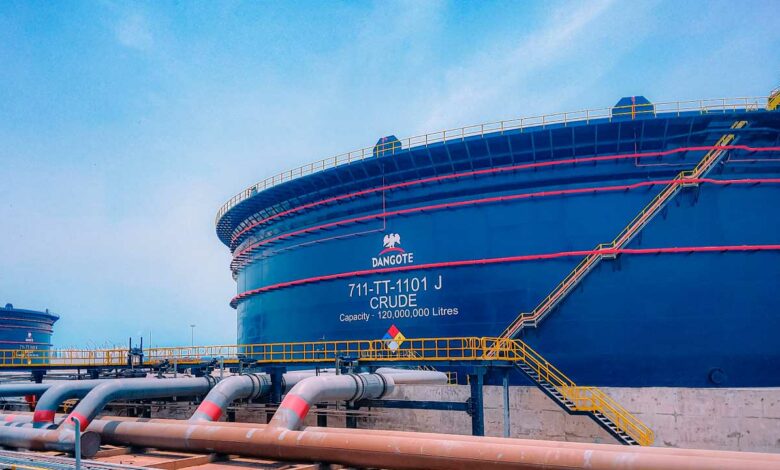
The Economist Intelligence Unit (EIU) has raised concerns that delays in supplying crude oil feedstock to the Dangote Petroleum Refinery and Petrochemicals could jeopardize Nigeria’s economic recovery and further strain the naira. The $20 billion refinery, which commenced production in January, has faced setbacks in petrol production due to insufficient crude oil.
Despite successfully exporting a range of products, including fuel oil, naphtha, nitrogen fertilizers, gasoil, jet fuel, and diesel, the refinery has struggled to scale up petrol production because of difficulties in sourcing adequate crude oil. This issue is expected to exacerbate economic challenges for Nigeria, potentially intensifying the existing pressure on public finances and the naira.
The report notes that while the official petrol subsidy was abolished in June 2023, unofficial subsidies persist, significantly impacting the national budget. This has led to increased currency losses and a widening budget deficit, which might compel the Central Bank of Nigeria (CBN) to adopt stricter currency management measures. The ongoing need for fuel imports could reduce the current-account surplus and affect foreign reserves, possibly leading to a more unstable foreign-exchange system.
The delays are linked to low crude production, which has been hampered by oil theft and underinvestment. Nigeria’s crude oil production was 1.31 million barrels per day (b/d) in July, below the OPEC+ target of 1.38 million b/d. The state oil firm, NNPC, has struggled to provide the promised 450,000 b/d of oil to the refinery, sold in naira, due to logistical and financial constraints.
The situation is further complicated by International Oil Companies (IOCs) demanding a premium of $3-$4 per barrel for Nigerian crude. Regulators are also hesitant to enforce the Domestic Crude Supply Obligation (DCSO), which requires IOCs to sell crude to local refineries, fearing it might lead to divestment.
The report emphasizes that local fuel production could greatly benefit Nigeria’s fiscal position and currency, given that petroleum products account for 15% to 20% of the country’s import bill. The Dangote refinery, with a capacity of 650,000 b/d, has the potential to reduce the need for fuel imports and stabilize local fuel prices against exchange-rate fluctuations, marking a significant step towards resolving Nigeria’s paradox of being a major oil producer yet reliant on fuel imports.


