

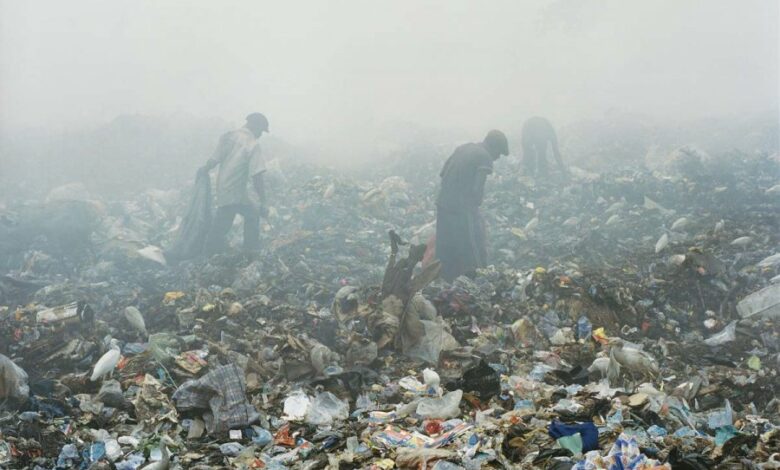
A recent study published in the journal *Nature* by the University of Leeds has identified Lagos, Nigeria, as the leading city in global plastic pollution. This finding highlights Lagos’s significant contribution to the estimated 57 million tonnes of plastic waste generated worldwide each year.
The study reveals that over two-thirds of global plastic pollution originates from the Global South. Annually, approximately 52 million metric tonnes of plastic waste could fill New York City’s Central Park to the height of the Empire State Building. Researchers analyzed data from over 50,000 cities and towns, focusing on plastic waste that ends up in the environment rather than in landfills or incinerators.
Lagos is at the top of the list of major plastic polluters, followed by New Delhi, Luanda in Angola, Karachi in Pakistan, and Cairo in Egypt. India is the largest contributor to global plastic pollution, producing 10.2 million tonnes annually, more than double Nigeria’s output, which is the second highest. Indonesia follows, while China, though heavily criticized for pollution, ranks fourth but has made notable progress in waste reduction. Other significant contributors include Pakistan, Bangladesh, Russia, and Brazil, with these eight countries responsible for over half of the world’s plastic pollution.
The study indicates that 15% of the global population lives in regions where local governments fail to collect and properly dispose of waste, exacerbating plastic pollution in areas like Southeast Asia and Sub-Saharan Africa. This deficiency in waste management infrastructure is a major factor driving the high pollution levels.
In response to this crisis, nations agreed in 2022 to develop the first legally binding treaty on plastic pollution, including marine waste. Final negotiations for this treaty are set for November in South Korea.
The research utilized artificial intelligence to examine plastics that are either improperly burned or dumped, constituting about 57% of the pollution. These processes release microplastics and nanoplastics, which pose serious health risks. Study author Costas Velis noted that microplastics are now pervasive, found in remote locations like Everest’s peaks and the Mariana Trench, as well as in the air, water, and food.
Velis cautioned against attributing the problem solely to the Global South, highlighting that the issue stems from a lack of resources and inadequate waste management systems. Some experts argue that focusing on pollution rather than production may overshadow the broader issue of plastic manufacturing, which significantly contributes to greenhouse gas emissions. Others point out concerns about the trade in plastic waste, noting that while the study shows a decline in this trade, there has been a recent increase in trash shipments from Europe to developing nations.
The plastics industry acknowledged the study’s findings. Chris Jahn, secretary of the International Council on Chemical Associations, emphasized the need for improved waste management systems. However, the industry remains opposed to limiting plastic production, despite UN warnings that global plastic production could triple by 2050.


