

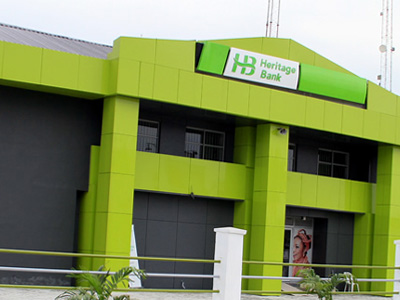
The Nigeria Deposit Insurance Corporation (NDIC) has made substantial progress in compensating depositors of the defunct Heritage Bank, disbursing 86 percent of the total insured deposits. Efforts are ongoing to address challenges delaying the payment of the remaining 14 percent.
NDIC Managing Director Mr. Bello Hassan, represented by Mrs. Emily Osuji, Executive Director of Corporate Services, shared this update during a retreat for the House of Representatives Committee on Insurance and Actuarial Matters in Lagos. Hassan outlined the issues causing delays, such as court-imposed Post No Debit (PND) instructions, Know Your Customer (KYC) constraints, and incomplete customer verifications, including linking Bank Verification Numbers (BVNs) or providing alternative bank accounts.
Hassan stressed that the NDIC’s actions support the federal government’s commitment to economic stability by reinforcing the financial system. The NDIC, in collaboration with the Central Bank of Nigeria (CBN), has focused on protecting depositors and maintaining financial stability through diligent supervision of insured institutions.
“This approach aligns with Principle 8 of the International Association of Deposit Insurers (IADI) Core Principles for Effective Deposit Insurance,” Hassan explained. “These principles advocate for regular reviews of deposit insurance coverage to ensure it remains credible and adequately protects depositors, mitigating the risk of bank runs while maintaining some market discipline.”
In line with this commitment, the NDIC reviewed its coverage in 2023, leading to increased insurance limits. As of April 2024, coverage for Deposit Money Banks (DMBs) and Mobile Money Operators (MMOs) was raised from N500,000 to N5 million. Payment Service Banks (PSBs) and Primary Mortgage Banks (PMBs) saw their coverage increase from N500,000 to N2 million, and Microfinance Banks (MFBs) from N200,000 to N2 million. These adjustments aim to provide nearly full coverage for depositors, enhancing their confidence.
Hassan highlighted the importance of timely reimbursement as a key factor in financial stability. The NDIC has adopted a new payment methodology, which was successfully tested with the recent payouts to Heritage Bank depositors. This approach utilized depositors’ BVNs from the Nigeria Inter-Bank Settlement System (NIBSS) to access alternative accounts and process payments within just four days.
Despite these advancements, Hassan acknowledged concerns about uninsured depositors and assured that the NDIC is pursuing debt recovery and liquidation of Heritage Bank’s assets to facilitate reimbursement. Once all insured and uninsured deposits are settled, the NDIC will proceed with compensating creditors according to legal priorities.
Hassan reaffirmed the NDIC’s commitment to strengthening Nigeria’s financial system by supervising deposit-taking institutions, maintaining early warning systems, conducting stress tests, and enforcing corrective actions.
Following the retreat, House Committee Chairman on Insurance and Actuarial Matters, Ahmadu Usman Jaha, expressed strong support for the NDIC. Jaha acknowledged the NDIC’s critical role in deposit protection and pledged the committee’s commitment to reviewing and updating policies to address emerging financial sector risks.
“In recent years, our financial systems have faced numerous challenges, from global economic shifts to regulatory hurdles,” Jaha said. “These challenges underscore the need for robust deposit insurance frameworks that protect depositors and enhance confidence in our banking systems.”
Jaha emphasized the need for collaboration among government bodies, financial institutions, and stakeholders to improve regulatory frameworks. He also advocated for increased financial literacy, savings promotion, and the use of technology to strengthen Nigeria’s financial stability.
“A resilient economy can withstand shocks and continue to thrive,” Jaha concluded. “As we enhance our deposit insurance schemes, we must also address broader economic factors to ensure our financial stability is maintained and improved for future generations.”


