

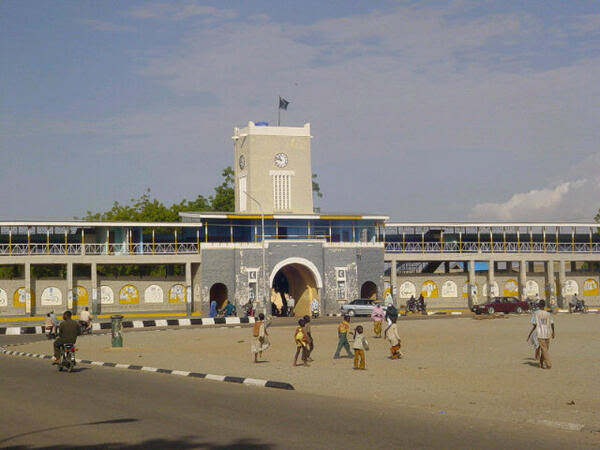
While these states do incorporate Hausa as a common pidgin, they have their own distinct languages.
Nigeria, known for its rich diversity, boasts 400 ethnic groups and 450 languages. Despite this, many individuals are often categorized into the three major groups: Igbo, Hausa, and Yoruba, even if they do not belong to these ethnicities.
In 1993, General Sani Abacha established six geopolitical zones in Nigeria, aimed at equitably distributing economic, political, and educational resources across these zones. People hailing from the North Eastern and Central states are frequently mislabeled and often prefer to be recognized as part of the “middle belt.”
Here are five Nigerian states that are commonly misconceived to speak predominantly Hausa but in fact, have their unique ethnic languages:
1. Adamawa
Adamawa is one of Nigeria’s largest states, located in the North Eastern region. It boasts a significant Christian population alongside a substantial Muslim community. Despite common misconceptions, Fulfulde is the most widely spoken language in Adamawa, although there are numerous other languages within the state.
2. Kaduna
Kaduna, known for being the eighth-largest city in Nigeria as of 2006, holds its name’s origins in dispute. While some suggest it is derived from the Hausa word “Kada,” signifying “crocodile,” others attribute its name to the Gbagyi word “Odna.” The state is home to between 59 and 63 diverse ethnic groups, including the Bajju, Kataf, and Gbagyi-Gbari.
3. Plateau
Plateau State, the twelfth-largest state in Nigeria, is centrally located and marked by the hilly landscape encompassing the Jos Plateau. It is home to over 40 distinct ethnic groups, with some prominent ones being Berom, Afizere, Amo, Anaguta, Aten, Bijim, and Bogghom, among others.
4. Kogi
Situated in the North Central region of Nigeria, Kogi State is unique as it shares borders with ten other Nigerian states. The state’s name is derived from the Hausa word for “river.” Kogi is recognized as the “Confluence State” due to the confluence of the Rivers Niger and Benue near its capital, Lokoja. The primary languages spoken in Kogi are Yoruba, Igala, and Ebira, with additional languages such as Nupe, Kakanda, Kupa, Bassa Nge, Basa Komu, and even Igbo in border regions.
5. Bauchi
Bauchi, the fifth-largest state in Nigeria by land area, is situated in the North Eastern political zone. It is divided into North Bauchi languages and South Bauchi languages, and is home to 55 different ethnic groups, including Hausa, Fulani, Gerawa, Sayawa, Jarawa, Bulewa, Kare-Kare, Kanuri, Warjawa, Zulawa, and Badawa, to name a few.


