

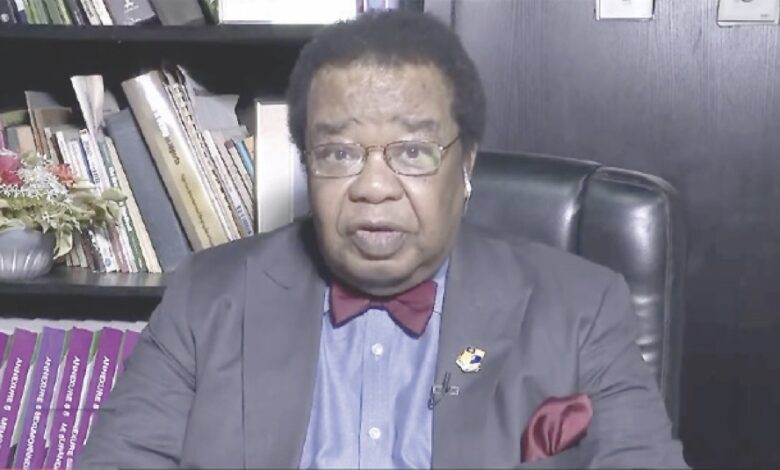
In an interview on Channels TV, former Minister of External Affairs, Professor Bolaji Akinyemi, advised caution regarding Nigeria’s dealings with China, particularly in light of President Tinubu’s trip to Beijing for the China-Africa Forum. Akinyemi emphasized that China offers no free gifts, urging Nigeria to approach these interactions with caution.
Implications of the China-Africa Summit
Akinyemi highlighted the global competition for economic and political dominance, particularly between the United States and China, as well as the emerging roles of other nations like Russia, Japan, Turkey, and India. He noted that China is positioning itself to assert its influence in Africa, as evidenced by various summits, including the China-Africa Forum, and similar gatherings hosted by the United States, Japan, Turkey, and Indonesia.
Nigeria’s Debt to China
Nigeria’s significant debt to China, amounting to over $4 billion, was a focal point of concern. Akinyemi warned against defaulting on these loans, as it could lead to severe consequences, including the seizure of Nigerian sovereign assets. He stressed the importance of honoring agreements, not only with China but with all creditor nations. He also raised concerns about the role of Nigerian states in signing international agreements, cautioning that Nigeria, as a sovereign entity, would be held responsible if states fail to honor these agreements.
Corruption and Infrastructure
Akinyemi also pointed out the pervasive issue of corruption in Nigeria, particularly among ordinary citizens. He expressed concern about the impact of corruption on infrastructure projects funded by Chinese loans, questioning how the country would repay these loans if corruption continued to undermine revenue collection.
Nigeria’s Position in Global Politics
Regarding Nigeria’s potential membership in BRICS, Akinyemi lamented the country’s missed opportunity to join the group at its inception. He attributed this to a lack of interest from previous Nigerian leaders and rivalry with South Africa, which has sought to assert its own dominance in Africa. He emphasized the need for Nigeria to focus on economic development and industrialization to strengthen its position on the global stage.
Path Forward for Nigeria
Akinyemi concluded by urging Nigerian leaders to focus on building a solid industrial base and adding value to local products before exporting them. He argued that this approach would transform Nigeria into an industrialized nation, reducing its dependence on crude exports and enhancing its global influence without having to “beg” for inclusion in international organizations.


