By Zhong Sheng, People’s Daily
On Oct. 30, Chinese President Xi Jinping met with his U.S. counterpart Donald Trump in Busan, South Korea. The two heads of state held in-depth discussions on strategic and long-term issues concerning China-U.S. relations, as well as major topics of shared interest.
Both sides agreed to maintain interactions on a regular basis, enhance cooperation in economic, trade, energy and other fields and encourage more people-to-people exchanges.
The international community has followed this meeting closely, viewing it as a positive signal to the world. It is believed that this meeting has provided new guidance and fresh impetus for the stable development of China-U.S. relations, and injected valuable certainty into a world undergoing turbulence and transformation.
Head-of-state diplomacy is the compass and anchor of China-U.S. relations, playing an irreplaceable role in providing strategic guidance for the relationship. Xi and Trump have maintained long-term interactions and mutual respect, which has become the most valuable strategic asset in China-U.S. relations.
Since the beginning of this year, the two presidents have maintained close engagement through three direct phone calls. When challenges arise in China-U.S. relations, such high-level communication enables both nations to transcend immediate differences, prevent misunderstandings and steady the bilateral relationship – safeguarding the relationship’s overall stability and positive trajectory.
This year witnessed complex developments in bilateral economic ties. Guided by the important consensus reached between the two heads of state, the two sides’ economic and trade teams conducted five rounds of consultations, successfully establishing frameworks for issue resolution.
During this latest meeting, the two presidents held substantive discussions on trade relations and committed to enhanced cooperation. The relevant understandings and arrangements reached by the two teams during the Kuala Lumpur consultations have served as a “stabilizer” for both the Chinese and U.S. economies, as well as the world economy.
This progress demonstrates that as long as both sides fully and faithfully implement the important consensus reached by the two presidents, and continue discussions in the spirit of equality, mutual respect and mutual benefit, they can continuously shorten the list of problems and lengthen the list of cooperation, and ensure that economic and trade ties remain the ballast and engine of China-U.S. relations.
China and the United States should be partners and friends. That is what history has taught us and what reality needs. Given different national conditions, it is normal for the two countries to have frictions. What matters most is how to view and handle them properly. Both sides should focus on the bigger picture and the long-term benefits of cooperation.
At present, there is a good momentum in China’s economic development. In the first three quarters of this year, the country’s GDP grew by 5.2 percent, demonstrating strong resilience and vitality. For more than seven decades, China has been working from generation to generation on the same blueprint to make it a reality. It has no intention to challenge or supplant anyone. Its focus has always been on managing its own affairs well, improving itself, and sharing development opportunities with all countries across the world. And that is an important secret to China’s success, which is in no way at odds with the United States’ aspiration to “make America great again.”
At its fourth plenary session, the 20th CPC Central Committee deliberated over and adopted the recommendations for the economic and social development plan over the next five years, which has drawn broad international attention and positive responses. China will further deepen reform across the board, expand opening up, and promote higher-quality economic growth while achieving an appropriate increase in economic output. This will also expand the space for cooperation between China and the United States.
As long as the two sides uphold mutual respect, peaceful coexistence, and win-win cooperation, China and the United States can achieve mutual success and shared prosperity.
The current international landscape is marked by transformation and turbulence. The world once again stands at a crossroads. As two major countries with global influence, China and the United States shoulder special responsibilities. Their positive interactions in regional and global affairs are key to addressing the many global challenges that continue to emerge.
There is good potential for the two countries to work together on combating illegal immigration and telecom fraud, anti-money laundering, artificial intelligence, and responding to infectious diseases. Through cooperation under both bilateral and multilateral frameworks, China and the United States can accomplish more great and concrete things for the good of the two countries and the whole world, and demonstrate the shared sense of responsibility as major countries.
China will host APEC 2026, and the U.S. the G20 summit next year. The two sides can support each other in making both summits productive to promote world economic growth and improve global economic governance.
A stable, healthy and sustainable China-U.S. relationship serves the long-term interests of both countries and meets the common expectations of the international community. The Busan meeting between the two heads of state once again proved that the common interests between China and the United States far outweigh their differences, and that cooperation is the only right choice for both sides.
The lessons of history, the needs of reality, and the call of the future all point to the same conclusion that the planet is broad enough to accommodate both China and the United States. The two countries can be partners and friends.
China hopes that both sides will work together to earnestly implement the consensus reached at the Busan meeting, enhance dialogue and communication, properly manage differences, expand mutually beneficial cooperation, and build a more solid foundation for China-U.S. relations, so as to bring greater benefits to both peoples and contribute more to the world.
(Zhong Sheng is a pen name often used by People’s Daily to express its views on foreign policy and international affairs.)
Blog
-
China, United States can achieve mutual success, shared prosperity
-

China’s ‘innovation boom’ brings more opportunities
By He Yin, People’s Daily
The fourth plenary session of the 20th Central Committee of the Communist Party of China (CPC) called for achieving greater self-reliance and strength in science and technology and steering the development of new quality productive forces.
This major decision reflects a profound understanding of the essence and laws of innovation and demonstrates the CPC’s strategic resolve to shape new advantages in development through science and technology.
It will not only inject strong momentum into advancing Chinese modernization, but also bring new opportunities for mutually beneficial cooperation between China and the rest of the world.
During the 14th Five-Year Plan period (2021-2025), China has made solid strides in innovation-led development. In 2024, the country’s total research and investment (R&D) investment exceeded 3.6 trillion yuan ($506.28 billion), up 48 percent from 2020. China’s overall national innovation capacity rose from 14th to 10th place in the global ranking. Emerging sectors such as artificial intelligence, new energy, and biotechnology are rising rapidly, forming new drivers of economic growth.
From Shenzhou spacecraft soaring into space and the Five-hundred-meter Aperture Spherical Radio Telescope exploring the universe, to the domestically produced C919 passenger jet and China’s first large cruise ship entering commercial operation, these milestones testify to the country’s steady march toward self-reliance and strength in science and technology.
As Portuguese Minister of Economy and Territorial Cohesion Manuel Castro Almeida observed, China’s remarkable achievements in innovation have made it a vital force in driving global scientific and technological progress.
A nation thrives when its science and technology thrive, and a robust science and technology sector is the cornerstone of a strong nation. Chinese modernization must be supported by the modernization of the country’s science and technology.
One of the main goals of China’s 15th Five-Year Plan for economic and social development is to significantly enhance self-reliance and strength in science and technology, achieve rapid breakthroughs in key and core technologies in crucial areas, and deepen the integration of scientific and industrial innovation. Strengthening development advantages through innovation is a strategic choice China has made with an eye on the big picture and the future.
In the midst of a new round of scientific and technological revolution and industrial transformation, whoever takes the lead in innovation will seize the initiative in development. Over the next five years, China will advance its initiatives to build strength in education, science and technology, and talent in a coordinated way, enhance the overall effectiveness of the national innovation system, boost its capacity for independent innovation, and capture the commanding heights of technological advancement to continuously foster new quality productive forces.
The systematic planning and clear roadmap for innovation have strengthened global confidence in China’s development prospects. As UN Under-Secretary-General Guy Ryder noted, China’s innovation is not just about breakthroughs in specific areas; it represents a comprehensive momentum that has entered an “innovation boom period,” reshaping the global scientific and technological landscape.
Sci-tech innovation is a vital force for humanity to address risks and challenges and promote peace and development. China has always worked to ensure that scientific and technological progress benefits all humankind, contributing wisdom and strength to addressing global challenges. The country has established science and technology cooperation relations with over 160 countries and regions, signed 119 intergovernmental science and technology cooperation agreements, proposed the Global AI Governance Initiative, issued the International Science and Technology Cooperation Initiative, and launched the Initiative on International Cooperation in Open Science. China’s growing role in global science and technology governance is widely recognized.
Chinese enterprises are also advancing open and shared innovation. AI company DeepSeek is committed to open-source approaches, while leading electric vehicle manufacturer BYD has made its core technologies available for industry-wide sharing. In pursuing technological breakthroughs, Chinese enterprises are simultaneously promoting the mutual benefit and sharing of innovative achievements, empowering inclusive development worldwide. As China accelerates its pace of innovation, it is also fostering a globally competitive, open environment for scientific and technological innovation, promoting international cooperation at a higher level, and ensuring that the fruits of innovation benefit more countries and peoples.
Looking ahead to the 15th Five-Year Plan period, China will continue to illuminate its path of development with the light of innovation, pursue international cooperation in science and technology with greater openness, and contribute even more to human progress. -

Chinese electric tricycles gain popularity overseas
By Bai Xue, Wang Qi
Recently, five containers carrying 200 electric tricycles departed from Xishan district, Wuxi, east China’s Jiangsu province, making their way to Shanghai Port for shipment to Ecuador.
This marks the first time a motorcycle manufacturing company in Wuxi has exported its products to Ecuador. The electric tricycles produced by this company have already been sold to over 40 countries and regions, with exports reaching nearly 70,000 units this year, a 40 percent increase compared to the previous year.
At the end of 2023, a short video went viral on social media unexpectedly, in which a Chinese woman gifts an electric tricycles to her father-in-law in the United States, and the elderly American man drives the vehicle around his small town, attracting widespread attention with its unique design and iconic notification sound that says “Please be aware, the vehicle is reversing.”
This video quickly made electric tricycles a sensation overseas.
From North American neighborhoods to Southeast Asian markets, from South American estates to Central Asian towns, the Chinese-produced electric tricycles are becoming another new symbol of Chinese manufacturing going global.
Fengxian county in Xuzhou, Jiangsu province, is known for its booming agriculture, where fruit orchards were once the primary source of income for locals. In the 1980s, pedal-powered tricycles gradually became a common household item to make the transportation of fruits easier.
Around 2000, electric scooters quietly emerged. Kang Yunqing, a farmer in Fengxian county with a knack for innovation, traveled to many places to gather motors, batteries, and controllers, eventually modifying a pedal-powered tricycle into an electric one. In 2002, Kang set up an electric vehicle factory. Subsequently, the electric tricycle industry in Fengxian county gradually took off and grew into one of the largest electric tricycle production bases in China.
Today, Fengxian county has developed a comprehensive industrial chain and supply chain system for electric tricycles. The county is home to over 1,000 enterprises engaged in complete tricycle manufacturing and parts and components production, accounting for more than 60 percent of the domestic electric tricycle market and over 95 percent of the motor market. Their products are exported to more than 130 countries and regions.
A reason for the growing preference for electric tricycles among overseas consumers is their cost-effectiveness.
“In the United States, many farm owners are enthusiastic about purchasing electric tricycles. Previously, their main transportation and hauling tools were pickup trucks, which cost over $20,000 each. In contrast, an electric tricycle only costs a few thousand dollars. It is flexible, convenient, and well-suited for short-distance transportation and farm tool handling on farms,” said Ni Xiaofeng, general manager of a motorcycle manufacturing company in Wuxi, as he crunched the numbers.
Additionally, apart from the low purchase cost, electric tricycles are powered by electricity, making their operational costs significantly lower than those of fuel-powered vehicles. They also align with the trend of green and eco-friendly development, making them highly popular among overseas users.
In response to diverse demands in the global market, Chinese electric tricycle manufacturers have demonstrated remarkable flexibility and innovation.
Liu Yinhu, head of a company in the electric tricycle industry in Jiangsu, explained that his company already exports products to 15 countries and regions. “We make adaptive modifications for different markets, such as anti-rust treatments and battery range enhancements,” he said.
From English-language labels to compliance with local safety standards, from anti-rust treatments for tropical regions to battery insulation for cold climates, every detail reflects the meticulousness of Chinese manufacturing.
Beyond electric tricycles, various specialized electric vehicles from China, including delivery vans, sightseeing cars, sanitation trucks, and high-pressure cleaning vehicles, are meeting the needs of global customers across different application scenarios.
The export of Chinese electric tricycles is a vivid example of the transformation and upgrading of Chinese manufacturing. By leveraging cost-effectiveness to enter the market and innovation to secure growth, these Chinese products have not only been revitalized but have also showcased the innovative strength of Chinese manufacturing to the world. -

A Spanish perspective on Chinese modernization
By Julio Ceballos
In the 21st century, China is one of the most important players on the international stage. It plays a key role in global economic development, scientific and technological innovation, and the fight against climate change. Gaining a deeper understanding of how China interacts with the world is not only an academic exercise but also essential for anticipating the trajectory of global affairs.
The term “Xuanji” originates from an ancient Chinese astronomical instrument used to track the stars. Just as early astronomers aligned their decisions with celestial movements, Europe today needs to recalibrate its strategic orientation. “Xuanji Tu” (The Celestial Compass) is the title of a palindrome poem written by Su Hui, a talented woman of the Southern and Northern Dynasties (420-589). This carries symbolic weight: there are multiple ways to respond to global challenges, and China’s development experience shows that modernization does not follow a single path. My new book, El calibrador de estrellas, which means Xuanji Tu, explores how China, its enterprises, and its people navigate an increasingly complex global landscape.
One of the most important lessons I have learned from China is that development is not the product of spontaneous impulses, but the result of decades-long, deliberate efforts. In Europe, political vision is often constrained by election cycles, with frequent leadership changes disrupting long-term initiatives. China exhibits strategic continuity: long-term goals remain constant, and the actions to achieve them are sustained over time.
After 18 years of living and working in China, I have come to observe its development with a focused and unbiased perspective, looking beyond surface impressions to understand deeper motivations and values. I have also come to see China not as a monolithic entity nor as an unfathomable enigma, but as a vibrant mosaic where tradition and innovation coexist, pragmatism aligns with ambition, and strategic patience is reinforced by executional efficiency.
The book El calibrador de estrellas is not intended to be an exhaustive analysis or a definitive guide. Rather, it is an invitation – through concrete experiences – to share lessons from China that can resonate with any society: the importance of long-term planning, investing in human capital, fostering innovation with clear objectives, and nurturing collective resilience. It is neither a gesture of blind admiration nor of idealized comparison, but an earnest effort to build a bridge between Europe and China. In an increasingly interdependent world, the true challenge lies in fostering mutual understanding and moving forward together. -
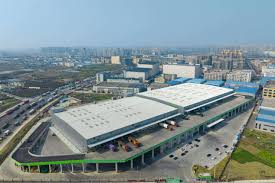
Booming demand fuels growth in China’s cold-chain logistics
People’s Daily reporters
Before dawn in Dongying, Shandong, crab farmers in Yong’an Township haul traps from shimmering ponds, revealing green-shelled, white-bellied Chinese mitten crabs with signature golden claws. Within 12 hours, these delicacies would arrive at dining tables across the country, made possible by China’s rapidly advancing cold-chain logistics network.
Inside the packaging workshop of Dongying Huize Agricultural Technology Co., Ltd., workers sort crabs under stringent protocols. “To ensure freshness, we’ve built an integrated cold-chain logistics and distribution warehouse,” said company general manager Wang Yingze.
“Before shipment, the crabs are pre-cooled for six to eight hours to preserve quality and minimize losses during transport,” Wang added.
In the warehouse, express delivery vehicles from China Post, SF Express, JINGDONG Logistics, and other companies operate in a steady flow. “During peak season, we handle up to 20,000 orders a day, some 20 to 25 tons of crabs,” Wang said.
As consumer demand for freshness grows – whether for summer fruits from the south or autumn seafood – China’s cold-chain logistics industry is experiencing robust expansion. According to the China Federation of Logistics & Purchasing (CFLP), food-related cold-chain logistics demand reached 192 million tons in the first half of this year, up 4.35 percent year on year. Corresponding revenues climbed to 279.94 billion yuan ($39.31 billion), up 3.84 percent.
“With fresh food consumption entering its peak season, the cold-chain logistics industry is showing strong momentum and growing resilience,” said Liu Fei, executive deputy secretary-general of CFLP’s cold-chain logistics committee.
Backed by national planning and surging market demand, China is accelerating the construction and intelligent upgrading of cold storage infrastructure. In June this year, a 920 million yuan super cold storage facility with over 150,000 tons of capacity was launched at the Bainipo Industrial Park in Suixi county, Zhanjiang, south China’s Guangdong province. From there, seafood and tropical fruits from surrounding areas can reach dinner tables across the Guangdong-Hong Kong-Macao Greater Bay Area within just five hours.
On Oct. 8, a cargo flight flying between Europe and Asia landed at Shenzhen Bao’an International Airport, carrying four tons of Atlantic salmon. The seafood was swiftly transferred to cold storage via refrigerated trucks.
“Imported chilled seafood now basically arrives and goes on sale the same day,” said Tan Weiping, deputy general manager of Shenzhen Airport International Cargo Terminal Co., Ltd. “Our intelligent cold storage and streamlined customs processes have significantly enhanced efficiency.”
The facility maintains temperatures from minus 25 degrees Celsius to 15 degrees Celsius, and is equipped with 11 dedicated loading and unloading platforms directly linked to refrigerated trucks. “This reduces exposure time and minimizes quality loss,” Tan explained.
Equipped with Internet of Things technology, the system enables real-time monitoring and remote control of temperature and humidity, ensuring optimal storage conditions and efficient logistics operations.
In the first nine months of this year, the cold storage facility of Shenzhen Airport International Cargo Terminal Co., Ltd. handled 31,000 tons of perishable goods, including chilled seafood, live produce, and fruit, up 36 percent year on year, accounting for over 48 percent of total inbound cargo.
Nationwide, cold storage investment reached 22.3 billion yuan in the first half of the year, a 7.67 percent increase year on year. By the end of June, China’s total cold storage capacity stood at 260 million cubic meters, equivalent to about 104 million tons, marking a 6.12 percent year-on-year rise.
The growth of fresh food e-commerce and chain catering is also driving surging demand for urban cold-chain delivery, leading to a boom in refrigerated truck sales. According to CFLP, 29,474 refrigerated trucks were sold in the first half of this year, up 18.19 percent year on year. Notably, 10,548 of these were new energy vehicles, an impressive 119.61 percent increase.
New energy light trucks, offering extended range and improved performance, are increasingly deployed for both short-haul urban deliveries and intercity routes.
“Orders for Yutong’s light trucks have surged, with our production lines fully booked through December,” said Wang Le, head of marketing of the light truck subsidiary of Chinese commercial vehicle manufacturer Yutong. “We’re introducing models with larger batteries and longer ranges. These upgrades drove a 60 percent year-on-year increase in our cold-chain truck sales during the first eight months of this year.” -

Wheat straw grids: China’s ingenious solution for sand control
By Zhang Wen, People’s Daily
As dawn breaks over the southeastern edge of the Tengger Desert, sand control workers are already at work. They spread bundles of wheat straw, press them into the sand, and shape them into neat squares. Across the vast sea of dunes, these crisscrossing “grids” of straw quietly take root, weaving a net that holds back the drifting sands.
The “wheat straw grid” is a sand-fixing method uniquely developed in China. Each small square stabilizes sand, conserves moisture, and reduces wind erosion. This innovation not only ensures the safe operation of the Baotou-Lanzhou Railway but also builds an ecological shield that safeguards China’s northwest from desert encroachment.
Driving from Zhongwei in northwest China’s Ningxia Hui autonomous region into the Tengger Desert, one sees vast dunes clothed in a gray-green “checkered shirt.” Up close, each square of straw firmly anchors the shifting sands. Inside the grids, shrubs like Caragana and sea buckthorn sway in the wind, adding vibrant green to the once-barren landscape.
This area was once among the worst-affected regions by wind and sand disasters in China. In the 1950s, after countless experiments, Chinese scientists and sand control workers in Zhongwei devised this pioneering technique — laying locally available wheat straw in square patterns on the sand to form interlocking protective belts. Since then, generations of sand control workers have created the miracle of “man advancing, sand retreating,” contributing Chinese experience to the global fight against desertification.
The method is as ingenious as it is practical. Workers place bundles of wheat straw on the sand in square patterns, pressing each bundle halfway into the ground with a shovel, and pushing sand toward the roots to keep the exposed straw upright.
When construction began on the Baotou-Lanzhou Railway in 1954, a 55-kilometer stretch in Zhongwei had to cross the Tengger Desert six times. Preventing windblown sand from burying the tracks became a top priority.
“At first, we tried covering the surface with pebbles, mixing asphalt with sand, and laying reed mats, but none worked well,” recalled Tang Ximing, a senior forestry engineer with the Zhongwei state-owned forestry farm.
To stabilize the surface and help vegetation take root, researchers experimented with layers of straw and clay, but the straw was easily blown away, Tang said.
After extensive trials, they discovered that forming one-meter-square straw grids effectively reduced wind speed, trapped sand, and stabilized the surface.
“As the buried straw decomposes, it enriches the soil with organic matter, fostering microbial and plant growth. Over time, it forms a thin layer of biological soil crust,” Tang explained, adding that with this crust, shrubs can be planted, and the desert gradually transforms.
From then on, this low-cost and easy-to-apply method spread widely across the Tengger Desert. Over the past 70 years, more than 430,000 mu (about 28,666 hectares) of straw grids have been laid in Ningxia’s section of the desert, and over 100 million sand-loving plants have been cultivated.
Today, Zhongwei has totally put desertification in control. The Tengger Desert has retreated 25 kilometers, while a 42-kilometer-long, 800-meter-wide sand control belt comprised by straw grids, shrubs, and trees now protects the Baotou-Lanzhou Railway.
Driven by technology, sand control has become increasingly mechanized and automated. In 2021, Zhongwei introduced a brush-type mesh rope barrier system with mechanical installation, improving efficiency by more than 60 percent and extending the service life from two years to five or six. A newly developed multifunctional sand-fixing vehicle can lay 8.5 mu of wheat straw grids per hour, while drones and electric planting tools are now used for post-installation maintenance.
Since the 1980s, the Zhongwei method has been applied far beyond the Tengger Desert. It is seen along the Gantang-Wuwei Railway and Qinghai-Xizang Railway, and has also become a symbol of China’s ecological cooperation with the world. In 1994, Zhongwei sand stabilization tree farm was enlisted in the Global 500 Roll of Honor for Environmental Achievement established by United Nations Environment Programme. Over the years, hundreds of experts from more than 50 countries and regions have visited the tree farm, calling it a miracle sand control in human history.
Today, areas once desolate and lifeless have become tourist attractions, thanks largely to the wheat straw grids. “Along the Baotou-Lanzhou Railway’s sand control zone, we’ve established a desert plant garden, increasing the number of plant species from fewer than 25 in the 1950s to more than 450 today,” said Sun Yanlin from Zhongwei’s culture and tourism department. The vast sea of sand has turned green, attracting great bustards, golden eagles, steppe eagles, swans, red foxes, and other wildlife.
Building on ecological restoration, nearby towns and villages have developed integrated models combining agriculture, culture, and tourism. In 2024, Shapotou scenic area in Zhongwei received 1.46 million visitors, generating total tourism revenue of 428 million yuan ($60.6 million). -
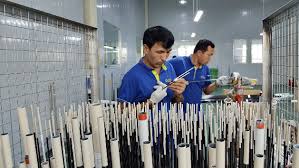
Cross-border journey of oranges reflects China’s expanding opening up
By Ouyang Jie, People’s Daily
At 5 a.m., morning mist still blanketed the citrus orchards in Yiling district of Yichang, central China’s Hubei province. Farmers carefully picked oranges, sorted them, attached traceable export tags, and loaded the fruit onto refrigerated trucks.
Two days later, the trucks arrived at the Horgos highway port on the China-Kazakhstan border, where a “green channel” expedited customs clearance for agricultural products. By noon, the fresh, high-quality oranges were delivered to a distribution center in Almaty, Kazakhstan.
This cross-border journey vividly illustrates how China’s inland regions are advancing toward the forefront of opening up. According to China’s General Administration of Customs, in 2024, the total import and export volume of China’s western region exceeded 4 trillion yuan ($561.68 billion) for the first time, accounting for 9.2 percent of the country’s total foreign trade. In the first three quarters of this year, trade from the western region reached 3.21 trillion yuan, up 10.2 percent year on year.
The transformation of China’s inland regions represents more than a geographical breakthrough but a profound shift in development philosophy and economic growth models. By leveraging corridor-based connectivity, fostering coordinated regional development and adopting innovative approaches, these regions are becoming key engines of China’s broader opening-up agenda.
Expanding international logistics corridors broadens the landscape of opening up.
While coastal provinces have traditionally driven China’s export growth, the rise of international logistics corridors is enabling inland areas to connect directly with global markets by both land and sea. These developments are helping integrate inland hubs into China’s high-standard opening-up framework and creating stronger linkages between the eastern and western regions.
For instance, the Yellow River Land-Sea Corridor connects nine provinces and autonomous regions, facilitating the transport of engineering equipment, machinery, and agricultural products to international ports. Similarly, the New International Land-Sea Trade Corridor links the Silk Road Economic Belt with the Yangtze River Economic Belt, enabling high-quality goods from central and western China to reach Southeast Asian markets efficiently.
According to customs data, in the first three quarters of 2024, trade through the New International Land-Sea Trade Corridor totaled 611.5 billion yuan, up 19.3 percent year on year, contributing 3.4 percentage points to the overall growth of foreign trade in the western region.
Industrial synergy drives coordinated regional development.
Improved logistics infrastructure is facilitating the smooth flow of industrial and supply chains, allowing inland regions to transform locational challenges into competitive advantages. These regions are now attracting industrial transfers and upgrading their economic structure.
In the comprehensive bonded zone of Horgos in northwest China’s Xinjiang Uygur autonomous region, a fur clothing company from Hebei province in north China has established a full-service industrial platform, attracting both enterprises and technical experts from the east to train local workers, thus anchoring a new industry in a border area.
Meanwhile, in Shule county, Kashgar, Xinjiang, a fishing gear company from east China’s Shandong province has established a production base for outdoor sports equipment. With 13 upstream and downstream enterprises now operating in the cluster, the base has created jobs for more than 2,700 local residents. Products such as high-end carbon fiber fishing rods, bicycles, and fishing platforms are being exported to Europe, the United States, Japan, and South Korea. These industrial upgrades, fueled by modern logistics, are injecting vitality into the inland economy and promoting more balanced regional development.
Institutional reform and innovation improve the business environment.
Logistics and industrial growth are underpinned by continuous improvements to the institutional environment. This year, China’s General Administration of Customs, together with 20 other departments and institutions, launched a special action to facilitate cross-border trade. Targeted policy measures have accelerated customs clearance and improved logistical efficiency.
From the western border regions to the inland heartland, a rapidly expanding network of international logistics corridors is redefining China’s opening-up landscape, driving industrial transformation and promoting deeper integration into global trade. -

ORTOM CONGRATULATES NEW PDP ACTING NAT’L CHAIRMAN
…Blames Suspended Leadership for the Party’s Challenges
The immediate past Governor of Benue State, Chief Samuel Ortom, expresses deep concern over the latest developments in the Peoples Democratic Party (PDP), which culminated in the suspension of the National Chairman, Ambassador Umar Damagum, and five members of the National Working Committee of the party.
In a statement Sunday, through his Media Adviser, Terver Akase, declared that
Chief Ortom, attributes the crisis to what he describes as a lack of cohesion in the management of the party’s internal affairs by its leadership.He recalls that he had previously met with the party’s leaders and offered constructive advice on how to resolve the disagreements in a manner that would have produced a win-win situation for all stakeholders, but regrets that his counsel was ignored with impunity.
According to the statement the former Governor, the PDP leadership had the opportunity to rise above personal interests and unite the party but failed in its responsibility. He states that democracy is fundamentally about inclusion and consensus-building, not high-handedness or exclusion.
“Democracy thrives when people of diverse views and interests come together to find common ground for the good of all. It is, therefore, the responsibility of leaders to harmonize differing opinions and create a sense of belonging among members. Unfortunately, what we have witnessed in recent times is an attempt by a few individuals to run the party without recourse to collective consultation or internal democratic processes,” Chief Ortom notes.
The PDP Board member expresses optimism that the party would overcome its current challenges, recalling that PDP had survived many storms in the past and had always emerged stronger whenever it embraced fairness, dialogue, and inclusiveness.
Chief Ortom congratulates the newly appointed Acting National Chairman of the PDP, Mohammed Abdulrahman, on his emergence, describing it as a fresh opportunity for the party to heal and rebuild internal trust.
The former Benue Governor urges Hon. Abdulrahman and his team to urgently liaise with the Board of Trustees and other organs of the party to initiate genuine reconciliation efforts that would give every member a sense of belonging and renew confidence in the party’s leadership.
Chief Ortom further calls on the new leadership to promote inclusiveness, dialogue, and respect for all stakeholders, reminding them that no individual can succeed in isolation. He emphasizes that the PDP’s strength lies in its diversity, collective wisdom, and democratic culture.
He also appeals to all members of the party, to unite behind the new leadership and recommit themselves to the ideals and values of the PDP.
His Excellency Ortom reminds party members that, as Nigeria’s main opposition party, the PDP has a duty to offer credible alternatives, hold the government accountable, and defend the principles of democracy and good governance.
-
2027 Guber: Chief.Aondoakaa, SAN, the man Benue is Rooting for
Chief Mike Kaase Aondoakaa, SAN, is a highly respected figure in Nigeria’s legal and political landscape. As a seasoned lawyer, industrialist, agriculturalist, investor, and philanthropist, he possesses a unique blend of skills and expertise that make him an exceptional candidate for public office. Currently, Aondoakaa serves as a Senior Advocate of Nigeria, a prestigious title awarded to outstanding lawyers who have demonstrated exceptional competence and integrity in the practice of law.
Aondoakaa’s Impressive Background
Chief Aondoakaa’s background is marked by a series of impressive achievements. He holds an LL.B (Hons) degree in Common Law from the University of Maiduguri and was called to the Nigerian Bar in 1986. He has worked as a lawyer, founded his own law firm, and served as the Secretary-General of the Benue Chamber of Commerce, Agriculture, Industries, and Mines. Aondoakaa’s experience extends beyond law, as he is also a successful agriculturalist and industrialist, with a focus on rice production.
Positions Held by Chief Aondoakaa, SAN
Aondoakaa has held various notable positions, including,
*Attorney General of the Federation and Minister of Justice*: He served in this role under President Umaru Musa Yar’Adua’s administration, showcasing his expertise in legal affairs and governance.
*Minister of Special Duties* Aondoakaa worked under President Goodluck Jonathan, further demonstrating his ability to serve in high-level government positions. Fellow of the International Dispute Resolution Institute, This prestigious fellowship recognizes Aondoakaa’s outstanding contributions to the field of dispute resolution.
*Member of the Nigerian Bar Association* Aondoakaa is an active member of the NBA, underscoring his commitment to the legal profession.
*Chairman of the Land Use Reform Committee, This role highlights Aondoakaa’s expertise in land management and reform.
Chairman of the Federal Executive Committee on the Review of 1999 Constitution, Aondoakaa played a key role in reviewing Nigeria’s constitution, demonstrating his understanding of the country’s governance framework.Why Benue State Needs Aondoakaa as Governor in 2027
Benue State faces numerous challenges, including insecurity, economic instability, and inadequate infrastructure. Chief Aondoakaa’s leadership skills, experience, and expertise make him an ideal candidate to address these issues. Here are some reasons why Benue State needs Aondoakaa as governor in 2027:
*Security* Aondoakaa has emphasized the importance of security in Benue State, citing his experience as a former Attorney General and Minister of Justice. He has proposed community policing and collaboration with the Nigerian Police to tackle insecurity.
*Agricultural Development* As a mechanized farmer, Aondoakaa understands the potential of agriculture in driving economic growth. He has proposed creating farm settlements and providing support for farmers to increase food production and create jobs.
*Youth Engagement* Aondoakaa recognizes the importance of engaging youth in productive activities. He has proposed developing sporting activities, providing grants for youth empowerment, and creating job opportunities in agriculture and other sectors.
Chief Aondoakaaa, SAN and Mrs Patience Awubi Aondoakaa at the Conference
*Infrastructure Development*: Aondoakaa’s experience in governance and infrastructure development will enable him to prioritize projects that benefit Benue State, such as road construction and rehabilitation.*Inclusive Governance* Aondoakaa has emphasized the importance of inclusive governance, citing his experience as a leader who has worked with diverse groups. He will ensure that all stakeholders are represented and involved in decision-making processes.
Chief Aondoakaa’s Vision for Benue State
Aondoakaa’s vision for Benue State is centered around peace, security, and economic development. He believes that a stable and secure environment is essential for growth and progress. His proposals for farm settlements, youth empowerment, and infrastructure development demonstrate his commitment to creating opportunities for all Benue citizens.
Aondoakaa’s Leadership Style
Aondoakaa’s leadership style is characterized by inclusivity, transparency, and accountability. He has emphasized the importance of working with all stakeholders, including traditional leaders, women, and youth, to develop and implement policies that benefit Benue State.
Chief Mike Kaase Aondoakaa, SAN, is a highly qualified and experienced leader who possesses the skills and expertise needed to transform Benue State. His commitment to peace, security, and economic development makes him an ideal candidate for governor in 2027. With his inclusive leadership style and vision for Benue State, Aondoakaa is poised to make a positive impact on the state’s development.
If elected as governor, Aondoakaa’s policies and programs have the potential to positively impact Benue State in various ways, including:
*Increased Food Production* Aondoakaa’s agricultural development plans could lead to increased food production, improved food security, and economic growth.
*Job Creation* His proposals for youth empowerment and job creation could reduce unemployment and improve living standards.
*Improved Infrastructure* Aondoakaa’s focus on infrastructure development could lead to improved roads, increased access to healthcare and education, and enhanced economic opportunities.
The Future of Benue State
The future of Benue State looks bright with Aondoakaa’s leadership. His experience, expertise, and commitment to peace and development make him an ideal candidate to take the reins of governance in 2027. With his vision and leadership style, Benue State can look forward to a brighter future, characterized by peace, prosperity, and progress.
-
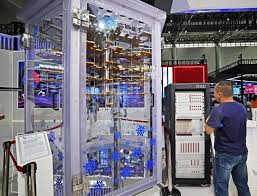
China advances to the forefront of global science and technology
By Shi Ling, People’s Daily
Over the past five years, China has made significant strides in science and technology, positioning itself at the cutting edge of global innovation. Chinese researchers are now leading in key frontier domains, reflecting the nation’s growing capacity for original, foundational breakthroughs.
In quantum science, Chinese scientists have, for the first time, realized fractional quantum anomalous Hall states of photons. In life sciences, they have produced the first single-cell spatial map of the macaque cerebral cortex. In brain-computer interface research, new technologies have enabled paralyzed patients to regain mobility and restored light perception in the visually impaired.
These advances underscore the country’s expanding ability to generate original innovations. As a result, new industries and business models are emerging, propelling China closer to its goal of becoming a science and technology giant.
Frontier technologies, defined by their foresight, pioneering potential, and exploratory significance, represent the future direction of global scientific and technological progress. In many of these domains, China has moved from a follower to a forerunner and in some areas, to a pacesetter. What lessons can be drawn from this transformation?
To push the frontiers, it is essential to anticipate emerging trends and take the initiative.
Artificial intelligence (AI) is transforming daily life, with applications ranging from intelligent voice assistants and adaptive environmental systems to facial recognition and smart security. China’s global leadership in AI is underpinned by comprehensive top-level planning and the effective alignment of policy guidance with market-driven innovation.
China’s scientific and technological endeavors now span from the cosmic and the quantum, engage with extreme environments, and advance through interdisciplinary integration. A deep understanding of technological trajectories enables China to define development priorities, make forward-looking plans, and seize new opportunities.
To push the frontiers, it is essential to strengthen basic research and cultivate long-term perseverance.
Over the past five years, China has more than quadrupled the charging efficiency of power batteries, while its motor and electronic control technologies have reached globally leading standards. Despite entering the new energy vehicle sector later than Europe and the United States, China has achieved leapfrog development – driven by foundational technological breakthroughs.
As many researchers acknowledge, “Scientific discovery often comes from the final attempt after countless failures.” The nanoscale confinement catalysis theory for efficient and clean energy conversion emerged from more than 20 years of sustained research by Bao Xinhe’s team. Similarly, the development of a quantum simulator that surpasses classical computing reflects more than ten years of dedicated effort by Pan Jianwei’s team.
These original breakthroughs are underpinned by growing investment in basic research, a strategic balance between open-ended exploration and mission-driven focus, and the quiet dedication of countless researchers committed to the pursuit of scientific discovery.
To push the frontiers, it is essential to integrate innovation drivers and build a robust innovation ecosystem.
Ultrapure water is indispensable in semiconductor manufacturing. To meet the stringent “five parts per billion” impurity standard required for chip production, Chinese tech firm Sunresin conducted more than 200 iterations over three years, ultimately breaking foreign monopolies. Within this ecosystem, even failed experiments are not penalized – an evolving tolerance for failure allows researchers to focus wholeheartedly on solving complex challenges.
A mature innovation ecosystem fosters synergy among innovators and ensures the effective allocation of resources. In recent years, China has deepened its reform of science and technology evaluation mechanisms, shifting the emphasis toward innovation value, capacity, and real-world contributions. The integration of enterprises, universities, and research institutions has accelerated, spurring the rapid rise of technology-leading firms. Simultaneously, infrastructure, platforms, and academic systems are being reinforced, while the country’s high-level talent pool continues to expand. China is also deepening international cooperation and actively engaging in major global scientific programs. Through a model of independent, collaborative, and open innovation, China is creating a world-class environment for frontier breakthroughs.
At the inaugural World Humanoid Robot Games, a robot that once stumbled descending stairs went on to win the 100-meter dash, while on the football field, a tangle of clumsy robots drew laughter from the crowd. Behind these imperfect yet promising performances lies the momentum of an emerging industry, demonstrating the vitality and resilience of China’s innovation landscape.
Looking back, China has transformed its latecomer position into a strategic advantage, achieving remarkable progress across multiple sectors. Looking ahead, China will not only provide extensive application scenarios for scaling innovations, but also become an increasingly important source of original and disruptive scientific breakthroughs.