By Wu Weizheng, People’s Daily
A newly opened exhibition within Tianjin Metro Line 4’s Dongnanjiao Station is drawing commuters’ attention. The display showcases remains of Tianjin’s ancient eastern city wall – a discovery prompting passersby to pause in curiosity, admiration, or quiet reflection.
With over 600 years of urban history, this wall fragment preserves authentic evidence of Tianjin’s evolution. Its exceptional archaeological value became clear in 2017 when construction uncovered the ruins. Heritage authorities immediately recognized it as one of Tianjin’s most significant 21st-century urban archaeological finds, mandating in situ preservation.
This decision presented a unique challenge: how to balance metro development with historical conservation. The solution emerged through reverence and scientific rigor. Today, eight meters below ground, the ancient wall coexists with modern transit – a tangible “time-space imprint” tracing Tianjin’s transformation from walled settlement to metropolis.
Relocation would have compromised the site’s historical layering and disrupted urban continuity. Instead, construction teams, designers, and heritage experts collaboratively preserved the ruins at their original elevation while advancing the metro project.
Implementation required extraordinary coordination. As a critical transfer hub beneath major thoroughfares, Dongnanjiao Station offered minimal workspace. Through iterative design refinements, computer simulations, and phased construction alternating with archaeological work, the team achieved dual objectives: protecting the heritage site while maintaining vital transportation functions.
Where archaeology and infrastructure development might collide, this project demonstrates how shared purpose and integrated execution can harmonize progress with preservation – turning a subway station into a living museum of urban identity.
The preservation of a non-stone city wall within an operational subway station presented an unprecedented challenge in China. Soft, water-saturated soils threatened structural stability, while confined spaces, complex site conditions, and persistent train vibrations compounded the risks.
Undeterred, a dedicated team pursued a clear conservation vision through ingenuity and perseverance. After meticulous research, they implemented a five-stage engineering process. Using advanced technology, the ancient wall was carefully lifted onto custom spring-mounted supports – simultaneously safeguarding its integrity and isolating it from vibrations. This “mission impossible” became a landmark achievement in harmonizing urban infrastructure with heritage protection, showcasing both scientific ingenuity and unwavering commitment.
Yet conservation alone was insufficient; revitalization was essential. Tianjin masterfully integrated the ancient wall with the modern metro, transforming the preserved relic into a subterranean cultural destination: a museum within a functioning station.
Now woven into the fabric of urban life, the public exhibit invites commuters to engage with history. Visitors encounter the wall’s exposed cross-section and explore the cutting-edge techniques that saved it. This unique space offers dual insights: a window into the city’s layered past and a testament to contemporary engineering excellence.
Here, one senses the planners’ reverence and courage – their prudent balance of public needs and heritage stewardship. Through thoughtful display, history resonates with the present; culture and progress harmonize.
Tianjin’s success underscores a universal principle: by respecting history, embracing cultural values, and adhering to core tenets – prioritize protection, ensure responsible use, minimize intervention – cities worldwide can achieve transformative synergy between development and heritage preservation.
Blog
-

Tianjin Metro Station Unveils Ancient City Wall in Pioneering Heritage Display
-
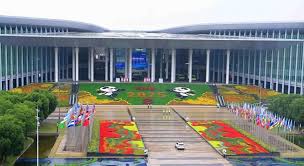
CIIE Story: How Peruvian alpaca goods find their big stage
By Ma Yuxia
The China International Import Expo (CIIE) is the world’s first national-level expo dedicated to imports, and alpaca is a “fluffy elf” from the Andes Mountains. They once seemed to have nothing to do with my life. Yet, as China expanded its global openness, these elements converged into a transcontinental economic bond that transformed my career and thousands of Peruvian artisans’ livelihoods.
This story began unexpectedly in 2016. Before returning from Peru, I purchased handmade alpaca wool dolls asclients gifts. That same evening, a client called requesting 1,000 more units – revealing the Chinese market’s vast potential for quality products.
I partnered with Peruvian artisan Osvaldo Mamani, whose family workshop could barely produce a few pieces daily. Mobilizing his entire household, they delivered the order after four months. However, limited production capacity and sales channels stalled our business for two years.
The turning point came in 2018 when I applied for the inaugural CIIE. Despite doubts about small businesses fitting a “national-level event,” we secured a 9m²booth. During the expo, crowds surrounded our stand daily, selling all samples before closing. CIIE proved China’s market values quality over company size – where even modest ventures can thrive.
Post-expo, we received international orders from Russia, the U.S., Canada, and Iceland. To strengthen our brand “Warmpaca”, I brought Peruvian artisans to subsequent CIIE editions. They refined craftsmanship based on consumer feedback, expanding from single dolls to over 10 product lines. Today, “Warmpaca” operates five stores, partners with more than 200 Peruvian artisan families, and exports nearly 10,000 alpaca products monthly.
The CIIE has unlocked transformative opportunities for global businesses while uplifting communities across developing countries. Take Mamani for example. When we first met, his family crafted goods in a modest shack, selling them from a simple wooden stall. By 2019, driven by CIIE-generated orders, he constructed a new home and hired relatives to expand production. By 2023, his enterprise had flourished so dramatically that he built a three-story villa, with over 20 family members forming a local production cluster nearby. This year, he purchased two off-road vehicles, and his neighbors have likewise upgraded their homes. “It feels like a dream,” Mamani often tells me, “except I’m fortunate enough to live it.”
For artisans like Mamani, China has become a place where aspirations materialize – where dreams transform into tangible realities, filling lives with renewed hope.
A pivotal moment came in November 2024, when the China-Peru jointly developed Chancay Port commenced operations. Shipping times for our alpaca products from Peru to China plummeted from 60 to 24 days, drastically reducing costs. As our nations deepen cooperation, we are not merely beneficiaries but active witnesses to this historic progress.
I recall initial hesitancy among Peruvian artisans toward collaboration. Today, however, they associate Chinese visitors with opportunity and partnership. In every village we enter, we’re met with warmth – a trust forged through shared success. Growing numbers internationally recognize that engaging China means embracing opportunity; believing in China means investing in a brighter future.
As a seasoned CIIE participant, our “Warmpaca” brand has thrived within China’s steadfast commitment to openness. Recently, I’ve observed more small enterprises from Africa and Latin America following this pathway into the Chinese market through the CIIE. On this vast, inclusive stage, I’m confident countless businesses will replicate such success – proving that exceptional products, when given the right platform, can bring joy and prosperity to families worldwide.
(Ma Yuxia is the founder of Warmpaca. This story was compiled and written by People’s Daily journalist Chang Jin.) -
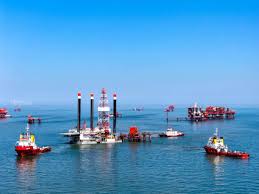
China uncovers ‘treasure map’ beneath ground
By Kong Dechen
China’s mineral exploration efforts during the 14th Five-Year Plan period (2021-2025) yielded remarkable breakthroughs across diverse geological settings – from deep underground to high plateaus – resource types, spanning energy minerals to strategic emerging materials.
According to the Ministry of Natural Resources, non-oil and gas mineral exploration investment surged 23.9 percent year-on-year in the first half of 2025, accelerating the mapping of the nation’s subsurface resources.
A landmark achievement of this period is the discovery of the 2,800-km “Asian Lithium Belt,” stretching from Sichuan through the Qinghai-Xizang Plateau to Xinjiang. This find – combined with major deposits identified in Inner Mongolia and Hunan – has elevated China from the world’s sixth-largest to second-largest holder of lithium reserves.
Technologically, China transitioned from reliance on foreign models to pioneering independent innovations. Aerial reconnaissance (drones, satellite remote sensing) proved highly effective in challenging terrains like Sichuan’s Jiajika and the Xinjiang’s West Kunlun. Meanwhile, subsurface detection (geogas surveys, lithium isotope tracing, high-density resistivity imaging) enabled precise drill-site targeting.
“A series of new technologies and methodologies have provided modern, multidimensional support for drilling projects,” said an executive from the Institute of Mineral Resources at the Chinese Academy of Geological Sciences. “They have greatly improved the success rate of exploration, shortened exploration cycles, and reduced costs.”
China’s identified lithium oxide resources now stand at 17.5 times the national total two decades ago. “The discovery of the Asian Lithium Belt has not only strengthened China’s resource base and supported the healthy and orderly growth of the lithium battery and new energy vehicle industries, but also spurred local economies, especially strategic emerging sectors, laying a solid foundation for regional economic transformation and upgrading,” the executive added.
The breakthrough of the Asian Lithium Belt offers a vivid snapshot of China’s flourishing mineral exploration landscape in recent years.
According to a report on mineral resources released by the Ministry of Natural Resources, China’s investment in geological exploration reached 115.994 billion yuan ($16,339 billion) in 2024, marking four consecutive years of growth. During the 14th Five-Year Plan period, total prospecting investment has approached 450 billion yuan, with 150 new mineral deposits discovered nationwide.
Energy mineral security has continued to improve. Ten newly discovered oilfields each exceeding 100 million tons and 19 gas fields each with reserves over 100 billion cubic meters have pushed oil and gas reserves to record highs, supporting steady annual crude oil production of 200 million tons and natural gas output surpassing 240 billion cubic meters.
Five large uranium bases, including those in Xinjiang’s Ili Kazak autonomous prefecture and Ordos in Inner Mongolia autonomous region, have seen their resource foundations strengthened. Ten new large uranium deposits were discovered, significantly enhancing China’s uranium resource security.
Production and reserves of bulk minerals have also expanded notably. Major breakthroughs have been made in deep or peripheral exploration at long-established mining bases such as the Xiaoyi bauxite mine in Shanxi, the Duobaoshan copper mine in Heilongjiang, the Jiaodong gold mines, and the Anshan-Benxi iron mines in Liaoning, substantially extending mine lifespans.
Meanwhile, new mining bases continue to emerge: the Dadonggou gold deposit in Liaoning, for instance, has an estimated gold resource of nearly 1,500 tons and is expected to evolve into a world-class large-scale gold mine in the Bohai Rim region.
Significant progress has been made in discovering minerals vital to strategic emerging industries. “We leverage scientific innovation to overcome resource constraints. By advancing geological theories and breakthrough technologies, we underpin the growth of strategic emerging industries,” said Xu Dachun, vice minister of Natural Resources.
Take helium for example. Widely used in semiconductors and aerospace, helium was once almost entirely imported. Through technological breakthroughs in extracting helium from natural gas, China has achieved a major leap from zero to full-scale exploration and development, now capable of meeting core domestic demand.
Or take high-purity quartz, indispensable to semiconductor and photovoltaic manufacturing but previously heavily import-dependent. China has designated high-purity quartz as an independent mineral type and stepped up its exploration and development, discovering multiple deposits in Henan and Xinjiang. These findings are of great significance in safeguarding the security of China’s high-tech industrial and supply chains.
“There’s good news on rare earths, too,” Xu added. “In the Bayan Obo mining area in Inner Mongolia, newly identified rare earth reserves have reached nearly 50 million tons, the largest rare earth discovery worldwide so far this century, further cementing China’s position as the world’s leading rare earth producer.” -
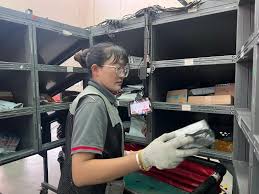
Faster, further: Xizang’s express delivery industry on the rise
By Xu Yuyao, People’s Daily
At around 9 a.m., a delivery truck pulled into SF Express’s logistics park on the outskirts of Lhasa, southwest China’s Xizang autonomous region. Workers swiftly unloaded parcels onto conveyor belts, sorting them into destination-specific containers.
Among them was an online order by Lhasa resident Qiang Zhen – clothing shipped from Guangzhou, south China’s Guangdong province, more than 3,000 kilometers away. After sorting and loading, the parcels were back on the road, heading toward local delivery stations. Inside each station, couriers arranged parcels by neighborhood, quickly packed them into delivery bags, and set off for the final leg of the journey.
By 5 p.m., Qiang received her parcel – less than 72 hours after purchase.
China’s express delivery volume surged from 83 billion parcels in 2020 to 175 billion in 2024, average 20% annual growth. Daily, over 500 million parcels are processed – nearly 6,000 per second. The boom has been especially remarkable in Xizang.
Qiang recalled earlier barriers: “Years ago, shipping a 200-yuan ($28) item cost 40-50 yuan – prohibitively expensive.” Recently, falling fees and free-shipping policies enabled her online shopping: “Two years ago, I bought clothes and shoes with free delivery.”
SF Express’s Tibet branch head Liu Shuxin noted annual orders grew from about 4 million five years ago to 14 million last year. Behind this growth lies rising consumer confidence and spending power among residents in Xizang. In the first half of this year, Xizang’s online retail sales reached 18.07 billion yuan, up 38.6 percent year on year. Physical goods accounted for 86.1 percent of the total, growing by 39.3 percent, among the fastest nationwide.
To handle the surging demand, logistics providers are working together to find better solutions. “In the past, ground transportation to Xizang was too slow, while air transport was too costly,” Liu explained. “Now, by combining the two – using a ‘land + air’ model – we’ve improved efficiency and cut costs.”
Xizang’s postal authorities encourage express companies and e-commerce platforms to set up local and regional warehouses. By consolidating and dispatching shipments from these hubs, companies can lower logistics costs and make free shipping more viable.
The autonomous region’s logistics services have improved noticeably in recent years. Huang Haifen, who moved from Guangdong to work in Nyingchi, Xizang seven or eight years ago, said, “Now it usually takes four to seven days for a package from another province to arrive, not lightning fast, but much quicker than when I first came.”
Even more impressive, she said, are the lower costs. “Many items now come with free shipping. Even when they don’t, delivery usually costs only five or six yuan,” she noted. “It used to be dozens of yuan, and some products even listed a fake ‘999 yuan shipping fee’—basically saying they wouldn’t ship at all.”
This year, Xizang intensified efforts to extend modern delivery services to rural and pastoral areas, ensuring equitable access. Regional subsidies support postal logistics systems and offset rural shipping costs. “Free shipping to Xizang” is now transitioning from slogan to reality. -

A thousand days in space: China’s space station harvests a bounty of achievements
By Liu Shiyao, People’s Daily
On Dec. 31, 2022, Chinese President Xi Jinping solemnly declared in his 2023 New Year Address that “China’s space station was fully completed.”
Today, the space station has been operating smoothly and safely for more than 1,000 days. It has accommodated seven astronaut crews and facilitated over 200 space science and application projects, showcasing China’s strength of self-reliance and independent innovation in science and technology.
This scene inside the space station is common: astronauts floating to the center of the cabin to do a stylish pull-up using ceiling handrails, riding the space bicycle, or running on the treadmill. The station is equipped with a dedicated exercise area to help astronauts maintain muscle strength and reduce the impact of long-term microgravity exposure on the body.
Over the past 1,000 days, the space station’s environment and facilities have been continuously improved. Equipment such as fitness devices have been regularly delivered to the space station.
According to Tang Yi, a researcher from the ground support team of the space station and the China Academy of Space Technology, China’s space station uses the latest generation of commercial wireless communication technology to ensure stable and seamless communication both inside and outside the cabin.
“To help astronauts sleep better, we replaced the doors of the sleeping area,” said Tang. “The new doors use improved materials, structure, and locking design, achieving better sound and light insulation.”
The space station is also home to a unique group of “AI crewmates”. AI assistants such as the Wukong AI large language model, pipeline inspection robots, and Xiaohang robot provide intelligent and specialized support for astronauts in orbit.
Tang noted that in the next 1,000 days, the team hopes to introduce more advanced scientific and technological innovations to further enhance the station’s intelligence and autonomy, enabling it to better support astronauts’ work and life in space.
The space station serves scientific application, and scientific experiments are carried out in it every day.
Astronauts have taken video footage of sprouting Arabidopsis seedlings to study how microgravity affects plant cell structure and function. They also conduct experiments on brain organoid chips to explore how the space environment impacts human brain health.
According to Guo Xiaoxiao, deputy director of the application office at the Technology and Engineering Center for Space Utilization of the Chinese Academy of Sciences, space science and application projects can be broadly categorized into three areas: scientific research in fields such as space life science and biotechnology, space materials science, microgravity fundamental physics, microgravity fluid physics and combustion, and new spacecraft technologies; emerging scientific projects featuring innovation and frontier exploration; and application-oriented payload missions.
“Overall, these experimental projects have progressed very smoothly,” said Guo. “In some areas of fundamental science, the results have even exceeded scientists’ expectations, bringing many surprises.”
Beyond the orbiting space station, there are actually two more “space stations” on Earth.
One is an identical ground-based version built by China Aerospace Science and Technology Corporation to enable full technical validation for the station’s design, construction, and in-orbit operation, providing essential support for the real space station.
The other is a “digital space station” that offers simulation and verification support through pre-mission simulation, in-mission digital co-flight, and post-mission status evaluation.
Together, these three elements — the space-based, ground-based, and digital systems — form an integrated operational framework, providing robust support for the long-term, stable operation of China’s space station.
Tang explained that the ground support team continues to maintain an “around-the-clock, 365 days × 24 hours” standby mode, responsible for data monitoring, trend analysis, mission support, and troubleshooting.
Looking to the next 1,000 days, leveraging the role of the space station as a “space home port” will be an important direction of exploration.
The station has unique advantages — abundant resources, continuous human presence, and a high level of intelligence, said Tang. By developing standardized service models and interfaces, and providing in-orbit services for various types of spacecraft, China’s space station is poised to embrace even broader prospects for development. -

China opens door wider to share more opportunities with world
By Guo Jiping, People’s Daily
From Nov. 5 to 10, 2025, the 8th China International Import Expo (CIIE) is being held as scheduled in Shanghai.
As a pioneering initiative in global trade development, the CIIE continues to showcase China’s commitment to openness, retaining loyal participants while attracting new international engagement. This year’s event features a record-high participation from 155 countries, regions, and international organizations. With 4,108 overseas enterprises exhibiting across more than 430,000 square meters of space, both metrics represent the highest levels in the expo’s history.
For New Zealand’s dairy company Theland, its leapfrog growth exactly began with the CIIE.
When the company first entered the Chinese market in 2017, it encountered a significant logistical challenge: its imported fresh milk arrived with only minimal remaining shelf life. With a product lifespan of just 15 days and customs clearance requiring 7 to 8 days, the milk neared expiration upon arrival. Ahead of the inaugural CIIE, Shanghai’s Changning district launched a pilot program separating inspection from release procedures for imports, dramatically expediting customs processing. This reform enabled Theland’s fresh milk to reach the CIIE venue rom New Zealand in just 72 hours.
Since then, Theland has participated in every edition of the CIIE, achieving rapid expansion in China. Its fresh milk sales have increased 26-fold, with offline distribution now covering 25 provinces and online availability extending to over 90 percent of e-commerce platforms.
“Theland has grown alongside the CIIE. We have full confidence in both the Chinese market and the CIIE platform,” said Roy van den Hurk, CEO of Milk New Zealand Dairy Limited,
For participating companies, a shared belief has emerged: to grow with China is to grow with opportunity. In the first three quarters of this year, China’s GDP grew by 5.2 percent year on year. The stability of China’s high-quality economic growth provides both the confidence and foundation for China and the world to share development opportunities and pursue common progress.
Pursuing high-quality growth, China is unlocking vast new potential for cooperation in green, digital, and intelligent transformation. Over the past seven years, the CIIE has become a global stage for innovation, hosting numerous world, Asian, and China premieres of new products, technologies, and services. Behind this lies China’s transition from serving as the “world’s factory” to becoming a global “innovation lab”. The 8th CIIE alone showcases 461 new offerings.
As Nicolas Hieronimus, CEO of L’Oréal Group, noted, “The CIIE provides us with precious certainty, showcasing China’s firm commitment to high-level opening up and high-quality development.”
Opportunities also stem from the certainty of China’s super-sized market. Siemens of Germany has participated in every session of the CIIE, building a full value chain in China covering research and development, manufacturing, and services. U.S.-based Honeywell regards the CIIE as a one-stop platform to showcase technologies and solutions, debut flagship innovations, expand investment, and strengthen partnerships in China.
The first seven editions of the CIIE facilitated over $500 billion in intended transactions – a testament to its role in helping global businesses navigate market uncertainties through access to China’s 1.4 billion consumers.
For 16 consecutive years, China has remained the world’s second-largest import market. In the next decade, its middle-income population is expected to surpass 800 million, and its industrial supporting capacity will continue to strengthen. Globally, China means both market and opportunity, so much so that “investing in China is not optional, but essential” has become a strategic consensus among multinational corporations.
During the first nine months of this year, China approved the establishment of 48,921 new foreign-invested enterprises, representing a 16.2% year-on-year increase. Since the start of the 14th Five-Year Plan period (2021-2025), China has attracted over $700 billion in foreign investment, with new foreign enterprises exceeding the previous five-year period by approximately 25,000. This robust growth underscores China’s continued status as a leading global investment destination.
Since its inception, the CIIE has consistently provided dedicated support and preferential policies for the least developed countries (LDCs). This year, the special zone for African products has been further expanded and upgraded, ensuring that enterprises and products from all LDCs and 53 African countries with diplomatic ties with China can fully benefit from duty-free access. Participation by LDC-based enterprises grew by 23.5% year-on-year.
Through concrete actions, China is opening new doors of opportunity for the least developed and other developing countries. Increasingly, distinctive products from these nations are reaching broader international markets through the CIIE platform.
Amid significant disruptions to the international trade order and rising unilateralism and protectionism, China’s hosting of the CIIE demonstrates its steadfast support for advancing constructive economic globalization.
China continues to deepen institutional openness through multiple channels: establishing new platforms like the CIIE, China International Consumer Products Expo, and China International Fair for Trade in Services; expanding pilot free trade zones and developing the Hainan Free Trade Port; shortening the foreign investment negative list; and extending unilateral visa exemptions to more countries. These efforts foster broader prospects for high-quality development through elevated openness.
During this era of profound changes unseen in a century, China maintains strategic stability through consistent policies, sustained economic growth, and clear development vision. This approach generates shared opportunities for global prosperity and collective progress. -
Alleged N5m Bribery: Why Chief Judge Tsoho, is been blackmailed
Indications emerged that the allegations against the Chief Judge of the Federal High Court, Justice John Terhemba Tsoho, over a petition of involvement in an alleged $5 million bribery scheme aimed at overturning a court order restraining Nestoil Limited and its affiliates from tampering with their assets in a $1 billion debt recovery dispute is baseless and mere distractions.
Three petitions were written against Justice Dehinde Dipeolu, one by the fourth defendant in the matter and two by the defendant lawyer himself Mofesomo Tayo Oyetibo, SAN, to the Chief Judge of the Federal High, Justice John Terhemba Tsoho, who directed the trial judge to respond within 14 days.
The allegations surfaced barely one week after Justice Dehinde Dipeolu of the Federal High Court in Lagos granted a Mareva injunction inSuit No. FHC/L/CS/2127/2025, empowering First Trustees Limited and FBNQuest Merchant Bank Limited to take possession of Nestoil’s assets pending determination of the case.
Investigations by our judiciary correspondent revealed that the story flying on some online platforms is aimed at diverting attention on the issues raised in the matter.
The investigation has revealed that on 22nd day of October, 2025 in Suit No. FHC/L/CS/2127/2025 between FBNQuest Merchant Bank Limited & 1 Other vs Nestoil Limited and others, the Federal High Court made Ex-parte orders which:1. Were the same in all respects to those contained in the Motion on Notice and in the Originating Summons. In such a situation, granting the orders ex-parte will amount to determining the substantive suit and courts are enjoined to hear both parties before making such orders.
2. Apart from directing the Nigerian Police to assist the Receiver in carrying out the functions as directed by the court, it went ahead to also direct the Navy and the DSS to equally assist as contained in Order 7 in the attached ruling of the Court.
3. Thirdly, while Order 5 of the Ruling empowered the receiver to take over the assets of Nestoil Limited under the Receivership, which he was duty bound to preserve, Order 8 thereof, contrary to the preservative order, empowered the Receiver to dispose of the assets of the defendants, including the sale of crude oil. These two orders are clearly conflicting and mutually exclusive but were granted ex-parte.
4. Fourthly, the life span of ex-parte orders is for 14 days. Courts of law have been admonished not to grant far-reaching orders without putting the adverse party on notice in accordance with the Constitutional right to fair hearing.
Faced with the weighty allegations contained in the said petitions, the Trial Judge, Hon. Justice D.I. Dipeolu was directed to respond within Seven days and to stay further proceedings within the period in order to preserve the sanctity of the judiciary.
Further findings revealed that the Chief Judge of the Federal High Court, never asked Justice Dehinde Dipeolu, to recuse himself from the matter but, excersing his constitutional duties only asked the trial judge to respond to the petitions written against him.
Further investigations by judiciary correspondents, further that the story over allegations bordering on bribery against the Chief Judge of the Federal High, Justice John Terhemba Tsoho, is a pure case of blackmail and mischief.
See the attached Ruling of the Court
-

Digital Creators Storm Surveyor-General’s Office: Seek Partnership to Remap Nigeria’s Image, Infrastructure
The leadership of the Bloggers and Vloggers, Content Creators Association of Nigeria (BAVCCA), paid a courtesy visit to the Office of the Surveyor‑General of the Federation (OSGoF) at its headquarters in Abuja on Thursday, where discussions were held to strengthen collaboration for national development, public enlightenment, and enhanced digital visibility of government institutions.
Led by its President, Ikechukwu Chukwunyere, the BAVCCA delegation—comprising six executive members—was personally received by the Surveyor-General of the Federation, Abdulganiyu Adeyemi Adebomehin, at his office.
In his opening address, Chukwunyere expressed the honour of BAVCCA visiting the office of the Surveyor-General and lauded the institution’s immense contribution to Nigeria’s infrastructural and territorial development. He explained that BAVCCA, as an umbrella body of over 5,000 professional digital creators, bloggers, vloggers and online journalists, is committed to promoting truthful, ethical and responsible online discourse in support of national growth.
He emphasised that the Office of the Surveyor-General remains one of the most critical yet undervalued government agencies, pointing to its pivotal role in land mapping, boundary demarcation, geospatial data management and infrastructural planning.
“Your office lays the foundation for Nigeria’s progress. Unfortunately, many citizens—especially the youth immersed in digital spaces—are unaware of how vital your work is to our national development,” he said.
Chukwunyere said that BAVCCA is ready to partner with OSGoF in the following areas:
* Joint public sensitisation campaigns to showcase OSGoF’s achievements and modernisation efforts.
* A bespoke media workshop to train content creators on accurate reporting of land, boundary and infrastructure topics.
* A co-hosted 2026 awareness event titled “Mapping the Future: The Role of Digital Media in Geospatial Development.”
* The establishment of formal communication channels between OSGoF’s media unit and BAVCCA’s Digital Relations Unit to guarantee reliable reporting of OSGoF’s activities.
The BAVCCA President also applauded the Federal Government’s decision to extend the tenure of the Surveyor-General for two years from January 5, 2026, calling it a strong affirmation of his transformative reforms in geospatial data infrastructure and national mapping. He also welcomed the strategic repositioning of OSGoF directly under the Presidency, saying the move would streamline decision-making and strengthen the institution’s role in mapping, planning, land governance and security.
On broader national issues, Chukwunyere reaffirmed BAVCCA’s commitment to unity, transparency and responsible reporting amid global scrutiny of Nigeria’s human rights record. He urged the newly appointed security chiefs to redouble their efforts in protecting all Nigerians, regardless of religious, ethnic or regional background. He pledged that BAVCCA will leverage its platforms to promote narratives of resilience, reconciliation and collective progress.
In his response, Surveyor-General Adebomehin expressed delight at the visit from BAVCCA and described it as timely and impactful. He reiterated the indispensable role of OSGoF in national planning and governance, and emphasised that Nigeria’s last comprehensive mapping was done over five decades ago — highlighting the urgent need for a new national remapping exercise in line with international standards.
“Whatever you cannot map, you cannot manage,” he said, while showcasing a modern digital railway map linking Lagos to Calabar—an example of what geospatial technology can do for infrastructure.
He encouraged professionals in the surveying and geospatial fields to consider stepping into politics, saying that effective national development requires technically skilled individuals in leadership positions.
“Until we start thinking beyond self, we will remain under-developed as a nation,” he added.
Adebomehin assured BAVCCA of his office’s readiness to collaborate in public education, digital storytelling and national advocacy initiatives that promote the work of OSGoF.
The meeting concluded with a mutual agreement to establish a partnership framework between BAVCCA and OSGoF, aimed at strengthening public awareness, advancing geospatial innovation, and enhancing Nigeria’s digital governance ecosystem.
-

Revealed: Alleged N5m Bribery against Chief Judge Tsoho Blackmail
Indications emerged that the allegations against the Chief Judge of the Federal High Court, Justice John Terhemba Tsoho, over a petition of involvement in an alleged $5 million bribery scheme aimed at overturning a court order restraining Nestoil Limited and its affiliates from tampering with their assets in a $1 billion debt recovery dispute is baseless and mere distractions.
The allegations surfaced barely one week after Justice Dehinde Dipeolu of the Federal High Court in Lagos granted a Mareva injunction inSuit No. FHC/L/CS/2127/2025, empowering First Trustees Limited and FBNQuest Merchant Bank Limited to take possession of Nestoil’s assets pending determination of the case.
Investigations by our judiciary correspondent revealed that the story flying on some online platforms is aimed at diverting attention on the issues raised in the matter.
More details later
-

Harnessing power of water and sand: China’s wisdom in managing Yellow River
By Wang Hao, People’s Daily
The Yellow River, China’s second-longest river, transports more sediment than any major river in the world. Centuries of silt accumulation have diminished reservoir capacity and elevated its riverbed, creating a “suspended river” that historically threatened downstream regions with flooding.
Since 2002, China has conducted 31 coordinated water-sediment regulation initiatives to ensure the river’s long-term stability. Through multi-reservoir management, over 3.5 billion tons of sediment have been flushed seaward, significantly mitigating the suspended river phenomenon while enhancing flood control and sediment transport capacity.
Central to this system is the Xiaolangdi Reservoir – functioning as both the “control tap” for the middle-lower Yellow River and the “power source” for sediment regulation. At 9 a.m. on Sept. 8, inside a digital twin control center of the Xiaolangdi Multipurpose Dam Project Management Center in central China’s Henan province, massive data streams pulsed on monitoring screens.
“Following a dispatch order to “adjust outflow to 2,500 m³/s,” Engineer Li Xiandong executed operational commands. As sediment-discharge gates lifted, torrents surged downstream, initiating the annual regulation cycle.
“This flow rate releases an Olympic-sized swimming pool’s volume per second – triple the normal discharge,” Li explained. “The powerful current acts like hydraulic brushes, scouring sediment seaward.” Li’s expertise lies in precisely timing gate combinations to optimize this scouring effect. During this year’s operation, 24 gate adjustments following six major commands enabled Xiaolangdi to flush 8.87 million tons of sediment.
Through meticulous water management, a multi-reservoir coordination system now operates across more than 1,000 river kilometers, integrating Xiaolangdi with Sanmenxia and Wanjiazhai reservoirs. This precision engineering has dramatically increased sediment discharge efficiency, alleviating sedimentation burdens throughout the system.
During pre-flood season operations (June 28, 8:00 AM), Xiaolangdi’s outflow peaked at 4,820 m³/s. Concurrently, drones equipped with edge-analysis terminals and dual-spectrum cameras launched automated inspections. “These devices transmit real-time imagery, autonomously identify structural defects, and generate inspection reports,” noted Wang Pengfei, deputy director of the hydraulic engineering department of a company under the Xiaolangdi Multipurpose Dam Project Management Center.
With digital twin technology, an intelligent “mirror” of Xiaolangdi has come to life. More than 2,943 monitoring devices capture precise structural data, while satellites provide full coverage of the 300-square-kilometer reservoir area and 1,300 kilometers of shoreline. In the virtual space, 12 hydrological and engineering models run continuous simulations.
From the dam and reservoir to the river channel and water flow, everything is mapped into the digital twin platform, where virtual and physical systems interact. This enables advanced simulations for sediment flushing, reservoir dispatching, and engineering safety – all tested and refined before real-world implementation.
From Xiaolangdi to the Yellow River section in Jinan and Dongping Lake, the digital twin yellow river project is steadily advancing. More than 550 million data entries have been integrated, bringing the Yellow River into the digital realm.
“We have developed a scientific paradigm of three interconnected models – a prototype Yellow River, a model Yellow River, and a digital twin Yellow River,” said Cao Yongtao, director of the sediment research department at the Yellow River Institute of Hydraulic Research. “The three systems verify and complement each other, improving forecasting accuracy and refining dispatch plans.”
Through “micro-Yellow River” experiments and cross-validation among the three systems, the forecast error for flood peak enhancement has been reduced to within 10 percent.
As torrents of water roared downstream during this year’s pre-flood season operation, Lou Guangyan and her team from ecology and environment division the Yellow River institute of water resources protection worked along the river’s monitoring sections, studying the relationship between changes in sediment discharge and aquatic life.
The Yellow River Protection Law, which took effect on April 1, 2023, stipulates in Article 62 that water and sediment regulation shall minimize impacts on aquatic organisms and their habitats.
From 2023 to 2025, Lou’s team has set up 12 monitoring cross-sections between Xiaolangdi and the river mouth, collecting more than 1,300 samples to assess ecological impacts. “In the long run, water and sediment regulation helps stabilize the river’s morphology, improve aquatic habitats, and support biodiversity. Rare species such as the ungeo fish have reappeared,” Lou said.
Data show that since 2008, the structure of plankton communities in the lower Yellow River has remained stable, while the number of fish species in Henan and Shandong provinces has increased by nearly 50. During each operation, water is also released to the Yellow River delta wetland, providing essential support for its restoration and biodiversity enhancement.
The water and sediment regulation of the Yellow River embodies China’s ancient wisdom of water governance combined with modern technological innovation. After more than two decades of practice, this integrated approach has laid a solid foundation for ensuring the river’s long-term stability, while offering valuable experience and insights for the ecological management of major rivers around the world.