Blog

  • Nigerian Navy Rescues 10 Crew Members from Sinking Vessel Off Calabar Route

    Nigerian Navy Rescues 10 Crew Members from Sinking Vessel Off Calabar Route

    Abuja, November 10, 2025 — The Nigerian Navy has rescued 10 crew members from a distressed vessel, MV SEMA III, which was en route to Calabar from Malabo, Equatorial Guinea.

    Director of Naval Information, Commodore Ayiwuyor Adams-Aliu, announced this in a statement on Monday in Abuja, describing the operation as a demonstration of the Navy’s swift response capability and commitment to saving lives at sea.

    According to him, the rescue was conducted by personnel of the Forward Operating Base (FOB) IBAKA on Friday, following a distress call received around 8:00 p.m.

    “A naval gunboat equipped with a submersible pump was immediately deployed. On arrival, the team discovered the vessel taking in water and promptly evacuated all occupants, comprising one Cameroonian, one Equatorial Guinean, and eight Nigerians,” Adams-Aliu said.

    The rescued crew members were safely brought to FOB IBAKA, where they were received, debriefed, and provided with care until Saturday.

    “The Master of MV SEMA III expressed heartfelt gratitude to the Nigerian Navy for its timely intervention and exceptional professionalism,” he added.

    Adams-Aliu said the successful operation reflects the Navy’s renewed efforts to enhance maritime safety, protect national assets, and support lawful economic activities within Nigeria’s maritime domain.

    In a related development, the Chief of the Naval Staff, Vice Admiral Idi Abbas, recently approved the appointment and redeployment of 65 Rear Admirals across various commands, institutions, and departments of the Nigerian Navy and Armed Forces — part of broader efforts to strengthen operational efficiency and security coordination.

  • ASUU President Accuses Federal Government of Neglecting Education Sector

    ASUU President Accuses Federal Government of Neglecting Education Sector

    The President of the Academic Staff Union of Universities (ASUU), Prof. Chris Piwuna, has accused the Federal Government of failing to prioritise education, saying its officials do not treat the sector’s challenges as a national concern requiring collective effort.

    Speaking during The Toyin Falola Interviews on Sunday in a virtual session themed “A Conversation with the ASUU President,” Piwuna said indifference among key government officials has hindered meaningful reforms in Nigeria’s education system.

    According to him, members of the Federal Executive Council often view the problems facing education as the sole responsibility of the Minister of Education.

    “Members of the government, the ministers, and chief executives do not see the problem of education as a problem that affects them,” he said. “When ASUU declares a strike, the Minister of Finance sees it as the Minister of Education’s problem, the Minister of Science and Technology sees it the same way. But if the Minister of Finance understood that the country’s economic growth depends on a knowledgeable workforce, he would take the Minister of Education’s problem as his own.”

    Piwuna criticised the government’s attitude toward education, saying it is worsened by corruption and ideological conflicts.

    “We in ASUU see education as a public good, but those in government treat it as a capitalist venture—something only important if it generates profit. Many now even suggest that TETFund should start funding private universities. Self-interest and contract inflation have replaced public service. That is why TETFund has become a marketplace,” he said.

    The ASUU leader also revealed that the union’s ongoing negotiations with the Federal Government are nearing conclusion, adding that the government’s current salary offer remains “unacceptable.”

    “What the government is offering us as salaries is nothing to write home about, and we are ready to go any length to fight it. Some of our colleagues sleep in their offices with their families due to poor living conditions. How can such people be expected to conduct research or seek endowments?” he added.

    Other discussants at the event included historian and host Prof. Toyin Falola; University of Ibadan scholar, Prof. Francis Egbokhare; economist Prof. Sherrifdeen Tella; Nigeria Labour Congress President, Joe Ajaero; and journalist Grace Edema of The PUNCH.

    Prof. Egbokhare blamed poor leadership and weak accountability structures for the decay in Nigeria’s university system. “You look around our universities and see poorly constructed buildings in an era when sustainable design should be standard. We must fix leadership and integrity issues within our universities,” he said.

    He also argued that universities could generate income if government agencies patronised them for research, consultancy, and training services.

    On his part, NLC President Joe Ajaero urged ASUU and the government to take a holistic approach to education reform, stressing that the crisis extends beyond universities. “Beyond autonomy, we must also address the state of primary and secondary education,” he said.

    Economist Prof. Sherrifdeen Tella noted that Nigeria’s disregard for research has contributed to its underdevelopment. “When farmers plant improved seeds and get better yields, it’s due to academic research. Unfortunately, the system has neglected research for too long,” he said.

    ASUU has historically resorted to strikes to press home its demands, citing unmet agreements, withheld salaries, promotion arrears, and poor funding of public universities. The current round of negotiations with the Federal Government, Piwuna hinted, may determine whether another industrial action looms.

  • Akpabio Urges Revival of Grassroots Football to Secure Nigeria’s Sporting Future

    Akpabio Urges Revival of Grassroots Football to Secure Nigeria’s Sporting Future

    Abuja, November 10, 2025 — Senate President Godswill Akpabio has renewed calls for the revival of grassroots football development in Nigeria, warning that the nation’s football future could remain uncertain unless deliberate efforts are made to discover and nurture young talents nationwide.

    Akpabio made the remarks in Abuja at the opening ceremony of the second edition of the Senate President’s U-18 Unity Cup, a youth football competition he initiated to promote early talent discovery.

    According to a statement from his media aide, the tournament, which kicked off at the Old Parade Ground in Garki, Abuja, features 21 teams — 16 male and five female — drawn from across the country.

    Represented by the Chairman of the Senate Committee on Sports Development, Senator Abdul Ahmed Ningi, Akpabio said the competition was designed to rebuild the grassroots system that once produced some of Nigeria’s football legends.

    “With these young men showcasing their talents, this is the future of Nigeria. There is no way you can grow sports if we don’t go to the grassroots,” he said. “In times past, the late Keshis, the Okochas, the Kanus, the Amokachis, the Ikpebas, and the Tijani Babangidas, who brought glory to Nigeria, were discovered in tournaments like this.”

    Akpabio also noted that President Bola Tinubu’s administration has shown renewed commitment to sports development and urged sports administrators to take advantage of the opportunity.

    “I have seen tremendous signal from President Bola Tinubu in putting sports on the front burner. Therefore, sports administrators must key into this opportunity the President has shown in the last two years. It should not be business as usual,” he added.

    He assured that the U-18 Unity Cup would be sustained annually to help groom future stars capable of representing Nigeria in international competitions.

    The Tournament Coordinator, Hon. John Bassey Ekpenyong, commended Akpabio for his commitment to grassroots sports, noting that the Unity Cup promotes youth development, national unity, and sportsmanship.

    In the opening match, Jaguar Football Club of Abia defeated Amahus Football Club of Yobe 1–0. The competition continues this week in Abuja.

    Nigeria’s football once thrived on grassroots structures in the 1980s and 1990s, producing greats like Rashidi Yekini, Stephen Keshi, Nwankwo Kanu, Daniel Amokachi, and Austin Okocha. However, years of neglect, poor funding, and the collapse of school sports have weakened the system — a trend Akpabio’s initiative now aims to reverse.

  • BAVCCA Pledges Partnership With New Security Chiefs On National Enlightenment, Peace-Building Campaigns

    BAVCCA Pledges Partnership With New Security Chiefs On National Enlightenment, Peace-Building Campaigns

    The Bloggers and Vloggers, Content Creators Association of Nigeria (BAVCCA) has welcomed the recent appointments of Nigeria’s new service chiefs and called on them to redouble efforts in protecting all Nigerians—regardless of religious, ethnic or regional background.

    The association also announced its readiness to partner with the security leadership in nationwide public-enlightenment programmes.

    It will be recalled, President Bola Ahmed Tinubu recently approved the following appointments of Service Chiefs including:
    General Olufemi Oluyede – Chief of Defence Staff (CDS)
    Major‑General Waidi (S.) Shaibu – Chief of Army Staff (COAS)
    Air Vice‑Marshal S.K. Aneke – Chief of Air Staff (CAS)
    Rear Admiral Idi Abbas – Chief of Naval Staff (CNS)
    Major‑General E.A.P. Undiendeye – Chief of Defence Intelligence (CDI) – retained his position

    BAVCCA’s position and commitments was made known in a statement signed by Ikechukwu Chukwunyere, President of BAVCCA, on Sunday in a Abuja.

    Chukwunyere while congratulating the new service chiefs, revealed BAVCCA’s readiness to partner with them in a bid to assist them deliver on their respective mandates.

    His words: “As the new service chiefs settle into their roles, BAVCCA stands ready as an ally in public-education and digital-media partnership. With synergy between security leaders and digital creators, the association believes Nigeria can headline a new era of renewed hope—one backed by clarity of purpose, transparency of action, and inclusion of all.

    “Commendation for the newly appointed service chiefs for their emergence at a critical time in Nigeria’s security history.

    “I’m urging that the security leadership must act impartially — protecting every Nigerian regardless of faith, ethnicity or region — in order to restore trust and unity.

    “This is a reaffirmation of BAVCCA’s unwavering commitment to unity, transparency, and responsible reporting, particularly at a moment when Nigeria faces heightened global scrutiny over human rights and governance.

    “This is also a pledge that BAVCCA will leverage its platforms of over 5,000 digital creators, bloggers, vloggers and online journalists to promote narratives of resilience, reconciliation and collective progress.

    “As well, this is to show our readiness to partner directly with the service chiefs and their offices in joint public-education and digital media campaigns aimed at elevating citizen awareness, trust and engagement in security and governance.”

    Partnership in Public Enlightenment

    BAVCCA underscored that effective security extends beyond military operations—it also demands citizen awareness, media transparency and collaborative public engagement. In that regard, the association proposed:

    Launching a series of digital‐media campaigns in partnership with the new service chiefs to spotlight security efforts, successes and citizen responsibilities.

    Hosting media-workshops for digital creators on responsible coverage of security issues, civil-military relations, and the protection of human rights.

    Establishing communication channels with security institutions to ensure accurate, timely, verified reporting—thus combating misinformation and strengthening national cohesion.

    Why This Matters

    BAVCCA emphasised that in today’s digital age, the narrative around national security is shaped not only by deployments and operations—but also by how citizens perceive them, engage with them and trust them. The service chiefs must therefore not only fight threats, but win hearts and minds. The media—including digital creators and content professionals—are key partners in this mission.

    Chukwunyere said: “Through ethical storytelling and digital advocacy, we can help build a Nigeria where every citizen feels protected, where institutions are trusted, and where our common identity is stronger than what divides us.”


  • Understanding China’s urban development through a Chinese perspective

    By Wu Yan, People’s Daily
    From the ancient wisdom in Kaogong ji, or The Artificer’s record, the earliest Chinese book on technologies which describes how craftsmen build the state, to the Athens Charter that defines the functions of a modern city, humanity’s pursuit of the ideal city has spanned millennia.
    China’s current efforts to build people-centered smart cities, aligned with the vision of making cities better places to live, reveal distinctive perspectives on urban development.
    The first lies in its foundational philosophy: Cities are built by and for the people defines the essence of China’s approach to urban modernization.
    In Shanghai’s Xuhui Riverside, foreign expert Kseniia Kirianaki observed how prime riverfront area was preserved as public space rather than becoming commercial or luxury residential zones. It’s truly remarkable, she said.
    From building twin hills in the city center based on citizens’ suggestions to building apartment blocks for food delivery riders, Shanghai consistently prioritizes people in its planning, reserving premium resources for the public use and ensuring equitable access to services. The people’s city ethos shines vividly here.
    Nationally, cities embrace this same principle. Beijing has implemented detailed underground space development plans, while Guangzhou expands its network of public cultural facilities.
    Urban planning now begins with residents’ actual needs; city construction emphasizes livability and employment; governance fosters collective participation and shared benefits. Though cities express this warmth differently, all share the core commitment: only by building foundations for better lives can citizens’ sense of fulfillment, happiness, and security truly flourish.
    The second perspective is evident in practice. China’s pursuit of high-quality, connotative urban development is charting a new course for people-oriented modernization.
    Visitors to Chongqing’s digital urban operations center witness firsthand how integrated data systems underpin city management. In Fuzhou’s a historical and cultural area Sanfang Qixiang, which literally means three lanes and seven alleys, urban renewal has both preserved the city’s cultural heritage and improved residents’ quality of life. Similarly, Nanjing’s Tangshan Quarry Park exemplifies ecological restoration, transforming a former mining site into a thriving public green space – turning industrial scars into recreational havens.
    These cases illustrate the compelling demonstration effect of China’s high-quality urban development. As UN Under-Secretary-General Anaclaudia Rossbach noted, China’s experience offers valuable insights globally.
    China’s cities have shifted from large-scale expansion to improving quality and efficiency, emphasizing intensive growth over extensive development. By focusing on the construction of modern cities of the people that are innovative, desirable to live in, beautiful, resilient, culturally advanced, and smart, China is refining its urban vision. This approach seeks efficient, distinctive, and well-coordinated progress to enhance the overall quality of urban life.
    The third perspective lies in its global influence. China demonstrates its sense of responsibility by providing international public goods.
    Take the concept of the 15-minute community life circle as an example. First proposed by Shanghai at the inaugural World Cities Day Forum in 2014, the concept quickly spread across the country. Later, Paris introduced its own 15-minute city plan, and Milan has been described by media as one of the cities closest to achieving that vision. This resonance shows how China’s ideas are inspiring global urban innovation.
    China’s contributions go beyond concepts. The Shanghai Award has become a high-level UN recognition for urban sustainability achievements. The Shanghai Manual remains among the most downloaded publications from UN-Habitat , and the Shanghai Index is being piloted in cities across multiple countries. These efforts offer new solutions to urbanization challenges and highlight China’s responsibility and contribution as a major country.
    Today’s China is committed to building a collaborative social governance system with broad participation, aiming to deliver benefits for all. The goal is to make cities true homes of happiness for their residents and ensure development brings tangible improvements to everyday life. This commitment resonates with historical aspirations while representing a significant contribution to global urban civilization.

  • Spring manufacturer in E China finds its bounce on new track of growth

    Spring manufacturer in E China finds its bounce on new track of growth

    By Liu Junguo, People’s Daily
    Recently, Le Zhiguo, head of the robotics spring task force at Zhejiang Meili High Technology Co., Ltd. (Meili), visited several humanoid robot companies, including Unitree Robotics and Deep Robotics.
    “Our purpose was to deliver prototype springs and deepen collaboration with downstream partners to jointly overcome technical hurdles,” stated Le.
    Le explained that while many humanoid robot developers concentrate on core components like control systems (“brain”), motion coordination (“cerebellum”), and joint actuators, they often pay less attention to the flexibility of the body and limb systems. This oversight can result in operational issues such as overheating joints, unnatural movements, and reduced durability.
    Recognizing this gap, Meili leveraged its expertise to assist. The company has already begun supplying small batches of prototype springs to several humanoid robot manufacturers. The solution for enhancing robotic flexibility and agility? A specialized spring, approximately one centimeter in diameter.
    At first glance, this component may appear similar to conventional springs. “However,” Le clarified, “its strength and precision are significantly higher. When integrated into linear actuators, it enables smoother and more coordinated robotic movements.”
    Le Zhiguo drew an analogy: if sensors provide a robot’s sense of touch and harmonic reducers function as its joints, then these high-precision, high-strength damping springs act like ligaments. They cushion joints, facilitate posture adjustment, and mitigate vibration and noise.
    To accelerate this development, Meili established a dedicated robotics spring team earlier this year, drawing key technical experts from more than 120 R&D personnel. Within just three months, the team progressed from concept design to small-batch production, enabling Meili to supply springs to both domestic and international robotics companies.
    How did the company manage to springboard into this new field so quickly?
    “The foundation was built on over 35 years of experience in the spring industry,” explained Zhang Bihong, Founder and Chairman of Meili. “That solid expertise made our entry into a new sector possible.”
    Founded in Ru’ao township, Xinchang county, east China’s Zhejiang province, Meili began as a small spring workshop. “We started by manufacturing springs for fire extinguishers, then progressed to motorcycle valve springs,” Zhang recalled.
    In the early days, with few clients, Zhang often rode his bicycle along dusty country roads, visiting motorcycle parts factories one by one. Gradually, the company expanded into the automotive spring market.
    In recent years, intensifying competition in the traditional spring market could no longer support the company’s growth ambitions. However, the rapid rise of China’s new energy vehicle (NEV) sector presented a new opportunity.
    “To thrive, we had to ascend the value chain,” Zhang stated. Determined to move into higher-value products, he led the company to develop air suspension springs for NEVs – a segment with significantly higher technical barriers.
    Air suspension systems, once exclusive to high-end vehicles, were long dominated by foreign companies. Despite having no prior experience in this field, the Meili team recognized that the market opportunity might be fleeting. The pressure to succeed was immense.
    “The greatest challenge was improving the durability and air-tight sealing between the rubber airbag and the metal components. Both factors directly impact product quality,” said Li Xiaojun, head of the air spring project team.
    “Another difficulty was ensuring stable performance under extreme conditions. Sometimes, lab data looked perfect, but during real vehicle tests, the damping materials failed to meet standards,” Li added.
    “To enhance air-tightness and ensure the springs could withstand fatigue, heat, and cold, we tested more than 100 types of rubber materials,” Li explained. The team repeatedly refined designs, adjusted material formulas, optimized vulcanization processes, and tested structural options. After enduring 5.42 million cycles in rigorous alternating high- and low-temperature humidity tests, Meili successfully produced its first prototype air spring for passenger vehicles in 2024. The prototype passed customer validation later that year.
    The company continues to innovate. “Robot springs offer even higher added value than automotive springs and could represent a new multi-billion-yuan market,” Zhang noted.
    Through relentless innovation, this small component is springing into a world of broader possibilities.

  • Three products that reveal China’s secret in exploring new frontiers of growth

    Three products that reveal China’s secret in exploring new frontiers of growth

    By Li Hongxing, People’s Daily
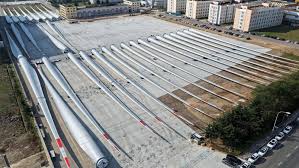
    Two recent developments in wind turbine blade technology have sparked considerable public interest. First, blade lengths have increased dramatically – from just over 30 meters to more than 150 meters – significantly boosting the power-generating capacity of individual turbines. Second, companies are pioneering innovative ways to recycle decommissioned blades, particularly those from the first generation of turbines now nearing the end of their service life. These retired blades are being transformed into eco-friendly products such as pallets and pedestrian walkways.
    As blades grow longer and industry chains expand, new commercial models and development trajectories are emerging. During a recent visit to a blade manufacturing facility, a striking question arose as we stood before a massive 100-meter blade in production: “If blades keep getting larger and production volumes increase, won’t the market eventually become saturated? Where will future growth come from?”
    A company representative expressed no such concerns. The firm had already mapped out a comprehensive post-production value chain, covering areas such as turbine operations, maintenance, and blade recycling – each representing a substantial market opportunity in its own right. This strategic expansion and diversification of business models demonstrates how companies are innovating to overcome perceived market limitations and sustain growth.
    This raises a broader question: Markets exist – but how can companies access new growth opportunities? Instructive parallels can be drawn from three diverse products across different sectors.
    Consider, for instance, the case of bottled water.
    In the western mining area of Shuangyashan Mining Company in northwest China’s Heilongjiang province, high groundwater levels once posed serious challenges to coal mining. Guided by a commitment to green development and supported by technological innovation, the company implemented a “drain – purify – reuse” model. The purified water now serves multiple purposes: production processes, dust suppression, irrigation, and even a new mineral water product line. This initiative generates nearly 10 million yuan ($1.41 million) in annual revenue, transforming what was once hazardous mine water into a source of green vitality.
    The question remains: Where is the market? Growth emerges through transformation. Whether upgrading traditional sectors or reshaping emerging ones, companies that refuse to settle and persistently pursue improvement and innovation discover new pathways with every problem solved and unlock fresh potential with every reform.
    Development resembles digging a well, and the market is the spring: those willing to explore new directions and apply fresh thinking to familiar territory will always find a steady flow of opportunity.
    Consider the case of a bus route. Recently, Shanghai J.Y Ba-Shi Passenger Transport (Group) Co., Ltd. launched a customized service enabling elderly passengers to travel directly to local food markets. This “food-focused” route has become a new offering supporting leisure and consumption. As high-speed rail expands and traditional long-distance coach services decline, tailored routes like these have gained popularity across the Yangtze River Delta. Their success lies in accurately identifying consumer needs, carefully designing routes, improving service quality, and strengthening stakeholder collaboration.
    Where do such opportunities originate? They require attention to both regional trends and granular shifts. Young and old alike cherish the small joys of everyday life and appreciate accessible escapes close to home. When companies understand and meet these emotional needs, they tap into hidden market potential. Experience shows that through market-driven integration of cultural tourism, local products, and transportation resources, localized demand can become a growth driver, and regional micro-circulation can stimulate broader economic flows.
    Finally, consider a screen protector. A company in central China’s Hunan province produces tempered glass screen protectors sold in 68 countries and regions, capturing 30% of the global market. Their competitive edge? Take fingerprint recognition sensitivity: through sustained R&D, they reduced protective film thickness from 0.33 millimeters to just 0.1 millimeters. By refining technology and strengthening their product, they generated tangible growth momentum.
    The key lies not only in external drivers but in building inherent capabilities. From a single company to an entire region – and indeed, in forging a new development paradigm – continuous enhancement of internal resilience unlocks greater vitality. The stronger a company’s self-driven strength, the more competitive it becomes. When countless market entities thrive, they inject lasting momentum into China’s high-quality development.
    China’s economy possesses a stable foundation, numerous advantages, remarkable resilience, and vast potential. The fundamental conditions and long-term positive trajectory supporting its growth remain unchanged.
    Within transformation lies opportunity;in microeconomic circulation, hidden potential; through inner strength, sustainable growth. Rooted in practical experience and looking ahead, China is steadily opening new frontiers for development.

  • The Sanjiangyuan Region: Protecting China’s “Water Tower”

    The Sanjiangyuan Region: Protecting China’s “Water Tower”

    By Qiao Dong, Cao Jiwei, People’s Daily
    Nestled in northwest China’s Qinghai province, the Sanjiangyuan area – often called the “Water Tower of China” – derives much of its water from glacial sources. Among these, the Amne Machin peak in the Golog Tibetan autonomous prefecture encompasses over 120 square kilometers of glaciers. These ice formations supply approximately 35% of the water for the upper reaches of the Yellow River, China’s second-longest river, forming an indispensable ecological barrier for the region.
    In recent years, the water conservation capacity of this vital “Water Tower” has steadily improved, with the ecological restoration of Amne Machin serving as a prime example.
    Driving along the southern foothills of Amne Machin, the sight of sprawling glaciers inspires awe. Here, glacial melting and freezing cycles peak around May and November each year – critical periods when herders in Xueshan Township, Maqen County, conduct their glacier monitoring work.
    After stepping out of the vehicle, I donned a felt hat and joined a team of herder-monitors trekking through the snow. Since 2008, local herders have voluntarily formed teams to measure the glacier’s snow line. At an altitude exceeding 4,500 meters, each step upward proved arduous. Emerging from the ridge mist, the team reached a monitoring point known as “Thousand Tents,” where last year’s red-painted markers remained visible. Working together, team members bent down with tape measures to calculate the distance between the glacier’s edge and the previous year’s marker.
    Local authorities and residents have joined hands to protect this sacred mountain. In 2009, the snow mountain protection station of Maqen county’s natural resources and forestry and grassland bureau began glacier observation work, soon joined by research teams such as that of He Xiaobo from the Northwest Institute of Eco-Environment and Resources, Chinese Academy of Sciences. Today, glacier monitoring employs increasingly comprehensive methods, combining satellite remote sensing, drone photogrammetry, modeling, and physical monitoring stakes.
    Artificial precipitation enhancement and ice preservation have become vital conservation measures. In recent years, local meteorological departments have used catalysts to induce snowfall during suitable weather conditions. The protection station simultaneously monitors upstream and downstream glacier temperature, humidity, and snow depth to assess the effectiveness of these interventions. Practice has shown that such efforts extend snow cover duration in certain areas and effectively slow glacial melting.
    During our hike, Geltsang, head of Maqen county’s forestry and grassland station, pointed across the mountain ridge. “That’s the Delni Copper Mine!” he said.On one side of Amne Machin’s midsection lies the mine, while its tailings pond occupies the other. Open-pit mining and tailings construction previously damaged meadows, eroded slopes, and degraded surrounding grasslands. “When the mine began operations in 2006, we didn’t fully grasp the environmental impact,” admitted Zhang Ming, a Delni Copper Mine staff member. “Now, for ecological restoration, we’ve even planted grass at an altitude of 4,430 meters!”
    The ecological rehabilitation of the Delni mine prioritized grassland restoration. Facing a lack of soil, the project team innovatively utilized local serpentine rock, processing it into a composite soil suitable for grass growth. To overcome water scarcity, they adopted techniques inspired by terracing and checkerboard grass planting methods to retain soil and moisture. Through these combined efforts, the Delni copper mine successfully completed its major ecological restoration work last year.
    Across Golog prefecture, significant progress has been made in restoring degraded grasslands, including areas known as “black soil patches,” covering over 5.16 million mu (approximately 344,000 hectares). Reviving this land was challenging. “Grass often needs to be sown multiple times before it takes root here,” explained Geltsang. The region’s high average elevation (above 4,200 meters), cold climate, and short growing season pose major difficulties. After extensive trials, local experts identified resilient grass species suitable for the area, such as Elymus nutans and Poa crymophila. Research indicates that compared to natural regeneration, enclosure protection combined with artificial reseeding can boost the carbon sink capacity of alpine meadows by approximately 30%.
    Heading westward leads to Madoi county, renowned as the “County of a Thousand Lakes.” This area encompasses Gyaring and Ngoring lakes, critical sources of the Yellow River. Historically, overgrazing led to wetland degradation, causing half of the county’s more than 4,000 lakes to dry up. Thanks to sustained restoration efforts, the landscape has rebounded dramatically, with the number of lakes now exceeding 5,800.
    Golog prefecture has advanced integrated restoration efforts targeting grasslands, river basins, and wetlands. Last year, Madoi and neighboring counties initiated a wetland connectivity project that restored 1,200 hectares of wetlands. This project is projected to increase water flow into the Yellow River’s tributaries by 15%. Over the past five years, Golog has restored 100,000 mu of wetlands, contributing to a more than 6% increase in the annual water conservation capacity within the Sanjiangyuan National Park. Water quality in the Yellow River’s Golog section consistently meets the highest national standard (Class I).
    Over 10,000 ecological rangers patrol the prefecture’s lakes and wetlands. Among them is herder Dorje Gyaltsen, who monitors springs near Amne Machin peak. “I’ve witnessed springs dry up and then flow again,” he noted. Remarkably, 14 of the 27 springs within a 20-kilometer radius of the glacier, which had completely dried up in the past, have now been rejuvenated, contributing vital flow to the Yellow River’s headwaters.

  • Guangdong-Hong Kong-Macao Greater Bay Area sees vital scientific innovation

    Guangdong-Hong Kong-Macao Greater Bay Area sees vital scientific innovation

    By He Linping, Jiang Xiaodan, People’s Daily
    At 8 a.m., Zhong Chao, founder of PAM²L Biotechnologies, a developer of innovative, low-cost, and sustainable functional biomaterials, was already busy at work in Guangming Science City, a comprehensive national science center in Guangming district, Shenzhen, south China’s Guangdong province.
    Zhong, also a researcher at the Shenzhen Institute of Advanced Technology, Chinese Academy of Science, has now become a pioneering entrepreneur in the fertile “test field” of industrial innovation.
    In 2019, Zhong research revealed that feeding probiotics to nematodes extended their lifespan by regulating mitochondrial function through a bacterial enzyme. “Applying this mechanism to human cells,” Zhong said, “could yield breakthrough anti-aging compounds.”
    Guided by this insight, his team used synthetic biology to engineer a bacterial strain capable of mass-producing the enzyme.
    Early R&D required cross-disciplinary collaboration among microbiologists and materials scientists Guangming’s integrated ecosystem – where research institutes and businesses share facilities – enabled real-time calibration of technical parameters with engineers. Within three years, laboratory discoveries advanced to mass production.
    “From nematode longevity studies to commercial anti-aging ingredients and medical-grade biomaterials, this progress was made possible by the Guangdong-Hong Kong-Macao ‘innovation relay,’” Zhong emphasized. “That’s why we chose this base.”
    “This base” extends beyond Guangming Science City. Northwest, the Pearl River Estuary connects Dongguan and Guangzhou; southward, it links Shenzhen and Hong Kong – forming a 100-kilometer innovation corridor.
    Leveraging geographic advantages, robust resources, and the Guangdong-Hong Kong-Macao Greater Bay Area’s ongoing development as an international tech hub, the region now concentrates innovation entities and expertise, creating a dynamic synergy along the Guangzhou-Shenzhen-Hong Kong scientific innovation corridor.
    In September, the World Intellectual Property Organization released the Global Innovation Index 2025, ranking the “Shenzhen–Hong Kong–Guangzhou” cluster as the world’s largest innovation hub—surpassing Japan’s “Tokyo–Yokohama” cluster for the first time.
    In Guangming district, PAM²L Biotechnologies is not alone. Another company, Liying Biotech, produces recombinant collagen proteins with triple-helix structures. Many of its founding members brought cutting-edge theoretical expertise to Guangming, and after achieving breakthroughs in pilot trials, they confidently handed over industrialization to manufacturing partners “along the same corridor.”
    “The Pearl River Delta offers mature precision-instrument supply chains,” a Liying representative stated, highlighting a Dongguan-made protein purification system costing 1/20 of imported equivalents while outperforming them. “This R&D-manufacturing synergy boosts our competitiveness.”
    “When scientific research, industry, policy, and the market work hand in hand, ideas from the lab can quickly bear industrial fruit,” said Zhang Guangnan, a professor at the Institute of Guangdong, Hong Kong and Macao Development Studies, Sun Yat-sen University.
    “What drives this is not only geographic proximity and complementary strengths, but also the free flow of innovation factors across the corridor,” Zhang added.
    This summer, Signet Therapeutics drew global attention with its targeted therapy for diffuse gastric cancer. COO Dai Changgui explained: “Our AI algorithms screen billions of molecules to pinpoint tumor-weakness compounds, slashing drug development time.”
    In 2020, founder Zhang Haisheng of Signet Therapeutics returned to Shenzhen from overseas with his research vision. Thanks to the Hetao Shenzhen-Hong Kong Science and Technology Innovation Cooperation Zone’s unique location and supportive policies, his team quickly grew to include over 80 percent R&D personnel, nearly 70 percent of whom hold master’s or doctoral degrees.
    “This place is like a powerful magnet,” Dai noted. “International experts can easily travel between Shenzhen and Hong Kong through fast channels, while the Greater Bay Area’s well-developed industrial ecosystem doubles our experimental efficiency.”
    On June 27 this year, the Greater Bay Area International Clinical Trials Center of the Shenzhen Medical Academy of Research and Translation was officially inaugurated. Focusing on building a closed-loop clinical trial ecosystem across the region, the center effectively integrates clinical research resources.
    According to its director, Li Yichong, by enabling resource sharing and efficient collaboration, the center will help turn the Greater Bay Area into a major global source of biomedical innovation.
    In recent years, Guangdong province has developed 26 key innovation platforms along the scientific innovation corridor. In 2024, innovation entities within these platforms accounted for about 1/10 of the province’s total PCT patent applications. Cities, parks, major facilities, and laboratories along the corridor, like pearls strung together, are shining ever more brightly as the corridor’s innovation vitality continues to surge.

  • AI technology applied to improve crop breeding

    AI technology applied to improve crop breeding

    By Huang Xiaohui, People’s Daily
    “Even field workers now use AI for crop breeding,” remarked Huang Fugang, a rice molecular breeder at Guangxi University, during recent acknowledgments to the Fengdeng large model’s R&D team.
    Released in April 2024 by a coalition of researchers from the Shanghai Artificial Intelligence (AI) Laboratory, Yazhouwan National Laboratory, China Agricultural University, and other research institutions, the Fengdeng model laid the foundation for Fengdeng Gene Scientist – an AI-driven biological breeding launched in July 2024. This tool helps scientists explore and validate unknown gene functions.
    Crop breeding hinges on designing agronomic traits through precise genome engineering. Despite heavy global investment since rice genome sequencing concluded in 2005, decoding gene functions progressed slowly. Traditional breeding remains reliant on expert intuition, with hypotheses, experiments, and validation spanning years and yielding limited success.
    “It’s like deciphering a book of cryptic symbols – we decode few, and efficiency stays low,” explained Yang Fan, Yazhouwan National Laboratory researcher and Fengdeng project co-lead. He emphasized that historical breeding data, crop sequences, field conditions, and cultivation practices critically determine outcomes, adding: “With extreme weather intensifying, field dynamics shift rapidly. Relying solely on human experience makes successful breeding increasingly difficult.”
    The team trained the AI agent with massive datasets, enabling it to identify gene-trait relationships, predict gene-trait associations, and design and simulate breeding experiments.
    Since the global release of the Fengdeng large model’s rice-specific version in May this year, it has been adopted by leading institutions such as the International Rice Research Institute and Indian Institute of Rice Research.
    According to Yang, this technology enables researchers to rapidly analyze gene functions and precisely combine superior alleles. This facilitates customized breeding for both traditional objectives (high yield, disease resistance, stress tolerance) and emerging demands (enhanced nutrition, improved flavor).
    “This transcends merely teaching AI breeding knowledge – we’re training it to make scientific discoveries,” explained Dong Nanqing, fellow project co-lead and researcher at the Shanghai AI Laboratory. “The system learns to interpret breeder needs, identify relevant genes, design experiments, verify outcomes, and self-correct.”
    Through continuous learning, the Fengdeng Gene Scientist has developed independent research capabilities. It simulates expert reasoning and automates the entire scientific workflow from hypothesis generation through experimental design to results analysis. In validation trials, the system supported all key research decisions (excluding physical experiments) for dozens of previously unstudied rice and maize genes.
    In rice research, Fengdeng large model uncovered new functions of several genes, some regulate plant hormones that determine height, while others are tied to photosynthetic efficiency. In maize research, it accurately predicted candidate genes associated with traits like plant height and ear placement, which were later confirmed by field experiments.
    The Fengdeng Gene Scientist represents just the initial phase. The research team plans to integrate additional crop, environmental, and breeding data to evolve the system into a comprehensive smart breeding platform covering all species and full breeding cycles.