People’s Daily Reporters
China’s 15th National Games transcends being merely a grand sporting spectacle; it serves as a dynamic platform showcasing the deepening integration within the Guangdong-Hong Kong-Macao Greater Bay Area (GBA).
During the Games’ opening ceremony, the symbolic flowers representing the three regions – Guangdong’s kapok, Hong Kong’s bauhinia and Macao’s lotus – converged into a concentric floral pattern, powerfully embodying their unity. The pulse of the GBA resonated throughout the celebrations, visible from Guangzhou’s gleaming skyline to Hong Kong’s Victoria Harbour and the historic Ruins of St. Paul’s in Macao.
The recommendations for formulating the 15th Five-Year Plan(2026-2030) highlight the importance of consolidating and enhancing the GBA as a powerhouse of high-quality development. The document calls for stronger efforts to support Hong Kong and Macao in better integrating into and contributing to the country’s overall progress, while enhancing cooperation with the mainland across economic, trade, scientific, technological, cultural, and other fields.
To advance these goals, the Central Committee of the Communist Party of China and the State Council designated Guangdong, Hong Kong, and Macao as co-hosts of the Games, a pioneering practice of “one country, two systems” in the realm of sports. The experience of joint organization across the three regions is helping build valuable models for broader and deeper regional integration.
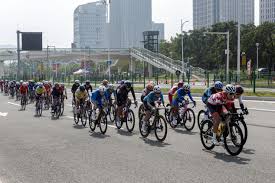
A striking example of this cooperation was the men’s road cycling race. Its 230-kilometer course started in Zhuhai, Guangdong province, crossed a bridge into Macao, traversed the Hong Kong-Zhuhai-Macao Bridge to Lantau Island in Hong Kong, and returned via the same bridge back to Zhuhai – physically linking all three regions within half a day.
Throughout the race, cyclists passed seamlessly through the bridge’s three checkpoints six times – without stops, document checks, or security screenings. The “zero delay, zero contact, zero waiting” process was a testament to the GBA’s institutional innovation.
“The key lies in a ‘pre-verification and closed-loop management’ system,” explained Yuan Xiong, deputy director of the executive committee office for the Zhuhai division of the Games. “With dedicated communication networks, satellite positioning, UAV (unmanned aerial vehicle) filming, and RFID (radio-frequency identification) tracking technologies, the entire process was digitally monitored and coordinated to ensure smooth passage for people, vehicles, and equipment.”
During the Games and Para Games, more than 9,000 participants are expected to travel across the three regions – a significant test of organizational and logistical capacity.
“For delegations, we set up dedicated lanes at border crossings to allow group entry and exit on demand. For ticket holders, we opened green channels, enabled cross-region processing of travel documents, and offered expedited services for those with urgent needs,” said Zhang Zhihua, an official overseeing the Games’ coordination work with Hong Kong and Macao.
Behind this high level of efficiency are innovative mechanism that enables unified handling of matters, policies, and regulations across Guangdong, Hong Kong, and Macao.
“This cross-regional model not only enhanced the GBA’s ability to host large-scale events, but also strengthened bonds among people and promoted the integration of sports, culture, and tourism,” said Yeung Tak-Keung, head of the Hong Kong coordination office for the Games.
By using sports as a bridge and events as a shared platform, the Games has brought together Guangdong, Hong Kong, and Macao, which share same cultural roots, close people-to-people bonds, and similar traditions. The joint hosting ignited a powerful current of innovation, collaboration, and unity, forming a driving force that continues to shape the GBA into a dynamic, world-class metropolis cluster.
The flame of innovation, the torch of collaboration, and the light of integration kindled by the Games will continue to illuminate the GBA’s path forward, empowering it to evolve into a truly international first-class bay area and a world-leading urban cluster.
Blog
-
Integration in motion: GBA shines at China’s 15th National Games
-
Rural cultural, sports activities are gaining momentum across China
By Chang Qin, People’s Daily
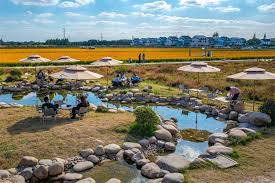
A nationwide surge in rural cultural and sports activities is reshaping China’s countryside, offering new insight into the country’s path toward modernization. Events such as the Village Basketball League and Village Super League in southwest China’s Guizhou province have drawn passionate crowds, while in Zhejiang, farmers take center stage at “village galas,” performing self-written shows to enthusiastic applause.
These vibrant activities are not only enriching rural life but also inspiring community spirit, fostering grassroots cohesion, and contributing to a renewed sense of pride and progress among rural residents.
According to a recent report released by China’s Ministry of Agriculture and Rural Affairs, over 2.2 million cultural and sports activities were organized in rural areas across China in 2024, with participation from more than 70 percent of the country’s farmers.
Alongside the surge in quantity, the quality of such activities has also improved remarkably. Currently, renowned rural cultural and sports events fall into five major categories comprising 24 types. They include educational and scientific activities such as “village lectures” and “village reading fairs,” athletic competitions like rural basketball and football tournaments, and artistic showcases such as the “village gala,” “village show,” and “village dance.”
Leisure activities like “village chess,” “village fishing,” and “village cafe” further enhance daily life, while exhibitions and trade events such as the “village expo” and “village livestream” promote local industries and stimulate rural development.
“These events are deeply rooted in rural culture. The stage is often the farmland itself, props are made from local materials, and prizes come in the form of agricultural products,” said Tang Ke, director general of the Department of Rural Social Services of China’s Ministry of Agriculture and Rural Affairs, adding that this model that combines farmers and rural elements has tremendous vitality.
These activities are marked by distinct characteristics: they are farmer-led, community-rooted, and integrative, combining agriculture, culture, tourism, and commerce to generate new consumption models. Policy support, strong local demand, cultural vibrancy, and digital technologies, especially short video platforms, have propelled their growth, allowing the charm of rural life to reach broader audiences.
By translating popularity into developmental momentum, these events are emerging as engines of rural revitalization. In Lanxian county, north China’s Shanxi province, rural football tournaments attract visitors to nearby agricultural markets. In Ya’an, southwest China’s Sichuan province, a rural running event boosted hotel occupancy to 80 percent and raised sales of local heritage products by 23.5 percent.
In Zhejiang’s Anji county, landscape improvements tied to rural tourism and the village cafe trend have revived underutilized resources. By the end of 2024, Anji hosted over 300 rural cafes, drawing more than 6.15 million visitors annually.
These activities have also fostered new forms of rural governance and community development. To host events, residents often initiate village beautification projects, revitalizing local environments and improving civic engagement. In Yuhuan, Zhejiang province, a local official reported that following a village dance competition, social interactions increased and community disputes declined by 20 to 30 percent.
According to Yang Lichao, associate professor at the School of Sociology, Beijing Normal University, rural cultural and sports activities provide a collective platform that strengthens public life and social bonds in rural communities. “These events unite communities in pursuit of shared honor, reinforcing grassroots cohesion and public life,” Yang said.
Where rural-to-urban migration once symbolized aspiration, a new trend is emerging: rural life is increasingly seen as attractive and meaningful. As these cultural and sports initiatives expand, they not only revitalize the countryside but also bolster farmers’ cultural confidence and collective identity. -
Zhejiang drives economic prosperity through flourishing cultural development
By Liu Junguo, People’s Daily
In recent months, the M511 complex, or M511 Light and Shadow Hui Commercial Center in Hangzhou, east China’s Zhejiang province, drew a number of visitors from across the country.
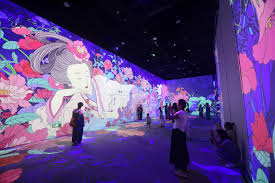
Located on Hangzhou’s Xixi Road, this M-shaped building leverages cutting-edge light and shadow technology to create a “micro park” of immersive audiovisual experiences.
The complex is home to a number of immersive installations built with 8K projection, triple-fold LED screens, and visual reality (VR) technology. Entering feels like stepping through a portal; visitors can traverse a field of stars or interact with renowned artworks, fully immersed in the fusion of light and art.
This exemplifies the growing intertwining of technology and culture, leading to increasingly diverse cultural experiences and consumer offerings. Such novel, technology-driven attractions are transforming public spaces into accessible “science and art museums,” broadening both cultural participation and the boundaries of cultural consumption.
Developing the cultural industry requires robust policy support. Take Hangzhou’s Xihu district as an example. Over the past three years, the district has invested more than 50 million yuan ($7.02 million) in cultural and creative projects, building a full-cycle support system that includes startup funding, loan interest subsidies, and direct investment funds. Tailored policies have also been introduced to encourage cultural enterprises to apply digital technologies, with one-time subsidies amounting to 5 percent of actual project investment – up to 500,000 yuan per enterprise each year.
The results speak volumes: in the first quarter of this year alone, Xihu district’s cultural industry generated revenue of 10.16 billion yuan. This demonstrates the powerful multiplier effect targeted funding and precise policy incentives can have in fostering innovative cultural business models.
A thriving cultural industry also relies on strong platforms. The globally acclaimed Chinese-made AAA video game Black Myth: Wukong, the animated blockbuster Chang’an, which reignited the passion for Tang poetry, and Nobody, China’s top-grossing 2D animated film – all trace their roots to Hangzhou’s Artinno Town. Once a shuttered cement plant, the site has been transformed over the past decade through Hangzhou’s efforts to build the Zhijiang and Grand Canal Cultural Belts. Today, it hosts more than 3,000 cultural and creative enterprises.
With platforms connecting industries and fostering clusters, businesses learn from each other, collaborate, and achieve shared success, accelerating the implementation of major cultural projects. With the government providing the foundational support and enterprises taking the lead, culture forms the spirit while industry serves as the chain. This synergy drives a virtuous cycle of cultural vitality and industrial prosperity.
A culturally thriving city is always appealing. An old grain depot and rice mill sites in Xihu district have been transformed into popular leisure destinations by adopting art and creative elements. In Xiaoshan district, a disused agricultural warehouse has been repurposed into an art park, which has welcomed over 20 million visitors and generated more than 600 million yuan in revenue since opening, becoming a cultural landmark and consumption hub. By infusing cultural creativity into urban renewal, Zhejiang continues to unlock the potential of culture, commerce, and tourism integration, generating powerful momentum for high-quality development.
Across Zhejiang, cultural landmarks – from the scenic West Lake and the ancient Liangzhu City to the picturesque water town of Wuzhen – continue to enhance their appeal. Meanwhile, innovative industries such as animation and gaming, artificial intelligence, and e-commerce are gaining global recognition.
Culture serves as both heritage and resource; technology offers support for and drives cultural development. By fostering economic prosperity through cultural vibrancy and advancing cultural renewal through technological innovation, Zhejiang is steadily moving toward the harmonious integration of material wealth and spiritual richness. -
Why China’s five-year plans capture global attention
By Li Hongxing, People’s Daily
Malaysia is currently in its durian harvest season. Remarkably, durians picked in Malaysian orchards can reach markets in China within as little as 36 hours. This accelerated timeline is made possible by advancements across the supply chain – from quarantine and customs clearance to institutional innovation. Upgraded China-Malaysia trade cooperation has expanded market reach, meeting the needs of Chinese consumers while boosting Malaysia’s export-oriented industries.
The durian business exactly mirrors the increasingly closer collaboration between China and ASEAN countries. This growing collaboration is further solidified by the recent signing of the China-ASEAN Free Trade Area 3.0 Upgrade Protocol. This agreement unlocks new market opportunities provides a significant boost of confidence for both regional and global economic growth.
Examining contemporary China and its strategic plans, including the next Five-Year Plan and beyond, offers the world a crucial anchor of stability, a source of growth momentum, and a clear window of opportunity.
The global significance of China’s five-year plans is well understood. As noted by international observers, these plans function as the “steady rhythm” of China’s modernization journey. This metronome reflects not only the continuity of China’s policy direction but also its resonance with the broader trends of global development.
The influence of the plans stems from their forward-looking nature. Achieving such strategic foresight and effective implementation requires exceptional leadership and governance.
Historically, China’s five-year plans have combined top-level design with extensive public consultation, showcasing the institutional strengths of effective national governance. The transition of each plan from blueprint to reality illustrates the collective power of unity and determination. The Communist Party of China (CPC) possesses strong leadership, organizational, and implementation capacity, enabling it to balance short-term and long-term interests as well as local and national priorities.
The plans’ influence also lies in the opportunities it creates. As an observer put it, China’s 15th Five-Year Plan (2026-2030) represents a “list of opportunities” for the world. Many multinational corporations have drawn the same conclusion: to move in step with China is to align with the future.
Amid a turbulent international environment, China’s stability, growth, and contribution serve as a crucial “anchoring force.” The Recommendations of the Central Committee of the Communist Party of China for Formulating the 15th Five-Year Plan for National Economic and Social Development, adopted at the fourth plenary session of the 20th Central Committee of the CPC, call for expanding the space for two-way investment cooperation and developing new advantages in attracting foreign investment. These commitments send a clear and positive message to the world.
Apple has announced plans to expand its investment in China, while Goldman Sachs has pledged to support financing for enterprises headquartered in China. “Continuing to invest in China” has become a shared consensus among foreign investors because of China’s stable growth prospects and vast potential for mutual benefit.
Viewed through the prism of modernization, the five-year plans embody China’s unique model of “goal-oriented governance,” delivering a clear message: “There is no such a thing as a single authorized model of modernization, nor a universally applicable standard of modernization.”
As Dilma Rousseff, president of the New Development Bank, noted, China is charting its own path of independent and sustainable development, precisely what many Global South countries aspire to achieve.
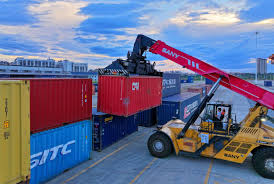
From the China-Europe freight trains revitalizing the Port of Duisburg in Germany, to China’s decision to grant zero-tariff treatment to 100 percent of taxable products originating from all least developed countries with which it has diplomatic relations, and to the signing of 23 free trade agreements with 30 countries and regions, China is partnering with nations that share a common aspiration for win-win development. Emerging economies and developing countries, whose development demands are often marginalized, now find new opportunities.
Chinese modernization represents a contribution not only to China’s development but to global progress. In this context, China’s five-year plans exemplify both the nation’s long-term strategic vision and its role in shaping a new form of human civilization – reflecting the cohesion of development and the centripetal pull of civilization.
Recent discourse has characterized China through three distinctive lenses: a “forward-looking nation,” an “enabler,” and a “civilizational state.” Together, these perspectives capture the threefold certainty China contributes to global development – steadfastness in strategy, stability in markets, and openness in cultural exchange.
China has persistently advanced generation after generation along the same developmental roadmap. The nation seeks neither to challenge nor displace others, but rather focuses on responsibly managing its own affairs, pursuing continuous self-improvement, and sharing development opportunities worldwide. This approach demonstrates China’s distinctive wisdom and its constructive contribution to global governance. -

Accessibility supervisor: Making barrier-free environment benefit more people
By Shi Fang, People’s Daily
Just after 7 a.m., Xu Yanchun attached a powered front wheel to her wheelchair and began her commute across Beijing.
Her day included delivering accessibility training to over 100 supervisors in Fengtai District before providing guided interpretation for international visitors at the National Barrier-Free Environment Exhibition Hall. After travelling more than 50 kilometres, she returned home after 5:00 p.m.
Though weary, Xu expressed profound satisfaction: “This is a life I never dared imagine – supporting myself while contributing to society.”
Born in 1974 with congenital spina bifida and scoliosis, Xu grew up aware of her physical differences, walking with an uneven gait due to differing leg lengths.
At 19, she enrolled in accounting at what is now Capital University of Economics and Business. Midway through her first semester, her legs grew progressively weaker. “The weakness started in my feet and calves, then spread to my thighs and eventually both legs,” she recalled. Forced to use a wheelchair, she had to postpone her studies.
During her initial wheelchair years, Xu experienced significant emotional challenges, isolating herself indoors. Her turning point came upon reading a magazine quote: “Accept what cannot be changed, and change what can be changed.” This philosophy inspired her transformation.
Xu mastered computer skills and established an online shop where she handled both customer service and management. In 2015, she joined a psychosocial rehabilitation program run by Beijing New Life Elderly and Disabled Services Center, where she not only gained practical skills but also met a group of like-minded friends.
Her career breakthrough came in 2018 when she participated in China’s inaugural national accessibility and universal design training camp. “Seeing international experts design accessibility solutions for Olympic Village convinced me I could do this too,” she explained. Through field studies in Shanghai, Dalian, Shenzhen, and Hong Kong, she systematically acquired accessibility technical standards, ultimately qualifying as a professional accessibility supervisor.
When Beijing launched its barrier-free environment initiative in 2019, Xu became a citywide lecturer, travelling by wheelchair across all 16 districts. She provided hands-on guidance for accessibility renovations in diverse settings – from municipal infrastructure and government centres to hospitals, shopping malls, and residential communities.
During facility inspections, she emphasised precision: “Call buttons must be positioned on the front side of toilets; accessible restrooms require a 1.5-metre wheelchair turning radius; low counters need adequate knee clearance. Barrier-free construction demands meticulous attention to detail.”
Xu’s expertise shaped Beijing’s Naga Tree Café in Sanjing Hutong, where she collaborated through over ten design revisions and onsite construction supervision. The resulting fully accessible space features Braille navigation maps, lowered call buttons, adjustable sinks, and a Braille reading corner, becoming a beloved community hub. “This thoughtful design creates welcoming public space for us,” patrons noted.
Xu considers her disability a professional advantage: “As a wheelchair user, I can authentically evaluate accessibility functionality.” To enhance her expertise, she taught herself architectural blueprint interpretation and improved her English for international standards access. In August 2023, her outstanding contributions earned her appointment as deputy secretary-general of the professional committee on standardization under the China Association of Volunteers for Persons with Disabilities.
Flatter roads, more convenient transportation, and easier public services – with continuous enhancements to barrier-free facilities in Beijing, Xu now often enjoys parks and shopping malls independently in her wheelchair. Her schedule stays packed, with at least three days a week spent traveling around the city. “I will keep working hard,” she said, “so that accessibility development can benefit more people.” -

Three perspectives on five years of change in China’s foreign exchange market
By Qiu Haifeng
As an important indicator reflecting the vitality of China’s external economy, cross-border capital flows have demonstrated consistent growth over the past five years. In 2024, China’s total cross-border receipts and payments reached $14 trillion, marking a 64 percent increase from 2020. In the first three quarters of this year alone, the total reached $11.6 trillion, up 10.5 percent year on year, with cross-border trade and investment activities maintaining robust momentum.
What new changes have taken place in China’s foreign exchange market over the past five years? Let’s look at it from three perspectives—
Balance of Payments: Expanding Scale, Enhanced Stability
China’s foreign trade resilience continues to drive growth in goods trade. Recent data from the State Administration of Foreign Exchange (SAFE), from 2021 to 2024, the annual average scale of goods imports and exports under the balance of payments reached nearly $6 trillion – an increase of almost 43 percent compared with the average during the 13th Five-Year Plan period (2016-2020).
Amid global economic shifts, China has steadily advanced manufacturing upgrades, ensuring the stability of its external economy. For instance, the recent export of 13.3 tons of fresh grapes from Dunhuang to Panama – a first for the region – exemplifies how Chinese enterprises like Gansu Benyuanxing Agricultural Products Co., Ltd. are leveraging local resources to expand internationally.
Alongside goods trade, two-way investment flows have grown steadily. From 2021 through the first half of 2025, net foreign investment inflows into China exceeded $740 billion.
Maintaining balanced cross-border flows has strengthened China’s external financial position. By June 2025, China’s external financial assets surpassed 7.2 trillion (up 10%). With net external assets of $3.8 trillion, China now ranks third globally in this category.
Services: Enhanced Environment and Improved Convenience
Trade facilitation policies have significantly streamlined cross-border payments. Li Tianpeng, Chief Financial Officer of Mintal Group based in Linyi, east China’s Shandong province, highlighted this improvement: “The efficiency of cross-border fund settlement has improved significantly.”Mintal Group, which exports building materials such as boards and wall panels, frequently requires cross-border settlements. “In the past, we had to prepare a lot of documents and spend much time communicating with banks. Now, a single receipt transaction can be completed very quickly,” Li said.
This efficiency is reflected in their activity – in just the first half of this year, the company processed over 3,000 cross-border receipt transactions totaling more than $64 million.
During the 14th Five-Year Plan period (2021-2025), SAFE has advanced trade-related foreign exchange facilitation policies targeting high-quality enterprises, deepening the credit-based incentive mechanism categorized by enterprise and business type, and fostering a business environment where “greater integrity brings greater convenience.” By the end of September 2025, related facilitation transactions nationwide had totaled about $4.7 trillion.
In recent years, cross-border e-commerce has flourished. Characterized by small, frequent, large-volume, and online transactions, cross-border e-commerce requires more efficient settlement services than traditional offline methods can provide.
To meet this need, SAFE has leveraged technology to empower financial institutions, supporting qualified banks and payment institutions in bulk verification of electronically generated transaction data, such as online orders and logistics information, thus enabling efficient, convenient, and secure foreign exchange settlement services for enterprises.
Since the start of the 14th Five-Year Plan period, more than 1.3 million micro and small merchants engaged in cross-border e-commerce have been served by banks and payment institutions, which have processed about 5.6 billion related transactions.
Openness: Higher Levels and a More Refined Structure
On Oct. 17, Suzano, a giant in commercial pulp production from Brazil, successfully issued Panda Bonds worth 1.4 billion yuan ($196.36 million) in China’s interbank bond market.
Panda Bonds refer to yuan-denominated bonds issued by overseas institutions in the Chinese onshore market. Since 2023, the Panda Bond market has continued to expand. According to relevant statistics, total issuance has now exceeded 1 trillion yuan.
This expansion reflects China’s deepening institutional openness in the foreign exchange sector during the 14th Five-Year Plan period (2021-2025). A series of policy measures – including improved management of Panda Bond funds – have been introduced and implemented at a faster pace. SAFE, together with other departments, has continued to advance financial market reform and opening up in a steady and orderly manner, improving the multi-channel, multi-level framework for two-way financial market openness. As a result, the value of domestic securities held by overseas investors has risen by 6 percent compared with the beginning of the 14th Five-Year Plan period.
“Looking ahead to the 15th Five-Year Plan period (2026-2030), we will make the foreign exchange management system more convenient, more open, more secure, and more intelligent, making new and greater contributions to advancing Chinese modernization,” said Zhu Hexin, deputy governor of the People’s Bank of China and head of SAFE. -
CIIE fuels success of Spain’s “City of Ham”
By Yan Huan, Xu Hailin, People’s Daily
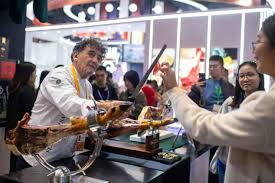
Since its debut at the inaugural China International Import Expo (CIIE) in 2018, Spain’s Iberian ham has been staple attraction at the annual event. Its complex aroma and savory depth have consistently drawn crowds, establishing it as one of the Expo’s star products Thanks to the CIIE platform, Iberian ham has progressively entered the culinary landscape of Chinese consumers.
The town of Guijuelo, Spain, produces approximately 60 percent of the country’s renowned Iberian ham globally by gourmets for its distinctive marbling and nuanced flavor.
Each autumn, Guijuelo’s oak forests yield abundant acorns that nourish free-ranging black Iberian pigs. The region’s elevated terrain, characterized by cold, dry winters and brief mild summers, creates optimal conditions for traditional air-curing of hams.
At century-old producer Julian Del Aguilar(established 1895), artisans commence work at dawn. Within curing rooms,thousands of hams suspended from wooden rafters permeate the air with their characteristic savory fragrance.
Master craftsman Ramos, with 41 years of experience at the company, explains: “From initial salting through natural curing, each ham requires at least three years of maturation here. This century-old tradition remains our point of pride.” Ramos meticulously inspects each ham before selecting matured specimens for quality grading and packaging.
The transformative impact of CIIE became evident when Spanish producer-distributor La Encina participated in the 2018 inaugural edition with modest expectations. Their initial six-month supply of 500 kilograms sold out within days, catalyzing broader Spanish industry interest in the Chinese market. This year, Jose Maria Aguilar, the fifth-generation heir of Julian Del Aguilar, brought his family’s heritage and products to the eighth CIIE.
“The CIIE has fundamentally reshaped our strategic outlook,” said Jose Maria Aguilar. “China’s vast middle-income population represents unparalleled potential for both investment and consumption. The Expo and the Chinese market collectively provide the confidence and platform to transition our family enterprise into a globally recognized brand.”
According to Guijuelo’s mayor, Roberto Martin, the town has a permanent population of 6,000 and more than 120 ham producers, earning it the nickname “City of Ham.” The industry provides jobs for over 90 percent of local residents and creates significant employment opportunities in surrounding areas.
In November 2018, shortly after the first CIIE, China and Spain signed an agreement allowing bone-in Spanish ham to be exported to China, opening up a major opportunity for Iberian ham producers. La Encina has since set up a branch in Shanghai and opened an online store on Chinese e-commerce platforms. Julian Del Aguilar has also invested in its first Iberian ham processing plant in Qingdao, east China’s Shandong province.
Data from the Spanish Institute for Foreign Trade and the Interprofessional Iberian Pork Association show that in 2024, Spain’s exports of ham and cured shoulder products to China exceeded 28 million euros ($32.23 million), up about 60 percent from five years ago. The growth has continued into this year, with exports rising 8.4 percent year-on-year in the first half of 2025.
“The openness of the Chinese market has been crucial for Iberian ham’s journey onto the global stage,” said Martin. “We hope that through platforms like the CIIE, Iberian ham will gain even more opportunities in China, which not only drives the growth of Guijuelo’s entire industrial chain and boosts the local economy, but also encourages the younger generation to stay, continue this craft, and build their own future here.”
Since the first CIIE, premium Spanish agricultural products such as ham, wine, and olive oil have become popular highlights at the expo, making China one of the fastest-growing markets for Spanish agri-food exports.
Angel Prieto, vice president for External Affairs at Spain’s National Association of European Business and Innovation, said the CIIE provides a valuable opportunity for Spanish companies to enter China and showcase innovative products.
“Chinese consumers are increasingly pursuing high-quality products and cultural value,” said Martin. “Guijuelo’s ham producers are also working hard in that direction.”
Maria Naranjo, spokesperson and director of the food industry at the Spanish Institute for Foreign Trade, noted, “The Spanish government places great importance on exports and is closely watching China’s dynamic market. Meat ranks as the second-largest category in Spain’s agricultural exports, and China now accounts for over 30 percent of Spain’s pork exports.”
Naranjo said the CIIE has become an important platform for strengthening trade ties between Spain and China, and the strong participation of Spanish companies reflects their desire to deepen cooperation with Chinese partners.
“The making of Iberian ham is a testament to tradition,” said Martin. “The Chinese market and the CIIE platform have given this tradition a broader and brighter future.” -
Spotlight on the “firsts” of 8th CIIE
By Wu Yan, Huang Xiaohui, Cui Yin, People’s Daily
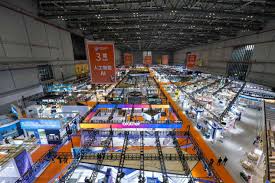
On Nov. 5, the 8th China International Import Expo (CIIE) opened at the National Exhibition and Convention Center (Shanghai). Since its inaugural session in 2018 – establishing itself as the world’s first national-level import-themed expo – the CIIE has consistently upheld its core principles of openness and mutual cooperation. Each year, it introduces innovations that continue to impress global participants and attendees.
First Dedicated Zone for Least Developed Countries (LDCs)
Demonstrating China’s commitment to unilaterally opening its market to LDCs, this year’s CIIE features a dedicated exhibition zone for products from these nations for the first time. A total of 163 enterprises from these countries are participating, representing of 23.5 percent increase compared to the previous year.
Beyond expanding the special zone for African products and encouraging African countries with diplomatic ties with China to leverage preferential tariffs, the CIIE also offers comprehensive support for LDC exhibitors. This includes complimentary exhibition booths and tax incentives for goods sold post-expo.
Shanghai Aifei Import and Export Trading Co., Ltd. has witnessed the remarkable growth of Ethiopian coffee exports through the expo. Starting with imports of just one or two containers, the company now purchases over 100 containers annually, totaling more than 2,000 tons. These African coffee beans have firmly established a presence in China’s mid-to-high-end coffee market.
Similarly, Bangladeshi company Dada Bangla Limited has experienced significant expansion through consecutive CIIE participation. Evolving from a micro-enterprise with only 10 employees, it is now a well-known firm employing over 2,000 people, with annual order growth exceeding 20 percent.
These examples, among many others, underscore how China’s open market offers inclusive and mutually beneficial opportunities. Every participant, regardless of their nation’s economic size or geographic distance from China, can access development opportunities.
Inaugural Sino-Foreign Sister Cities of Charm exhibition zone
This year’s CIIE has also introduced a Sino-Foreign Sister Cities of Charm exhibition zone. According to Wu Zhengping, deputy head of the CIIE Bureau, the 8th CIIE’s Country Exhibition is joined by 67 countries and international organizations. Exhibitors will showcase industries and sectors that reflect high levels of development and strong cooperation potential through distinctive booth designs and creative displays, highlighting the unique charm of their cultures.
Meanwhile, the CIIE has expanded partnerships with foreign provinces and cities. Canada’s Saskatchewan Province and Kazakhstan’s Almaty are participating for the first time. A new joint exhibition area featuring Chinese and foreign sister cities provides a vibrant platform for showcasing cooperation and promoting mutual learning among civilizations.
Showcasing Premieres and Innovations
Among the exciting world premieres this year are a family companion robot designed to provide emotional support and safety monitoring for seniors; a small-diameter, controllable-expansion vascular stent; a new X-ray machine for pharmaceutical applications; and AI-powered hearing aids. These innovations bring fresh possibilities to their respective industries.
Wu noted that this year’s CIIE places greater emphasis on cutting-edge technologies and forward-looking innovation. The event features six major exhibition zones: Food and Agricultural Products, Automobile and Smart Mobility, Intelligent Industry and Information Technology, Consumer Goods, Medical Equipment and Healthcare Products, and Trade in Service, along with a Innovation Incubation Special Section. It also highlights new consumption trends, such as the ice-and-snow economy and the silver economy, with special attractions including a CIIE sports park and an international automotive culture display zone.
These first launches and debuts are expanding consumer choices and enriching the Chinese market. In Zhangyuan, a commercial complex in Shanghai’s Jing’an district, deputy general manager Sun Fei of Jing’an Real Estate explained that, by leveraging the operation platform of a bonded warehouse, some jewelry exhibits from the 8th CIIE can be displayed and sold in Zhangyuan, creating a “second venue” where consumers can admire and purchase global treasures beyond the main expo halls.
Introducing a Cross-Border E-Commerce Selection Platform
Also making its debut this year is a dedicated cross-border e-commerce selection platform featuring dedicated promotion sessions and a specialized services zone. This initiative has rapidly become a focal point for both returning and new participants. The CIIE has facilitated specialized sourcing sessions for e-commerce platforms and new retail distributors, using its digital platform to enable intelligent matching and precise connections between overseas products and the Chinese market.
Hunan Yufei Industrial Investment Co., Ltd. brought over 140 distinctive African products to the CIIE in partnership with 13 African small- and medium-sized enterprises (SMEs). “In the past, many overseas SMEs had niche or uniquely crafted products, but due to information gaps, high channel-building costs, and complex compliance processes, they found it difficult to enter the Chinese market,” said company chairman Yang Yi.
To address these challenges, the CIIE launched the innovative cross-border e-commerce selection platform, jointly built by leading Chinese e-commerce platforms, major supply chain enterprises, and comprehensive service providers. This hub offers one-stop services ranging from market access consulting and digital marketing to cross-border logistics and channel integration, opening a new gateway for SMEs worldwide to enter China’s vast market. -

BAVCCA Vows To Fight Against Misinformation, Backs IGP Egbetokun
The Bloggers and Vloggers, Content Creators Association of Nigeria (BAVCCA) has backed the Stance of the Inspector-General of Police, IGP Kayode Egbetokun, following his warning on the devastating impact of misinformation in the country.

The development was made known in a statement jointly signed by BAVCCA’s National President and Secretary, Ikechukwu Chukwunyere and Tabuko Kennedy on Thursday in Abuja.
Ikechukwu, while quoting IGP Kayode Egbetokun verbatim, “Misinformation has become a silent bomb; it does not destroy buildings; it destroys trust. A single false post can cause chaos faster than a bullet can travel.” – stressed that the Police Chief’s comment is a clarion call to every Nigerian, creator, sharer, or citizen.
He further warned that the spread of falsehoods is not a bloggers-only problem; it is a national security threat that demands collective action.
BAVCCA also disclosed plans to formally submit the Digital Content Practitioners (Registration and Regulation) Bill, 2025, to the National Assembly, a bill that seeks mandatory registration of all bloggers, vloggers, podcasters, social media influencers, and online journalists with a National Digital Content Registry.
The group also vowed to name, shame, and prosecute any creator—inside or outside its fold—who weaponizes lies, set up a fact-checking platform, while pledging full support to law enforcement.
The statement reads in part:
The Bloggers and Vloggers, Content Creators Association of Nigeria (BAVCCA) stands united with the Inspector-General of Police, IGP Kayode Adeolu Egbetokun, in sounding the alarm on the devastating impact of misinformation.
This is a clarion call to every Nigerian—creator, sharer, or citizen. The spread of falsehoods is not a bloggers-only problem; it is a national security threat that demands collective action.
LANDMARK LEGISLATIVE INITIATIVE
BAVCCA shall be formally submitting the Digital Content Practitioners (Registration and Regulation) Bill, 2025 to the National Assembly. The bill seeks:
Mandatory registration of all bloggers, vloggers, podcasters, social media influencers, and online journalists with a National Digital Content Registry.
Annual licensing tied to verifiable identity, ethics training, and compliance with the Cybercrimes (Prohibition, Prevention, etc.) Act 2015, Nigerian Data Protection Act 2023, and NUJ Code of Ethics.Criminal penalties for unregistered operators who publish content that incites violence, spreads health disinformation,
Universal Pre-Publication Fact-Check Mandate
Every individual or platform publishing content on security, health, religion, or politics must verify with at least two independent, credible sources before posting. BAVCCA launches the #VerifyWith2 public campaign to enforce this standard.National Misinformation Rapid Response Network (MRRN)
A coalition of fact-checkers, tech platforms, and civil society, led by BAVCCA, will operate a 24/7 hotline (0700-VERIFY-NG) and app for real-time debunking. Any viral false claim will trigger automated community notes on X, Facebook, Instagram, and TikTok.
Prosecution Without Fear or FavorBAVCCA pledges full support to law enforcement. Under Section 24 of the Cybercrimes Act, any person—member or non-member—who knowingly spreads false information that endangers public safety will face arrest and prosecution. We shall submit a list of 47 repeat offenders to the Nigeria Police Cybercrime Unit.
Free Annual Ethics & AI Literacy Training
Starting 1 January 2026, BAVCCA will offer nationwide free workshops (physical and virtual) on spotting deepfakes, algorithmic bias, and responsible content creation. Certification will be required for registration under the new bill.₦50 Million Whistleblower Reward Fund
Open to all Nigerians. Report verified fake news via verify@bavcca.org.ng and earn up to ₦100,000 per confirmed case. Funds are seeded by BAVCCA and corporate partners.Tech Platform Accountability Pact
BAVCCA has secured commitments from Meta, Google, TikTok, and X to:
Prioritize fact-checked content in Nigerian feeds
Demonetize accounts with 3+ verified misinformation strikes
Share anonymized data on viral falsehoods with the MRRNA CALL TO EVERY NIGERIAN
Creators: Register now at registry.bavcca.org.ng. Your license is your shield and your duty.Citizens: Pause. Verify. Report. Use #BAVCCAVerify to tag suspicious posts.
Parents & Teachers: Teach digital literacy—misinformation starts in group chats.
Government & Platforms: Fast-track the Digital Content Bill. The time for voluntary compliance is over.BAVCCA will name, shame, and prosecute any creator—inside or outside our fold—who weaponizes lies. Truth is not negotiable,” the statement concluded.
-
Coalition Kicks Over 15% Import Duty Deferment, Urges Tinubu To Protect Local Industries
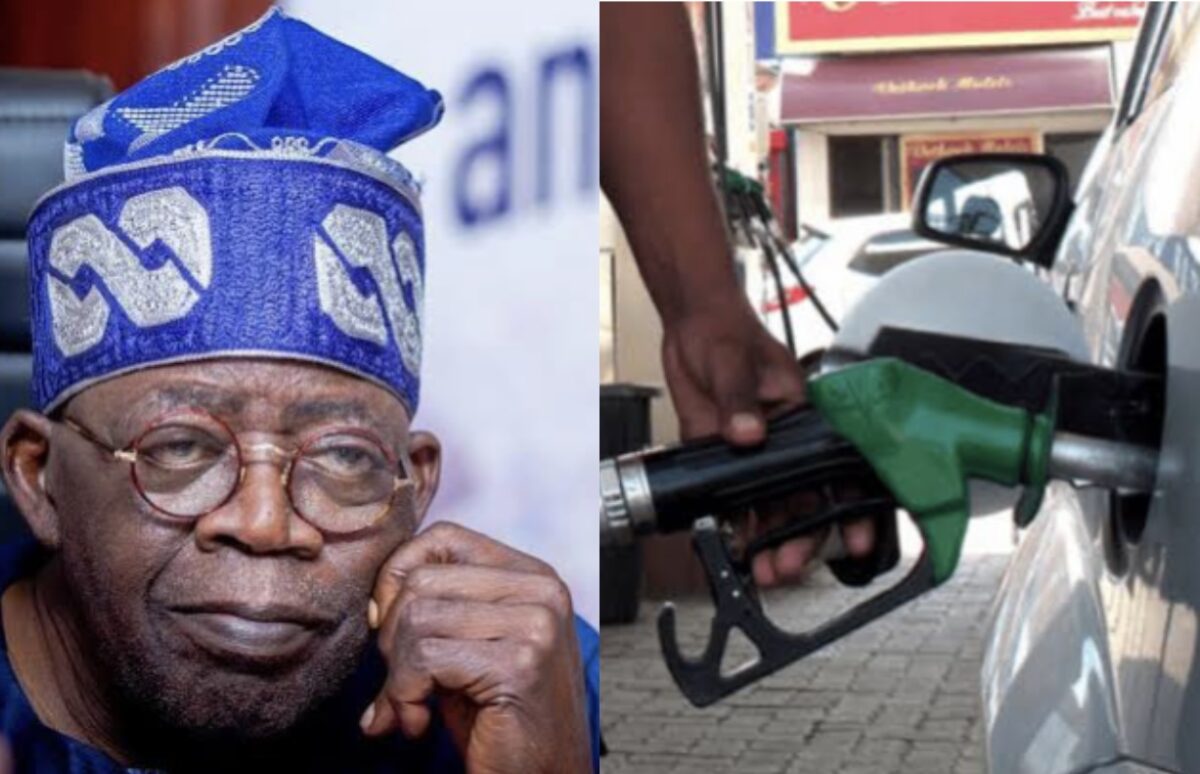
Nigerian Coalition of Civil Society Organisations, NCCSO, has faulted the directive of the federal government’s deferment of the 15% import duty on premium motor spirit (PMS) and diesel to the first quarter of 2026 describing it as strategic move to strangulate local refineries and also victory for foreign fuel importers and their local collaborators.
NCCSO expressed this displeasure on Thursday in press statement issued in Abuja by its National Spokesperson, Comrade Mustapha Ahmed, saying the deferment to first quarter of 2026 must be wrong and should be totally discouraged, with no further extensions.
They said the government must resist pressures from international traders and uphold its commitment to energy independence, calling on all relevant agencies to monitor imports to prevent market distortion during the deferment period.
According to the coalition, “The deferment is a temporary win for importers but a setback for Nigeria’s refining future. President Bola Tinubu must remain resolute and protect Nigeria’s local industries from external manipulation”, NCCSO said.
The statement further reads: “The NCCSO expresses deep concern over the Federal Government’s decision to defer the commencement of the 15% ad-valorem import duty on Premium Motor Spirit (PMS) and Diesel to the first quarter of 2026, as contained in the memo approved by President Bola Ahmed Tinubu, GCFR, on November 7, 2025.
“While the decision is presented as an administrative adjustment for “technical alignment,” it is in fact a strategic victory for foreign fuel importers and their local collaborators, whose agenda is to keep Nigeria dependent on imported products and frustrate the growth of local refineries such as Dangote Refinery and other modular plants ready for operation.
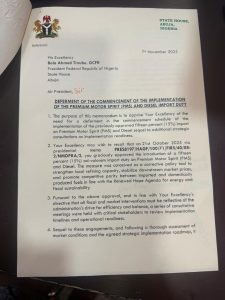
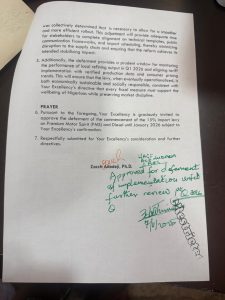
“The Federal Inland Revenue Service (FIRS), led by Dr. Zacch Adedeji, Ph.D., had earlier proposed the levy to promote local refining, stabilize market prices, and ensure competitive balance — in line with the Renewed Hope Agenda. However, this deferment gives importers time to flood the market with imported fuel, thereby undermining local production and discouraging investment”.