By Zheng Zongwen
Achieving gender equality and promoting the well-rounded development of women are important indicators of social progress.
In 1995, China successfully hosted the Fourth World Conference on Women in Beijing, where 189 countries and regions unanimously adopted the Beijing Declaration and Platform for Action, both landmark achievements in the global cause of gender equality.
On the occasion of the 30th anniversary of that landmark conference, China will soon hold the Global Leaders’ Meeting on Women in Beijing, which is expected to inject fresh momentum into the advancement of women’s development worldwide.
China’s commitment to women’s progress
Over the past three decades, China has earnestly implemented the Beijing Declaration and Platform for Action, translating the conference’s vision into concrete results and making significant contributions to improving the well-being of women both at home and abroad.
China has fully implemented the basic national policy of gender equality, incorporating women’s development into its overall governance agenda. It has established a comprehensive legal system to protect women’s rights and interests, with more than 100 laws and regulations in place.
Since 2012, the socialist path of women’s development with Chinese characteristics has demonstrated vibrant vitality and unique advantages. The living conditions and development opportunities for women have continued to improve, with notable achievements in poverty alleviation, education, science, and healthcare.
Today, 690 million Chinese women have joined the nation in achieving moderate prosperity. Females now account for more than half of university students, enjoying an average life expectancy exceeding 80 years, and make up 43 percent of the employed population. The World Health Organization has listed China among the world’s top 10 high-performing countries in maternal and child health.
In today’s China, the saying that “women hold up half the sky” has become a deeply rooted belief and a vivid reality. From female astronauts exploring outer space to leaders driving poverty alleviation efforts, from master craftswomen in key industries to outstanding athletes on the world stage, Chinese women have advanced in step with the country’s modernization drive. Through their perseverance, wisdom, and dedication, they have written inspiring stories of progress and contributed significantly to Chinese national development.
Promoting global cooperation and shared progress
China recognizes that the future of women around the world is closely interconnected, and that the progress of Chinese women is inseparable from that of women everywhere.
As a natural member of the Global South, China actively supports women’s poverty alleviation and development in other developing countries. The Juncao technology, affectionately called the “grass of happiness,” has created employment opportunities for women in over 100 countries. Chinese public welfare initiatives promoting women and children’s health, education, and access to water have been implemented across various regions, improving the lives of hundreds of millions of women.
China also attaches great importance to capacity-building and skills training for women. It has trained more than 200,000 women from over 180 countries and regions, launched women-focused projects worth $40 million across more than 20 countries, and organized over 100 training programs for women and children from the Global South.
China has deepened people-to-people exchanges on women’s issues. The All-China Women’s Federation alone maintains close exchange with more than 140 countries, over 420 women’s organizations and institutions, and UN agencies, building bridges of understanding, cooperation and friendship among women worldwide.
Championing multilateralism for women’s empowerment
The advancement of women’s causes depends on a peaceful and stable international environment, sustainable development, and the central coordinating role of the UN.
China firmly supports the UN’s leading role, faithfully fulfills its obligations under the Convention on the Elimination of All Forms of Discrimination against Women. Since 2015, it has contributed $20 million to UN Women. It has also partnered with UNESCO to establish the Prize for Girls’ and Women’s Education, worked to enhance women’s representation in the UN system, and helped foster an international environment conducive to women’s development.
Since 2012, China has hosted nearly 30 women-focused events under mechanisms such as APEC, the G20, BRICS, and the Shanghai Cooperation Organization, providing platforms for dialogue and cooperation on women’s empowerment.
China has actively guided the global women’s development agenda, promoting women’s participation in peace and security efforts, climate change responses, public health crises, and humanitarian challenges. It has advanced efforts to narrow the gender digital divide, ensuring that women and girls can share equally in the opportunities of the digital and AI-driven future.
Toward a shared future for women and humanity
Thirty years on, the message of the Fourth World Conference on Women continues to shape global progress toward gender equality. Yet challenges remain daunting: more than 600 million women face conflict and instability, nearly 2 billion women and girls lack access to social security, and violence, discrimination, and inequality persist.
Against this backdrop, the Global Leaders’ Meeting on Women in Beijing comes at a pivotal moment. It will help build consensus on solidarity and cooperation, pool collective strength to address shared challenges, and make new contributions to advancing women’s cause and the progress of human civilization.
(Zheng Zongwen is an observer of international issues.)
Blog
-

Starting a new from Beijing: Working together for shared future in global women’s development
-
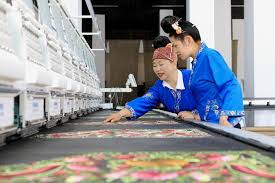
Injecting new momentum into global women’s development
By He Yin, People’s Daily
The Global Leaders’ Meeting on Women will be held in Beijing from Oct. 13 to 14. Chinese President Xi Jinping will attend the opening ceremony and deliver a keynote speech.
The meeting, co-hosted by China and UN Women, will gather heads of state and government leaders, parliamentary leaders, deputy prime ministers, ministerial officials, leaders of international organizations and friendly personnel from various continents.
The international community views this gathering as an opportunity to make it another historic milestone in advancing the global cause of women and to inject new momentum into efforts toward gender equality and the well-rounded development of women.
Achieving gender equality and promoting the well-rounded development of women are key indicators of social progress and a long-standing commitment of the Communist Party of China. They form an essential part of China’s vision to build a community with a shared future for humanity.
Thirty years ago, the Fourth World Conference on Women held in Beijing adopted the Beijing Declaration and Platform for Action, which became a landmark in the development of women’s cause. In 2015, at the Global Leaders’ Meeting on Gender Equality and Women’s Empowerment, Xi expounded China’s vision for promoting gender equality and women’s all-round development. Later, at a high-level meeting marking the 25th anniversary of the Fourth World Conference on Women, he proposed convening another World Conference on Women in 2025.
To implement this important initiative, China and UN Women will co-host the Global Leaders’ Meeting on Women in Beijing. Xi’s attendance and keynote speech will chart the course for global cooperation on women’s development and outline a brighter future for this shared cause.
China has made unique contributions to global women’s development. It has fully implemented the basic national policy of gender equality, incorporated women’s development into its overall governance agenda, and launched national action plans to promote women’s all-round advancement. Across all sectors, women are fully demonstrating their vital role as “half the sky.”
Today, 690 million Chinese women have joined the nation in achieving moderate prosperity. Females now account for more than half of university students, enjoying an average life expectancy exceeding 80 years, and make up 43 percent of the employed population.
The socialist path of women’s development with Chinese characteristics has demonstrated vibrant vitality and unique advantages, offering the world a vivid example of effective governance. It has also enriched human civilization and opened up new paths for progress.
Many international observers have commended China’s achievements in advancing women’s development, noting that they provide valuable insights and models for the rest of the world.
China is not only an advocate but also an active contributor to gender equality and women’s well-rounded development. Guided by the vision of building a community with a shared future for humanity, China has deepened exchanges and cooperation on women’s development, helping women, especially those in other developing countries, improve their lives and realize their potential.
The Juncao technology, which supports women’s employment in more than 100 countries, has been affectionately called the “grass of happiness.” Projects promoting women and children’s health, education, and water access have taken root in multiple countries, benefiting hundreds of millions of women.
China has trained more than 200,000 women from over 180 countries and regions, organized over 100 training programs for women and children in the Global South, and established the Global Exchange and Cooperation Center for Digital Empowerment of Women.
It has also carried out practical cooperation with multiple UN agencies, launched digital education and health education projects in Africa, and set up the Prize for Girls’ and Women’s Education with UNESCO.
From vision to action, China has been a strong driving force in the global cause of women’s development, demonstrating the commitment and responsibility of a major country.
Today, as the world faces profound transformation and uncertainty, the global cause of women’s development continues to encounter daunting challenges. Countries must work together to foster peace and stability, create environments conducive to women’s survival and growth, further empower women through exchanges and mutual learning.
The upcoming Global Leaders’ Meeting on Women is both timely and significant. The international community looks forward to this event serving as a platform for extensive consultation, joint contribution, and shared benefits, helping to build global synergy for solidarity and progress. Together, participants aim to accelerate the implementation of the Beijing Declaration and the Platform for Action as well as the 2030 Agenda for Sustainable Development, opening up broader prospects for the advancement of women around the world. -
Technology unlocks new possibilities for people with disabilities in China
By Dou Hao, People’s Daily
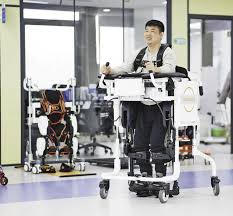
“Tighten the straps, hold the handles, push and up!” At the rehabilitation center of startup RoboCT located in Hangzhou, east China’s Zhejiang province, Mr. Wang, wheelchair-bound for more than a decade, slowly rose with the aid of an exoskeleton robot, drawing applause across the room.
Engineer Nie Peng, who also uses a wheelchair, shared the moment. A former auto mechanic, Nie sustained a spinal cord injury over ten years ago that left him paralyzed from the waist down. “When I realized I’d spend the rest of my life in a wheelchair, my world collapsed,” he recalled. Prolonged immobility led to muscle atrophy and complications such as infections and blood clots.
Physically disabled and emotionally withdrawn, Nie shut himself indoors like many paraplegic patients. “I was either sitting or lying down, and my health kept deteriorating,” he said.
RoboCT, founded in 2017 in AI Town at Hangzhou Future Sci-Tech City, develops and applies exoskeleton technologies. “An exoskeleton is not just an iron frame strapped to the body, but a wearable robotic system that integrates advanced information technology and mobile computing,” explained founder Wang Tian.
The device used by Mr. Wang employs leg-mounted force sensors to detect movement intention and then assists with powered motions that mimic a natural gait.
Nie’s daily routine includes working with colleagues to optimize exoskeleton comfort. He joined RoboCT the year it was founded after learning the company was recruiting testers. “I didn’t know what an exoskeleton was back then, but staying at home wasn’t an option. If my efforts could give other patients hope, it would be worth it,” he said.
He later joined the research and development team of RoboCT and vividly remembers his first assisted steps – tears streaming down his face. “Standing again gave me hope for life,” he said.
Today, Nie trains with the exoskeleton for at least an hour a day. offers design feedback, and, having taught himself mechanical and electronic skills, now maintains system data and manages equipment.
The team has shifted from hydraulic to electric drives, downsized battery packs, and refined strap design to improve usability. The latest model integrates a brain–computer interface that captures neural signals and, together with leg sensors, more precisely interprets user intent.
At the company’s rehabilitation center, people with disabilities can try or rent the equipment. Children with cerebral palsy use exoskeletons to correct gait, and seniors with limited mobility climb stairs with portable models. To date, RoboCT’s devices have been deployed in over 700 rehabilitation and eldercare institutions, serving more than 650,000 patients.
Nie said the Chinese society has become more inclusive and friendly to people with disabilities in recent years. “In Hangzhou, accessibility has improved greatly. On the metro, staff set up ramps to help us board safely. I love this city not just for its skyline and convenience, but because it genuinely supports vulnerable groups,” he said.
Recently, Nie tested the latest prototype using the brain-computer interface. As the technology matures, exoskeletons may soon move in sync with users’ thoughts. “From being unable to stand, to walking again, and to earning a living, I’ve grown more confident with each step,” he said. Looking ahead, he has a simple wish that exoskeletons made of flexible materials will be as light and easy to wear as clothing, enabling patients to walk freely.
“Ten years ago, I never dared to dream of standing again. Now, I can’t wait to see what the future holds,” said Nie. -
Chinese smart cleaning appliances gain popularity in North America
By Wang Weijian from People’s Daily, Deng Wei from People’s Daily Online
In Silicon Valley, where fast-paced lifestyles prevail among tech professionals, demand for smart cleaning appliances, particularly robotic vacuum cleaners, is rapidly increasing. Market forecasts project that the North American robotic vacuum cleaner market is expected to reach $9.9 billion by 2030, with an annual compound growth rate of about 18.8 percent. This positions North America as a major market for Chinese smart appliance manufacturers.
Earlier this year, Dreame Technology, a leading smart home appliance manufacturer headquartered in Suzhou, east China’s Jiangsu province, launched a robotic vacuum in North America. Within just two weeks of its debut, sales reached $1.7 million across all channels. During the spring promotion season, the company’s sales in the region surged 362 percent year on year, with robotic vacuum sales and floor washer sales increasing by 300 percent and 630 percent respectively.
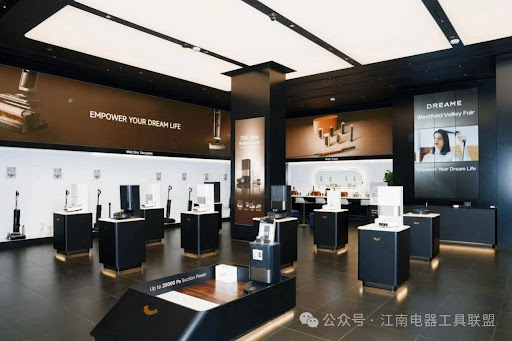
In June, Dreame Technology opened its sixth retail store in California, showcasing its latest innovations in smart cleaning and personal care. “I have great confidence in Chinese tech products,” remarked Sophia, a local consumer. “They offer both high-quality and practical software support.”
Dreame’s success stems from years of R&D aimed at solving common user pain points. For example, the conventional round design of robotic vacuums limited their ability to clean corners and tight spaces. “In 2022, we decided to address this challenge,” said Meng Jia, president of Dreame’s robotic vacuum division.
At first, the team tried changing the machine’s body from round to square. But during testing, the robot frequently bumped into obstacles and struggled with complex layouts. Another attempt involved extending the cleaning pad beyond the machine’s frame, but this design compromised aesthetics.
After testing over 30 designs, the team introduced a breakthrough solution: a robotic vacuum equipped with a miniature AI-powered mechanical arm that extends and retracts to clean hard-to-reach areas. The innovation propelled sales, with over one million units sold in 2023 alone. “While foreign brands may take five years to release a new model, we can do so every 10 months,” Meng added.
Innovation is also driving growth at Beatbot, another Suzhou-based firm focused on robotic solutions for pool cleaning. Founded in 2022, the firm has expanded its presence in North America via online and offline channels, achieving strong sales through platforms like Amazon. Traditional pool-cleaning robots are often limited in functionality and convenience. To address this, Beatbot developed a system allowing robots to ascend pool walls and float to the surface by adjusting buoyancy through controlled air intake, eliminating the need for manual retrieval, explained Beatbot founder Wang Shengle.
The company’s first-generation robot launched in early 2024 and generated nearly 400 million yuan in annual sales despite a premium price. Its second-generation model, equipped with AI capabilities and priced above $3,000, has seen strong demand in both North America and Europe. A third-generation model is currently under testing, promising enhanced intelligence, efficiency, and autonomous operation.
Beatbot now holds more than 100 invention and international patents. “In global competition, sustained innovation is the only way forward,” Wang said. “With core technologies as our competitive edge, we remain well-positioned for long-term success.” -

Father and son devoted over 30 years to protecting the Yunnan golden hair monkeys
By Yang Wenming, People’s Daily
In the primeval forests of southwest China’s Yunnan province, at altitudes between 2,500 and 4,700 meters, lives a rare and enchanting species – the black-and-white snub-nosed monkey, also known as the Yunnan golden hair monkey. With its distinctive upturned nose, pink lips, and large, expressive eyes, it is known as the “elf of the snowy mountains” and is one of the most endangered primates in the world.
From the earliest efforts to locate and observe these elusive animals, to initiatives in habitat restoration, scientific monitoring, and routine patrols, Chinese conservationists have spent decades advancing the species’ recovery.
In Xiangguguqing, part of the Baima Snow Mountain Nature Reserve located around 3,000 meters above sea level, even young hikers struggle with the altitude. Yet 70-year-old Yu Jianhua continues his patrols through the mountainous terrain.
Once regarded as the top hunter in Tachen township of Weixi Lisu autonomous county in Diqing Tibetan autonomous prefecture, Yunnan province, Yu gave up hunting at age 45 to become a forest ranger. His son, Yu Zhonghua, later returned from migrant work to join him. Together, they have spent over 30 years protecting the Yunnan golden hair monkey.
Today, weekend visitors to Xiangguguqing might glimpse the monkeys foraging quietly in the forest, while tourists observe from a respectful distance – a picture of harmony between humanity and nature. “Thirty or forty years ago, even we struggled to spot them, let alone tourists,” Yu Jianhua recalled.
The turning point came in 1983 with the establishment of the Baima Snow Mountain Nature Reserve. Recruited by the county forestry bureau, Yu Jianhua’s first assignment was to find the monkeys – no small task in such vast, rugged terrain. He crossed countless ridges and rivers, dismantled traps, and rescued injured wildlife along the way.
“It was April 1995 when I began searching. I didn’t see a monkey troop until March 1996 – more than a year later, and even then from about a kilometer away,” Yu Jianhua said.
Still too distant for meaningful observation, Yu persisted. It took nine more years to gain the monkeys’ trust. By 2005, he was able to approach within ten meters.
“Once I could see what trees they roosted in, what they ate, how they groomed each other, I finally understood how to create the right conditions for scientific protection,” he explained.
With his continued presence, additional monkey troops began settling in Xiangguguqing. By 2008, several family groups had established themselves, enabling long-term research and education efforts.
Inspired by his father, Yu Zhonghua also joined the conservation effort. “I wanted to understand what kept him here all these years,” he explained.
At its core, the answer was simple: love. Despite daily treks spanning dozens of kilometers and foraging for wild vegetables, father and son viewed their work as an outdoor adventure.
Initially, the younger Yu simply followed in his father’s lead-tracking footprints and identifying droppings. Over time, he developed a deep interest in local biodiversity, filling photo albums with rare species. When he encountered unfamiliar plants or animals, he turned to books and local knowledge. Through self-study, he learned the scientific names of many species and became known as a “local expert.”
Building on his father’s legacy, Yu Zhonghua expanded the scope of work to include population monitoring, biodiversity surveys, and community co-management. In 2013, he joined the Tachen management station of the Baima Snow Mountain Nature Reserve, where he now trains rangers using practical experience and scientific methods.
Their long-term observations have generated valuable data for researchers, shedding light on previously unanswered questions.
Over the past decade, the Xiangguguqing monkey troop has welcomed nearly 150 newborns. While the troop’s size remains stable at 50-70 individuals, growth is managed carefully. “When numbers exceed 70, we have to split the troop to maintain balance,” Yu Zhonghua explained.
Rangers spend entire days in the forest, tracking individual monkeys to ensure successful integration into new groups. So far, more than 80 monkeys have adapted to these new arrangements. Nationally, the population of Yunnan golden hair monkeys has grown from around 1,000 to 1,500 in 1996 to nearly 4,000 today.
With new video monitoring systems, Yu Zhonghua can now observe the monkeys from his office. “But field visits remain essential. Only in the forest can you truly understand what’s happening,” he said. -

China scales up urban recycling in drive for ‘zero-waste’ cities
By Wu Weizheng, People’s Daily
In Tianjin Port Free Trade Zone, north China’s Tianjin municipality, the first 20 smart recycling stations built by a subsidiary of China Resources Recycling Group Co., Ltd., have recently entered operation.
These multifunctional “smart cabins” combine resource recovery, community services, and emergency power supply, improving front-end urban waste collection and supporting the development of zero-waste cities.
Across China, localities are actively piloting distinctive models to turn waste into value and expand recycling.
The term “zero waste” does not mean that solid waste will cease to be generated, nor can it be eliminated entirely. Rather, it represents a governance approach centered on continuous source reduction and the systematic promotion of recycling and reuse – an essential pathway for advancing green development.
Turning waste into value requires removing bottlenecks across the recycling chain and converting materials into productive assets. As the adage suggests, waste is simply a resource in the wrong place. The practical question is how to realize resource circulation at scale.
One way is technological innovation. For instance, Moon-Tech, an environmental protection technology firm based in Yantai, east China’s Shandong province, has developed a technology that captures 97 percent of carbon dioxide in exhaust gas, and the resulting high-purity carbon dioxide extracted can be applied in food processing and other industries.
By converting waste into resources and consumption into added value, such innovations enhance resource efficiency and create new growth opportunities for enterprises.
Another approach is scenario-based innovation. At a new energy company in southwest China’s Chongqing municipality, retired power batteries undergo health testing, dismantling, and remanufacturing to become standardized battery packs. These packs are then applied in telecommunications base stations, smart streetlights, and other scenarios. Materials that are obsolete in one application can become valuable assets in another.
From technology to application scenarios, prioritizing efficient resource use and anchoring innovation enables idle or underutilized resources to be redeployed for greater value and broader public benefit.
Policy and regulatory frameworks are also critical to stimulating market vitality and transitioning recycling from being primarily government-driven to market-driven. In Shenzhen, south China’s Guangdong province, guidelines for the construction of recycling stations encourage companies to upgrade or build high-standard sorting centers and transfer stations, ensuring recyclables are properly collected and efficiently processed.
Policy instruments not only provide safeguards for implementation but also help shape public behaviors. Shanghai, for example, has issued a regulation on zero-waste city development that promotes wider public participation in zero-waste lifestyles. As a result, the city’s household waste-sorting compliance rate has remained above 95 percent, with an overall recycling rate of 43 percent. Well-designed policies can foster a culture of sustainability and support low-carbon living.
Effective green development further depends on coordinated governance. Ecological and environmental challenges do not conform to administrative boundaries. In construction waste management, for example, strict controls in one locality alongside law enforcement in another can lead to cross-regional dumping. Sustained progress from municipal zero-waste pilots to inter-regional collaboration requires systemic thinking and stronger coordination among government departments, regions, and policies.
By intensifying technological innovation, strengthening policy design and enforcement, and enhancing cross-regional coordination, the journey of building zero-waste cities can be transformed into a process that cultivates and expands green productivity while improving people’s sense of gain and fulfillment. -
Upholding multilateral trading system and advancing global economic governance reform
By Jiang Bo, People’s Daily
At a high-level meeting on the Global Development Initiative (GDI) recently held by China at the United Nations Headquarters in New York, China announced that it will not seek new special and differential treatment available to developing countries in current and future negotiations at the World Trade Organization (WTO).
WTO Director-General Ngozi Okonjo-Iweala praised this decision as a critical moment for the WTO, saying that it demonstrates China’s commitment to building a more balanced and equitable global trading system. She emphasized that the move provides strong momentum for WTO reform, helping to make the organization more adaptive and effective.
The multilateral trading system with the WTO at its core is facing severe challenges. Calls to safeguard the multilateral trading system have grown stronger across the international community, alongside rising expectations for the WTO to play a more active role.
Since joining the WTO in 2001, China has achieved rapid economic and social development, transforming into the world’s second-largest economy, top merchandise trader, and second-largest services trader. Associate Professor Hu Jianguo(Nankai University School of Law) notes that China’s expanding economic influence now positions it to play a more prominent role in safeguarding the multilateral trading system, participating in WTO reform, and shaping international economic and trade rules.
Ji Wenhua, professor at the School of Law, University of International Business and Economics, explained that special and differential treatment is an institutional arrangement under the WTO framework granted to developing members. As the world’s largest developing country, China has strictly observed WTO rules and fully honored its accession commitments since acceding to the organization. On this basis, Ji said, continuing to exercise its rights in accordance with WTO rules is consistent with international law and the principles of the WTO.
Amid rising unilateral tariffs and trade conflicts that undermine the multilateral trading system, disrupt global trade order, and heighten economic instability, Ji adds that China’s announcement can help break deadlocks on development issues at the WTO, accelerate institutional reform, and boost developing countries’ confidence in the multilateral trading system.
Han Yong, director general of the Department of WTO Affairs at China’s Ministry of Commerce, reaffirmed three guiding principles that remain unchanged: China’s status as a developing member, its commitment to defending the legitimate rights of developing countries, and its support for trade and investment liberalization and facilitation.
Tu Xinquan, dean of the China Institute for WTO Studies at the University of International Business and Economics, explained that this decision, while refraining from seeking additional differential treatment, does not alter its legal status as a developing country within the organization. “China has always been, and will always remain, a member of the Global South, standing together with fellow developing countries,” said Tu.
He added that these three “unchanged” principles represent China’s solemn commitment to safeguarding the multilateral trading system and its concrete actions to uphold the rightful place of developing countries in global governance.
Ji Wenhua further clarified that China’s position papers and policy statements to the WTO have clearly defined the scope and application of this decision.
First, the decision applies solely within the WTO framework and does not set a precedent for, or affect China’s status and treatment in, other international organizations or treaties.
Second, it concerns only whether China seeks special and differential treatment in negotiations, and does not change its developing-country status, which remains consistent with WTO rules, practice, and China’s stage of development.
Third, the decision applies only to current and future negotiations and does not affect, nor retroactively apply to, special and differential treatment that China already enjoys or has requested in ongoing negotiations.
Accordingly, assertions that this decision means China has become a developed country within the WTO or is no longer a developing country are incorrect and misleading.
In recent years, China has firmly defended the multilateral trading system, actively participated in WTO reform and the adjustment of international economic and trade rules, and worked to make the global economic governance system more just and equitable.
“At a time when protectionism and unilateralism are spreading, and some major countries disregard international rules and impose unilateral tariffs, the WTO’s authority and effectiveness face grave challenges,” Ji said,
At this critical juncture, Ji argued, China’s pragmatic actions reject zero-sum thinking and demonstrate its sense of responsibility for advancing global development. This move underscores China’s commitment to safeguarding the international economic and trade order, and highlights its leading role in global governance. -
Reviving political prospects for implementing two-State solution
By Huan Yuping, People’s Daily
During the 80th session of the UN General Assembly High-level Week, the peaceful settlement of the Palestinian question and the implementation of the two-State solution became the focus of international attention.
France, Monaco, Belgium, Luxembourg, Malta, and Andorra have recognized the State of Palestine, joining earlier acknowledgments by the United Kingdom, Canada, Australia, and Portugal. This brings total recognition to 157 of the UN’s 193 member states.
While this diplomatic surge injects momentum into a strained political landscape, recognition marks a beginning – not an endpoint. Converting diplomatic symbolism into political progress requires greater resolve and concrete steps that rebuild a credible pathway to two states.
At the heart of the two-State solution is the coexistence of Palestine and Israel as sovereign states. The prevailing international view remains clear: the only viable resolution is an independent Palestinian state based on the 1967 lines, with East Jerusalem as its capital.
Despite Palestine’s 1988 declaration of statehood and subsequent recognition by most UN members, decades of hesitation, particularly among some Western nations, have marginalized the issue. The latest round of violence is, in part, a consequence of that neglect.
Today, the prolonged conflict has led to an unprecedented humanitarian catastrophe. In Gaza alone, over 65,000 lives have been lost, nearly half of them women and children, and 2 million people face a profound survival crisis. At the General Assembly, numerous countries described ongoing events as “genocide in Gaza,” while consensus around the urgency of implementing the two-State solution has widened.
“Recognizing the State of Palestine is support for the Palestinian people’s right to self-determination. It is not a gift but a legitimate right,” said Riyad Mansour, the permanent observer of the State of Palestine to the UN. Annalena Baerbock, president of the 80th session of the UN General Assembly, noted that the international community is working on a practical and irreversible roadmap to achieve the two-State solution.
With war still raging, civilians cannot be protected and political settlement remains elusive. The immediate priority must be a comprehensive ceasefire in Gaza, pursued with the greatest sense of urgency. Continued military escalation is claiming innocent lives every day. The weaponization of humanitarian supplies and the militarization of their distribution – both egregious violations of international law – are eroding the foundations of a two-state solution and directly imperiling regional stability.
The international community, especially states with significant influence over the parties concerned, must fulfill their responsibilities by upholding fairness and justice and actively facilitate negotiations. The UN Security Council and humanitarian agencies must do their part to create conditions conducive to implementing the two-state solution.
A political settlement remains the only viable path forward for the Palestinian-Israeli conflict. Yet the path has been obstructed by the partiality of certain countries. Driven by narrow geopolitical calculations, some countries have taken persistently biased positions that blocked the implementation of the two-State solution, aggravated tensions, and undermined international law and the authority of multilateral institutions.
As New York Magazine observed, the postwar legal order established to prevent the atrocities of World War II has failed, and worse, the U.S., which nominally took on the responsibility of preserving that order, is abetting the killing and abandoning any pretense of adhering to the law.
Egypt’s Al-Ahram likewise argued that U.S. vetoes at the UN and ongoing military support for Israel have been major reasons the two-state process remains stalled.
The two-State solution concerns the bottom line of international justice and must not be undermined. Security cannot be zero-sum; no nation can build its safety upon another’s insecurity. Statehood is the inalienable right of the Palestinian people – no less than it is for Israelis – and there can be no double standards on this question.
Given the historical injustices endured by Palestinians, delay is indefensible and inaction inexcusable. On matters bearing on the future and destiny of the Palestinian people, no country should have a veto.
The Palestinian question has always been central to the Middle East issue. Achieving lasting peace between Palestinians and Israelis requires justice for the Palestinian people and the full implementation of the two-state solution. Only this can break the cycle of conflict and establish durable peace.
Gaza and the West Bank are inseparable parts of Palestinian territory. Any post-war governance or reconstruction arrangement must respect the will of the Palestinian people, uphold their legitimate national rights, and ensure that the principle of “Palestinians governing Palestine” is realized in practice.
All parties should support the Gaza reconstruction plan endorsed by the emergency Arab summit and the emergency ministerial meeting of the Organization of Islamic Cooperation, and support the Palestinian Authority in exercising effective governance across all Palestinian territories, including Gaza and the West Bank.
The international call for implementing the two-State solution has reached an unprecedented level, reflecting the mainstream will of the international community. Arab League Secretary-General Ahmed Aboul-Gheit said the recent wave of recognition “corrects a historical error that has persisted for years.”
The opportunity must be seized to forge a broader international consensus and a more unified position. On the basis of recognizing the State of Palestine, the international community should support Palestine’s bid for full UN membership, develop practical roadmaps to implementation, and reject unilateral measures that erode the two-state foundation.
The distance from recognizing the two-State solution to realizing it remains long and difficult. But history will ultimately bend toward justice, and the seeds of peace will break through the soil of hatred. The international community should muster greater resolve, work together to revive the political prospects for implementing the two-State solution, and strive for a comprehensive, just, and lasting settlement of the Palestinian question at an early date. -
China firmly promotes common values of humanity
By He Yin, People’s Daily
The General Debate of the 80th session of the UN General Assembly concluded onon Sept. 29. Marking the 80th anniversary of the organization, this year’s theme – “Better together: 80 years and more for peace, development and human rights” – underscores the global aspiration for peace and development, fairness and justice, democracy and freedom.
In his speech at the General Debate of the 70th Session of the UN General Assembly in September 2015, Chinese President Xi Jinping put forward the idea of “common values of humanity” for the first time to the world.
“Peace, development, equality, justice, democracy and freedom are common values of all humankind and the lofty goals of the United Nations,” Xi said. “Yet these goals are far from being achieved; therefore we must continue our endeavors.”
Since then, Xi has on many occasions emphasized the importance of promoting the common values of humanity, advancing a series of new ideas and proposals that offer strong intellectual guidance for building a community with a shared future for humanity.
Over the past decade, this vision has drawn strong appeal across cultural and national boundaries, establishing a broad consensus on core human values. As the world enters a new period of turbulence and transformation, marked by persistent global challenges, the need for common values becomes more urgent. Some countries remain obsessed with the law of the jungle and the practice of the strong bullying the weak, pursuing power politics and zero-sum competition, which have further exacerbated global instability and inequality.
In the face of profound changes unseen in a century and the pressing challenges of the time, the common values of humanity embrace the diversity of civilizations and respect the paths chosen by people of different countries. They reaffirm that peace and development are universal goals, fairness and justice are common ideals, and that democracy and freedom are collective aspirations. These principles provide essential moral guidance for addressing global challenges.
The growing international consensus reflects the strength and relevance of these values. As global challenges become increasingly complex, there is broad recognition that they require collective wisdom and coordinated action. Many argue that achieving world peace hinges on unity, cooperation, mutual understanding, and respect among nations. Others emphasize that only by deepening friendship and understanding can the international community achieve peace, stability, and development.
An increasing number of global voices have come to recognize that peace and development are the only viable path out of conflict and confrontation and the foundation of global security. Fairness and justice are essential to narrowing development disparities and protecting the rights and interests of the Global South, Meanwhile, democracy and freedom are prerequisites for enhancing mutual learning among civilizations and ensuring equal development for all.
Facts have proven that only by upholding the right values can humanity pave the way for win-win cooperation and shared prosperity.
China is a firm advocate and active practitioner of the common values of humanity. Guided by the global vision of the Communist Party of China, the country has proposed the Global Development Initiative, the Global Security Initiative, the Global Civilizations Initiative, and the Global Governance Initiative. It has been upholding true multilateralism, advancing the building of an open world economy, promoting greater democracy in international relations, facilitating exchanges and mutual learning among diverse civilizations, and working to make global governance fairer and more equitable.
Through its proposals and actions, China has not only contributed its wisdom but also demonstrated its sense of mission as a responsible major country. These efforts have illuminated the bright prospects of the common values of humanity.
Committed to the future of humanity and the well-being of all people, China stands ready to work with the international community to firmly promote the common values of humanity and to advance the building of a community with a shared future for humanity. -
China’s commitment bolsters global confidence in climate governance
By He Yin, People’s Daily
On Sept. 24, Chinese President Xi Jinping delivered video remarks at the United Nations Climate Summit held in New York, putting forward three proposals on advancing global climate governance to firm up confidence, live up to responsibilities, and deepen cooperation. He also announced China’s new Nationally Determined Contributions (NDCs).
At this critical juncture in global climate governance, China’s vision and solutions exemplify the role of a responsible major country and significantly boost international confidence in advancing the climate agenda.
This year marks the 10th anniversary of the Paris Agreement, a pivotal year for countries to submit their new NDCs. At this important moment, China is determined to be a contributor to and doer in advancing global climate governance.
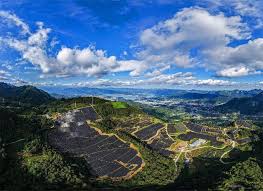
In his remarks, Xi announced to the world that China will, by 2035, reduce economy-wide net greenhouse gas emissions by 7 to 10 percent from peak levels, striving to do better; increase the share of non-fossil fuels in total energy consumption to over 30 percent; expand the installed capacity of wind and solar power to over six times the 2020 levels, striving to bring the total to 3,600 gigawatts; scale up the total forest stock volume to over 24 billion cubic meters; make new energy vehicles the mainstream in the sales of new vehicles; expand the National Carbon Emissions Trading Market to cover major high-emission sectors; and basically establish a climate adaptive society.
These targets and measures represent China’s maximum efforts in setting goals consistent with the requirements of the Paris Agreement. They have quickly drawn international attention and broad commentary. Many observers regard the commitments as a landmark step and expect China to sustain momentum on climate action. Some argue that the move has reinvigorated global confidence in emissions reduction, and China’s clean energy boom will reshape the global economy.
Overall, analysts believe that China is accelerating its green transition, has the capacity to meet its goals, and is injecting renewed confidence into global climate governance.
Climate change is a shared challenge to the common interests of all humanity. Effective response requires collective wisdom, mobilized resources, and concrete global action.
To advance global climate governance, the world must firm up confidence. Green and low-carbon transition is the trend of the times. From Eurasia to the Americas, from the African highlands to the Pacific island countries, a broad international consensus has formed around pursuing sustainable development and tackling climate change together.
Green transition is both the only path to address climate change and a new driver of economic and social development. Looking ahead, the international community should stay focused on the right direction, remain unwavering in confidence, unremitting in actions and unrelenting in intensity, and push for formulation and delivery on NDCs, with a view to providing more positive energy to the cooperation on global climate governance.
To advance global climate governance, the world must live up to responsibilities. There is only one Earth for humanity. Protecting the environment and promoting sustainable development is a shared responsibility of all countries.
At present, achieving the goals of the Paris Agreement is challenged by insufficient implementation of NDCs, funding shortfalls, and delays in technology and capacity building. Fairness and equity should be upheld and the right to development of developing countries fully respected. The global green transition should serve to narrow rather than widen the North-South gap. Countries need to honor the principle of common but differentiated responsibilities, whereby developed countries should take the lead in fulfilling emission reduction obligations and provide more financial and technological support to developing countries.
To advance global climate governance, the world must deepen cooperation. The world today faces not only deficits in development and in green transition, but also deficits in trust and in governance. To overcome these deficits, countries must join hands to deepen cooperation, pool strengths for green development, and address the challenges of climate governance, instead of creating obstacles in green development and cooperation.
The world now faces a huge demand for green development. It is important that countries strengthen international coordination in green technologies and industries to address the shortfall in green production capacity and ensure free flow of quality green products globally, so that the benefits of green development can reach all corners of the world.
Addressing climate change is both an urgent and a long-term task. The trend of green and low-carbon transition is irreversible. By firming up confidence, living up to responsibilities, and deepening cooperation, all parties can work together to realize the beautiful vision of harmony between humanity and nature and safeguard the shared planet.