By He Yin, People’s Daily
China has risen to the 10th position in the global innovation ranking for 2025, up one spot from the previous year, marking its first entry into the top 10, according to the World Intellectual Property Organization (WIPO). Since 2013, China has risen 25 places, making it one of the fastest-rising economies in innovation.
This progress reflects steady advances in basic research, breakthroughs in key and core technologies, leadership in frontier fields such as artificial intelligence and renewable energy, and the deep integration of digital and real economies. These achievements stem from China’s innovation-driven development strategy and its efforts to build a science and technology powerhouse.
“Reaching the global top 10 highlights China’s prominent role as a global leader in innovation,” said WIPO Assistant Director General Marco Aleman.
Recent milestones include the regular operation of the Tiangong space station, the Chang’e-6 mission’s return of the first samples from the far side of the moon, and the Haidou-1 submersible’s descent to more than 10,000 meters below the sea surface. Major scientific and technological advances – from large-scale 5G deployment, BeiDou’s global positioning services to brain-computer interface applications – demonstrate how scientific and industrial innovation are converging, with benefits reaching millions of households.
China now has the world’s largest R&D workforce and has led globally in both international journal publications and Patent Cooperation Treaty applications for five consecutive years, reinforcing its position as a global innovation hub.
Robust policy support and a dynamic innovation ecosystem underpin this growth. China has prioritized basic research, encouraged breakthroughs in key technologies, and enhanced its national innovation system to strengthen scientific self-reliance. In 2024, R&D investment exceeded 3.6 trillion yuan (about $500 billion), ranking second in the world, with 249.7 billion yuan invested in basic research.
Supportive policies – ranging from tax incentives and public procurement to enterprise participation in national R&D projects – have catalyzed corporate innovation. China is now home to over 500,000 high-tech enterprises. In 2024, 524 companies from the Chinese mainland were listed among the world’s top 2,000 industrial R&D investors, injecting sustained momentum into the economy.
China’s innovation appeal is underpinned by its commitment to openness and international cooperation. As a builder and contributor to the global innovation network, China actively promotes open scientific and technological cooperation for the common good, expands platforms for international exchange, strengthens intellectual property protection, and advances more proactive and inclusive talent policies, accelerating the development of a globally competitive open innovation ecosystem.
To date, China has established sci-tech cooperation relationships with more than 160 countries and regions and signed 119 intergovernmental sci-tech cooperation agreements. Through the Belt and Road Science, Technology and Innovation Cooperation Action Plan and the establishment of “Belt and Road” joint laboratories, China is paving new pathways for collaborative innovation and reinforcing its role as a key pillar of global innovation.
As noted by Wirtschaftswoche, a German weekly business news magazine, China’s technological capabilities and diversified demand for foreign investment have become a source of confidence for global investors.
Innovation remains the primary engine of development. With accelerating momentum, China will inject new vitality into the world economy, collaborate with other countries to foster a more open and inclusive global innovation network, and contribute greater strength to addressing global challenges and advancing peace and development.
Blog
-
China accelerates innovation to drive high-quality development
-
Maiden voyage completed on the China-Europe Arctic container express route
By Han Xin, Gu Chun, Dou Hanyang, People’s Daily
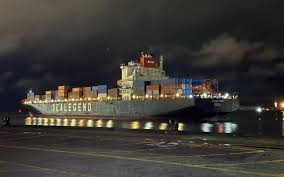
In the early hours of Oct. 14 (Beijing time), the “Istanbul Bridge,” operated by Sea Legend Line Limited, docked at the Port of Felixstowe, the UK’s largest container port, marking the successful completion of the maiden voyage of the China-Europe Arctic container express route.
The vessel carried 4,890 containers loaded with photovoltaic modules, energy storage systems, and cross-border e-commerce goods. Departing from Ningbo-Zhoushan Port, it navigated the Arctic Northeast Passage, completing the journey to Europe in just 20 days.
“This is the world’s first container route through the Arctic specifically designed for cross-border e-commerce and high value-added goods,” said an official with China’s Ministry of Transport. “It is also a major achievement in the development of the ‘Ice Silk Road’ under the Belt and Road Initiative,” the official added.
The new route provides faster and more sustainable logistics solutions for China’s high-end manufacturing, cross-border e-commerce, and new energy industries. Compared with traditional routes, the Arctic Express reduces travel time by up to 22 days and lowers carbon emissions per voyage by approximately 50 percent, according to a representative from Ningbo Zhoushan Port Group.
A significant portion of the inaugural shipment included lithium battery energy storage systems and auto parts for new energy vehicles. “Previously, shipping through the Suez Canal took about 40 days. Now, deliveries arrive in as little as 18 days, improving quality control,” said Zhou Chujing, logistics and procurement manager at Sigenergy, a company focusing on developing cutting-edge home and business energy solutions.
Zhou also highlighted that the Arctic’s naturally low temperatures enhance the stability of battery shipments and other sensitive goods. The improved efficiency also contributes to cost savings across the supply chain.
“Our inventory levels can be reduced by up to 40 percent, significantly lowering capital costs and enhancing supply chain responsiveness, said Li Xiaobin, chief operating officer of Sea Legend Line Limited. Zhang Guanghui, warehouse manager at Yinghe Express, a logistics firm based in east China’s Zhejiang province, noted that shipping costs via the Arctic Express are approximately 40 percent lower than those of the China-Europe freight train, further enhancing the company’s competitiveness in European markets.
Beyond logistics, the route enhances global connectivity for Ningbo-Zhoushan Port. “With this launch, the port now links the Pacific, Atlantic, Indian, and Arctic Oceans, completing its global route network,” said Sun Xuejun, chairman of Zhejiang Seaport Logistics Group Co., Ltd.
In the first eight months of this year, China-EU trade reached 3.88 trillion yuan, up 4.3 percent year on year and accounting for 13.1 percent of China’s total foreign trade.
Industry experts suggest the Arctic Express, as the third maritime corridor between China and Europe, will deepen trade ties, particularly in high-end manufacturing and the new energy sector, and contribute to the dual circulation strategy by strengthening domestic and international economic integration.
Looking ahead, the Arctic Express will operate from July to November each year, with plans to deploy larger vessels and increase voyage frequency to further enhance trade connectivity. -
Jingdezhen’s ancient ceramics “gene bank” decodes the cultural legacy of Chinese porcelain
By Yang Yanfei, People’s Daily
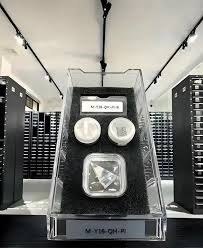
At the Jingdezhen Imperial Kiln Institute, east China’s Jiangxi province, a vast “gene bank” of ancient ceramics is unlocking the technological and cultural codes of porcelain production in China. Inside the facility, rows of transparent drawers line sleek grey iron cabinets, each containing ceramic samples dating from the late Tang Dynasty (618-907) to the Republic of China (1912-1949). Nearby, robots operate steadily, fabricating new ceramic specimens for ongoing research.
“This ceramic gene bank is something archaeologists once only dreamed of,” said Weng Yanjun, head of the Jingdezhen Imperial Kiln Institute, explaining that in the past, identifying and authenticating unearthed artifacts depended heavily on expert intuition and experience.
The establishment of the gene bank has fundamentally transformed this process, enabling a standardized specimen repository and unified data system to support scientific authentication and academic research.
Renowned as China’s ancient porcelain capital, Jingdezhen boasts an extraordinary ceramic heritage. Since the late 1970s, the institute – formerly known as the Jingdezhen Institute of Ceramic Archaeology – has uncovered more than 20 million kiln relics through sustained archaeological efforts. Among these are significant quantities of imperial porcelain shards from the Ming and Qing dynasties (1368-1911), characterized by meticulously documented excavation contexts and rich typological diversity – cornerstones of the gene bank’s authority.
In June 2022, the institute collaborated with Tsinghua University, the Palace Museum in Beijing, and the Shanghai Institute of Ceramics under the Chinese Academy of Sciences to initiate the creation of standardized ceramic reference samples and a knowledge-graph-based database.
“We’ve built 3D digital models of representative specimens alongside their reconstructed forms, incorporating archaeological records, physical data, condition reports, and analytical results,” Weng explained.
Holding a shard from a late Tang Dynasty celadon bowl, Weng demonstrated how a simple QR code scan provides comprehensive information, including form, clay composition, glaze, decoration, and dimensions. So far, over 3,000 curated samples have been digitized, yielding nearly 1.2 million individual ceramic data points.
“The gene bank aims to harness science and technology to decode the embedded knowledge in ancient ceramics and apply it to modern innovation,” said Weng. The gene bank now serves multiple purposes, facilitating historical reconstruction, revival of traditional craftsmanship, artifact authentication, cultural tourism, and international cultural exchange.
Recently, a Dutch ceramic collector consulted the gene bank to identify a dragon-patterned porcelain plate he had acquired years ago. Despite extensive testing in European laboratories, the piece’s origin remained uncertain.
“We selected 17 comparative samples spanning from the Xuande period of the Ming Dynasty to the Guangxu period of the Qing Dynasty,” Weng recalled. Analysis revealed the piece to be a product of a late-Qing folk kiln – a determination made possible by what Weng likened to a “porcelain DNA test.”
In collaboration with Peking University, the institute also conducted advanced research on blue-and-white porcelain during Yuan and Qing dynasties (1271-1911). Leveraging submicron-scale analysis, researchers confirmed the coexistence of imported and domestic raw materials beginning in the Xuande period – a major breakthrough in ceramic studies.
Furthermore, gene bank data has enabled the faithful reproduction of iconic artifacts, such as the Ming Yongle Blue-and-White Cup with Loop Handle, by providing detailed insights into shape, ornamentation, glaze chemistry, and inscription styles. “Recreating ancient porcelain techniques is only possible with a solid data foundation,” Weng emphasized.
To promote creative industries, the institute has released open-source data on artifacts like the “Ducktor Sui,” a duck-shaped ceramic incense burner created in the Ming Dynasty. Drawing from its structural and chemical attributes, a range of innovative cultural products has been developed to wide acclaim.
“By opening access to the gene bank, we are encouraging public engagement and supporting the creative transformation of traditional culture,” Weng concluded. “In doing so, we breathe new life into the timeless art of Chinese porcelain.” -
Holiday travel boom reflects resilience and vitality of Chinese economy
By He Yin, People’s Daily
China’s recent National Day and Mid-Autumn Festival holiday underscored the strength of its consumer economy, with a surge in tourism and spending signaling robust domestic demand and high-quality economic development.
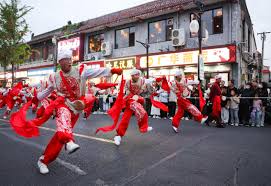
According to China’s Ministry of Transport, cross-regional passenger trips reached approximately 2.43 billion nationwide, averaging 304 million trips per day, rising 6.3 percent year-on-year and hitting a record high. From packed highways and high-speed trains to bustling airports and cruise terminals, the sheer scale of mobility highlighted China’s dynamic infrastructure and population movement.
Outbound travel also flourished, with countries such as Singapore, Thailand, Malaysia, Kenya, South Africa, and Serbia introducing measures to attract Chinese tourists. This trend not only facilitated cultural exchange but also contributed to global economic recovery.
As Secretary-General of UN Tourism Zurab Pololikashvili noted, China remains a major source of outbound tourists and a key travel destination, making significant contributions to global tourism by driving both outbound and domestic travel.
Domestically, consumer spending remained resilient, with heightened activity across urban commercial hubs, rural guesthouses, and agritourism destinations. The holiday travel surge served as a clear indicator of rising consumer confidence, reflecting the sustained release of domestic consumption potential and injecting momentum into sectors such as tourism, accommodation, and catering.
According to data from China’s Ministry of Commerce, during the holiday, key retail and catering enterprises reported a year-on-year sales increase of 2.7 percent during the holiday, underscoring the vitality of China’s consumer market.
As Bloomberg observed, China’s pivot toward service-led consumption coincides with rising demand for experiences, wellness, and value-for-money, positioning sectors such as aviation, tourism, duty-free shopping, and entertainment to benefit from this evolving trend.
Evolving consumer preferences reflected a growing appetite for diverse and immersive travel experiences. Beyond traditional sightseeing, travelers increasingly gravitate toward county tours, rural retreats, and tech-enhanced cultural exhibitions, signaling a shift in China’s tourism landscape toward personalization and innovation.
In Yangcun township of Longnan, east China’s Jiangxi province, an energetic “village basketball tournament” attracted large crowds, while in many parts of Jiangsu province in east China, sports events such as the “Jiangsu City Football League” sparked a surge in sports tourism. These activities underscore the rise of live-event-driven travel as a new consumption trend.
As observed by Brazilian news outlet Forum, the growing trend of Chinese people traveling to watch or participate in sports events has become a new driver of consumption and local development, turning sports into an economic engine.
The holiday travel boom underscores a growing sense of mutual connection. During this holiday, enthusiasm for “China travel” continued to soar, with data from travel platform Qunar indicating a more than 40 percent year-on-year increase in foreign travelers flying within the country on the first day of the holiday, spanning 70 cities nationwide. Increasingly, international visitors are engaging more deeply with Chinese culture – learning traditional embroidery in Suzhou, donning Han-style attire to experience the grandeur of the Tang dynasty in Xi’an, or experiencing the cyberpunk skyline of Chongqing. These moments of cultural immersion, where the ancient and the modern converge, offer a compelling portrait of contemporary China.
The vibrancy of the holiday economy reflects the strong momentum of China’s development. With resilient consumption, a commitment to openness, and a focus on innovation, China remains on course for high-quality growth, contributing stability and renewed vitality to the global economy. -
China’s enduring commitment to peaceful development: a consistent path across past, present, and future
By Guo Jiping, People’s Daily
Amid a turbulent and rapidly evolving global landscape, one principle remains consistent in China’s international engagement: its unwavering commitment to peaceful development. This steadfast approach continues to position China as a stabilizing force for global peace and progress.
China recently hosted the largest-ever Shanghai Cooperation Organization (SCO) summit in history and put forward the Global Governance Initiative, reinforcing its support for more inclusive and effective international systems.
The country solemnly commemorated the 80th anniversary of the victory in the Chinese People’s War of Resistance Against Japanese Aggression and the World Anti-Fascist War, joining the international community in remembering history and safeguarding peace.
Simultaneously, China has advanced cooperation through platforms such as BRICS and the United Nations, announced new nationally determined contributions at the UN Climate Change Summit, and launched fresh initiatives to support global women’s development at the Global Leaders’ Meeting on Women.
China not only firmly follows the path of peaceful development but also actively contributes to global stability and positive momentum for peace and development.
The pursuit of peace and development is deeply rooted in Chinese civilization, which has long valued harmony and aspired for universal peace. Despite enduring a century of national humiliation, China emerged with a strengthened resolve to safeguard peace, not to pursue aggression or dominance.
History affirms that peaceful development is not only a national choice but a universal truth. The enduring aspirations of humanity for peace, development, fairness, justice, democracy, and freedom continue to guide collective progress. Even in times of disruption, history shows that solidarity enables the international community to restore and advance its course.
In today’s uncertain international environment, the call for peace and development remains both morally imperative and globally supported. The historical trend toward building a community of shared future for humanity remains firmly on track.
Looking ahead, China remains firmly committed to its path of peaceful development, while actively contributing to global peace and development.
China’s role in promoting peace and development is evident in its commitment to shared growth. Recently, China announced at the UN headquarters in New York that it will not seek any new special and differential treatment in current and future WTO negotiations. This solemn decision demonstrates its commitment to upholding the multilateral trading system and its sincere desire to promote common development.
China also addresses global security challenges through tangible actions. From active participation in UN peacekeeping missions to successfully facilitating the Saudi Arabia-Iran rapprochement, and consistently advocating political resolutions to the Ukraine and Palestinian-Israeli conflicts, China demonstrates its firm commitment to international peace.
Equally important is China’s embrace of dialogue and mutual learning among civilizations. This year, the first International Day for Dialogue among Civilizations was marked by themed events held simultaneously in New York, Geneva, Vienna, Nairobi, Paris, Bangkok, and The Hague. China has also hosted the Global Civilizations Dialogue Ministerial Meeting, the fourth Dialogue on Exchanges and Mutual Learning among Civilizations, and the Beijing Culture Forum. Together, these platforms have fostered understanding, cooperation, and peaceful exchange among nations.
Moreover, China contributes to global governance reform by advocating for a system based on sovereign equality rather than hegemonic dominance. The Global Governance Initiative proposed by China aims to build a more just and equitable global governance system and provide a solid foundation for sustained global peace and development.
Chinese modernization follows the path of peaceful development. China will continue to serve as a force for global peace, stability and progress. Looking ahead, if all nations uphold peaceful development, cooperate to safeguard global stability, and work together toward building a community with a shared future for humanity, the collective journey of humanity will advance toward a brighter and more promising future. -

Millennium-old cypresses carry culture across generations
By Zhang Danhua, People’s Daily
Enter the Cangjie Temple in Baishui county, Weinan, northwest China’s Shaanxi province, and an imposing cypress immediately commands attention. Its trunk is so broad that five or six people could barely encircle it. Its weathered bark drapes in ribbons, the varied striations reading like a record of time.
This is the cypress planted by Cangjie, the legendary creator of Chinese characters. Standing 16 meters tall, with a diameter at breast height of 2.48 meters and a ground-level circumference of 9.9 meters, the tree has taken root on the Loess Plateau for about 5,000 years.
Ancient cypresses are scattered throughout the temple grounds, each bearing deep historical weight. “There are more than 40 cypresses over 1,000 years old here, with an average age of around 3,000 years. In addition to the 5,000-year-old Cangjie cypress, three are over 4,000 years old and 14 are more than 3,000,” said tour guide Liang Ni, pointing out the giants one by one.
China’s second national survey on ancient and famous trees reports that Shaanxi has more than 727,000 such trees, including over 11,000 solitary specimens and 271 groves totaling about 716,000.
In the autumn breeze, the cypresses rustle like ancient storytellers. Tradition holds that Cangjie served as historian for the legendary ancestor Huangdi, or the Yellow Emperor, and when knot-tying could no longer meet the demands of increasingly complex affairs, created the earliest Chinese characters. This cypress is said to have been planted by his hand. Visitors pause beneath it, run their fingers over the rough bark, study the distinctive grain, and marvel at the millennia it embodies.
To safeguard these treasures, local authorities have put comprehensive protections in place. In 2019, Weinan adopted the Regulations on the Protection of the Cangjie Tomb and Temple, bringing the temple’s cypresses under legal protection. A regulation on the protection of ancient and famous trees further strengthened these conservation efforts.
Technology offers more intelligent ways to preserve the trees. A detailed record has been created for the cypress planted by Cangjie, documenting its physical condition, maintenance measures, and growing environment, and connecting it to a real-time monitoring platform shared across national, provincial, municipal, and county levels. A panel of leading experts in ancient tree and cultural-relic conservation conducts regular checkups, forming a “one tree, one team” model that combines expert guidance, county supervision, and responsible caretakers.”
“With digital monitoring, we can track the cypress’s growth in real time. If we see yellowing leaves or abnormal bark, the expert team comes promptly to diagnose and carry out rejuvenation measures,” said Li Min, deputy head of the Cangjie Temple Cultural Relics Administration.
While preservation continues, efforts are also made to pass on the cultural heritage embodied by these ancient trees. Every year around Grain Rain, or “Guyu” in Chinese, a solar term to mark the end of spring that coincides with the UN Chinese Language Day, the temple hosts cultural events commemorating Cangjie. Under the shade of ancient cypresses, young visitors try woodblock printing, watching character strokes take shape at their fingertips and experiencing the appeal of tradition. Exhibition rooms with images, texts, and artifacts invite visitors to learn about the origins and evolution of Chinese characters while they admire the trees.
This five-millennia-old cypress bridges past and future. In spring 2012, a young sapling was discovered growing beneath the ancient cypress. “It proves the Cangjie cypress can reproduce naturally from its seeds. Thirteen years on, it’s thriving,” said Ren Zhigang with the temple administration. “Seeing such vigor prompted us to explore space breeding to extend its fine genetic line.”
In early 2020, local authorities partnered with the Shaanxi provincial space breeding engineering technology research center to explore space-based propagation. “Space breeding provides a new technological pathway for conserving and revitalizing the genetic resources of the Cangjie cypress,” Ren explained. “The offspring may be more vigorous and resilient, which is significant for preserving the variety.”
In May that year, seeds collected from the ancient cypress embarked on a space journey aboard a Long March rocket. Today, at the Cangjie Cypress Breeding Base in Baishui county, “space-bred” seedlings are unfurling tender green shoots. Some have already been transplanted back to the temple, carrying forward the genetic legacy of their 5,000-year-old ancestor. -
‘Cosmic snapshot’ mirrors China’s strength in innovation
By Bei Hu
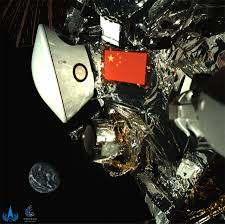
On Oct. 1, the China National Space Administration unveiled a remarkable image of the Tianwen-2 probe alongside Earth, captured during its deep-space journey.
The newly released image, acquired by a monitoring camera mounted on the probe’s robotic arm, showcases China’s five-starred red flag and the white return capsule against the backdrop of a distant, blue Earth – a sight that netizens affectionately hailed as a “cosmic snapshot.”
Behind the image lies China’s expanding capability in deep-space exploration. Over a decade-long expedition, the Tianwen-2 mission aims to collect samples from near-Earth asteroid 2016 HO3 and explore the main-belt comet 311P, which is farther from Earth than Mars.
Smarter probes, more reliable launch vehicles, and more powerful tracking, telemetry and communications have together enabled Tianwen-2 to embark on its “ten-year journey,” once again showcasing the brilliance of Chinese innovation in space.
From Dongfanghong-1’s first foray into orbit to the Chang’e missions writing brilliant chapters in lunar exploration, from building a national space station to Tianwen-2’s voyage toward an asteroid, China’s space aspirations have advanced step by step.
Beyond space, innovation is flourishing across the country in integrated circuits, high-end equipment, and industrial software. The BeiDou Navigation Satellite System provides precise global navigation and positioning; the C919 jetliner has entered commercial service; new energy vehicles lead the world in production and sales; the CR450 high-speed train continues to push the frontiers of rail technology; and steady progress continues in new energy, new materials, and artificial intelligence.
The “cosmic snapshot” also reflects China’s perseverance and long-term commitment to innovation, as well as its resolve to steadily push technology to new heights.
Space programs are vast, complex, and technology-intensive; breakthroughs require long-term accumulation. To realize its lunar aspirations, China adopted an overarching plan of orbiting, landing, and returning. After twenty years of continuous effort, it overcame challenges such as surviving the lunar night, communicating between the far side of the moon and Earth, and performing intelligent sampling on the moon’s far side, charting a high-quality, cost-effective path in lunar exploration.
Following Tianwen-1’s debut at Mars and Tianwen-2’s start to asteroid exploration, Tianwen-3 and Tianwen-4 will in due course undertake Mars sample-return and exploration of Jupiter system, respectively. From the very beginning, China’s planetary exploration program laid out a far-sighted roadmap – today’s flourishing is the payoff from years of steady cultivation.
In recent years, China has strengthened the backbone of basic research, providing stable, long-term support to key innovation platforms, outstanding teams, and priority areas. It has refined long-cycle evaluation mechanisms, enabling researchers to focus on big questions without distraction. It has also expanded patient capital to energize science-and-technology ventures with long horizons and heavy investment.
With a higher vantage and longer view, Chinese innovation places greater emphasis on originality, while industry pushes deeper into tough terrain, laying a solid foundation to nurture new quality productive forces and cultivate the commanding heights of science and technology.
With eyes on the stars and feet on the ground, China is charting a steadier, bolder course in space exploration. For Tianwen-2, the rocket’s orbital accuracy required a velocity of 11.2 kilometers per second while keeping the speed within one meter per second. Building on iterative guidance, the development team applied terminal-velocity correction to adjust the rocket’s velocity and attitude in real time before separation, ensuring the required insertion accuracy.
From “Chang’e” embracing the moon to “Tianwen” probing Mars and “Xihe” tracing the sun, each journey into the cosmos becomes the starting line for the next. As Tianwen-2 sails through the vastness of space, expectations are high – for new discoveries from the mission, and for more surprises from an ever-innovative China. -
Over 3,200 companies confirm participation in 8th CIIE
By Tian Hong, People’s Daily
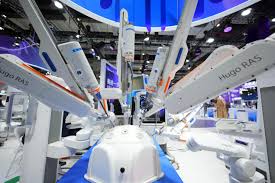
In just one month, Shanghai will once again take the global stage as the China International Import Expo (CIIE) returns. Over 3,200 companies from more than 110 countries and regions signed up for the business exhibition, covering an area of 360,000 square meters.
Both long-standing “old friends” and first-time “newcomers” are previewing first launches and debuts, reflecting their firm confidence in the vast Chinese market.
The first inbound exhibits for this year’s CIIE were recently cleared at the customs office stationed at the Chinese National Exhibition and Convention Center (Shanghai). The shipment came from German company Maybach Luxury Asia Pacific Co., Ltd.
After achieving an unexpected commercial breakthrough at the 7th CIIE last year, Maybach has since established its Asia-Pacific headquarters in Hong Kong and plans to set up a China subsidiary in Shanghai. The company’s booth this year has expanded from 36 square meters to 300 square meters, the number of exhibits has doubled, and several themed zones have been added.
“Expanding our presence is not only a strategic upgrade. It also represents our commitment to growing together with the CIIE,” said the head of Maybach Luxury.
The CIIE serves not only as a showcase for products but also as a bridge for innovation. Riding the expo’s momentum over the past seven years, Medtronic, one of the largest medical device companies in the world, has turned more than 30 flagship exhibits into commercial products.
“Leveraging this open platform, Medtronic has upgraded from exhibitor to investor, witnessing innovations move from ‘brought in’ to ‘going global,’” said Alex Gu, senior vice president and president of Medtronic Greater China.
Moving from product displays to ecosystem building, an increasing number of multinationals are using the CIIE platform to co-innovate with their Chinese counterparts. German healthcare and agribusiness giant Bayer, an eight-time attendee that has participated in every edition, will present 26 highlight exhibits this year across two booths totaling 800 square meters.
In May, Bayer launched its third regenerative-agriculture demonstration farm in China, which will make its CIIE debut. Developed with partners across industry, academia, research and end users, the farm charts a new path that integrates biological breeding and regenerative agriculture.
As new products continue to emerge, partnerships are deepening. At the upcoming 8th CIIE, Chiesi Group, an Italy-headquartered biopharmaceutical multinational company with nearly 90 years of history, will present three core business units – respiratory health, rare diseases, and specialty care – working with partners to accelerate the introduction of innovative products.
“The CIIE is not only an important platform for openness and connectivity but also a fast track for multinationals to deepen cooperation and translate innovation outcomes,” said Giuseppe Accogli, CEO of Chiesi Group. “I look forward to co-creating and sharing the future with our Chinese partners.”
Shanghai is rolling out a series of innovative measures to make participation in the 8th CIIE more convenient as preparations enter the final sprint. A city leadership group for CIIE services and support headed by the principal leaders of the CPC Shanghai Municipal Committee and the Shanghai Municipal People’s Government coordinates 22 working groups and advances 264 priority tasks.
Meanwhile, Shanghai has introduced a package of follow-up policies to expand the spillover effects of the CIIE, spanning commerce, taxation, public security, and customs. Measures include the “FIRST in Shanghai 3.0” policy, instant departure tax refunds, and streamlined customs procedures to make participation and visits smoother and more efficient. -
Revisiting UN’s founding aspirations, working together for better global governance
By Huan Yuping, People’s Daily
This year marks the 80th anniversary of the victory of the World Anti-Fascist War and the founding of the United Nations (UN).
At this historical juncture, revisiting the UN’s founding aspirations, reaffirming the commitment to the purposes and principles of the UN Charter, and revitalizing the UN’s authority and vitality under new circumstances are crucial to reforming and improving the global governance system and to building a community with a shared future for humanity.
In 1945, the international community came together to establish the UN and adopted the UN Charter, embarking on an extraordinary journey to build the postwar international order and pursue peace and development.
Over the past eight decades, the UN, the world’s most universal, representative, and authoritative intergovernmental organization, has played an irreplaceable role in maintaining peace and security and promoting economic and social development.
The UN mechanism has become an indispensable platform for conflict prevention and resolution, making positive contributions to overall global peace. Its unique value lies in its ability to rally nations to confront common challenges and to envision a better, more peaceful, and more sustainable future for humanity.
The world is entering a new period of turbulence and transformation. Unilateralism and Cold War mentality are reemerging, and the rules-based international order faces increasing strain. Peace remains elusive, and the global development encounters mounting headwinds. The international system, once seen as effective and resilient, has been repeatedly undermined.
Some observers argue that the current international order is at its most precarious moment since World War II: the “paralysis” of the UN, the “malfunction” of international law, and the “dysfunction” of multilateralism have left the old framework of global governance unable to board the “great ship” of the era.
To find a way forward, the world must look back to its compass. The disorder in today’s world does not arise because the UN is obsolete, but because the purposes and principles of the UN Charter have been repeatedly distorted or violated.
In the face of an international landscape marked by intertwined turbulence and turmoil, the UN-centered international system remains the cornerstone of global stability, and multilateralism based on coordination and cooperation remains the best solution to global challenges.
For the UN to fulfill its role effectively, the key is for the broad membership – especially the major countries – to uphold the spirit of solidarity and cooperation, prioritize the common interests of the international community, faithfully observe the purposes and principles of the UN Charter, make objective and impartial judgments in accordance with international law and the basic norms governing international relations, and play a positive and constructive role.
“Eighty years on, we confront again the question our founders faced, only more urgent, more intertwined, more unforgiving: What kind of world do we choose to build together?” UN Secretary-General Antonio Guterres remarked during the 80th session of the United Nations General Assembly, emphasizing that in the moment of crisis, the UN have never been more essential.
At this 80-anniversary milestone, the world should revisit the UN’s original aspiration and mission, resolutely uphold the international system with the UN at its core and the international order underpinned by international law, and work together to restore the UN’s authority and vitality in a changing world.
As a founding member of the UN and a permanent member of the Security Council, China has always stood firmly on the right side of history and remains committed to true multilateralism. China will always be a trusted partner of the UN, supporting its central role in global affairs and taking an active part in safeguarding world peace and promoting common development.
Recently, Chinese President Xi Jinping put forward the Global Governance Initiative, elaborating on the principles, approaches, and pathways for reforming and improving global governance. The initiative’s core ideas have been widely recognized by the international community as resonating deeply with the convictions upheld by the UN and responding forcefully to the global call for fairer and more effective global governance system.
History continues to illuminate the path forward. The UN embodies the aspirations of all peoples for lasting peace and shared prosperity, bear witness to the international community’s luminous history of unity, cooperation and pursuit of progress, and will remain indispensable in advancing the cause of human progress. -
Writing a new chapter in global women’s development
By Wang Hui, Liu Lingling, Qu Pei, People’s Daily
The Global Leaders’ Meeting on Women will be held in Beijing from Oct. 13 to 14. This year marks the 30th anniversary of the Fourth World Conference on Women held in Beijing. The international community views this gathering as an opportunity to uphold true multilateralism, pursue development-oriented cooperation, and accelerate the implementation of the Beijing Declaration and the Platform for Action as well as the 2030 Agenda for Sustainable Development. The meeting is expected to make tangible progress in safeguarding and advancing women’s rights, setting a new milestone in the global cause of women’s development.
Remarkable progress of Chinese women
Chinese women are achieving unprecedented success. According to a recent article published on the website of Brazil’s Forum magazine, public policies, legal reforms, and social initiatives in recent years have profoundly transformed the lives of Chinese women in education, healthcare, employment, and political participation, reflecting China’s remarkable progress in advancing women’s development.
Since the beginning of the new era, China has pursued comprehensive development of endeavors concerning women. The living standards and overall well-being of women have risen significantly, with the country leading globally in poverty alleviation, education, science, and healthcare.
China has achieved a significant milestone: 690 million women now share in the nation’s moderately prosperous society. Females account for more than half of all students in higher education, 45.8 percent of sci-tech researchers, over half of entrepreneurs in the internet sector, and 42.3 percent of judges nationwide. Their average life expectancy exceeds 80 years, and the World Health Organization ranks China among the world’s top 10 performers in maternal and child health outcomes. Sima Bahous, UN Under-Secretary General and UN Women Executive Director, commended China’s remarkable achievements in gender equality and women’s empowerment, expressing hope that China will share more of its valuable experience with the world.
China’s commitment to global cooperation
China actively advances the global women’s agenda through collaborative international engagement. The country champions multilateral frameworks, leading regional and global initiatives for women’s development. China upholds the UN’ central role and fulfills its obligations under international conventions such as the Convention on the Elimination of All Forms of Discrimination Against Women.
Through sustained cooperation with UN agencies on gender equality, China has institutionalized women’s issues within global governance platforms. Since 2012, China has convened nearly 30 ministerial-level women’s conferences through major multilateral forums including APEC, G20, BRICS, and the Shanghai Cooperation Organization.
A landmark achievement came in 2015 with the establishment of the UNESCO Prize for Girls’ and Women’s Education – a China-UNESCO joint initiative. To date, this award has honored 20 organizations and projects worldwide. In Tanzania, the prize has helped girls at risk of dropping out return to school; in Costa Rica, digital skills training has empowered women to access new opportunities.
Empowering women through action
China mobilizes resources and implements practical initiatives to advance women’s empowerment in developing countries, significantly improving livelihoods. Through targeted public welfare programs addressing women and children’s health, education, and water security, hundreds of millions of women globally have seen tangible improvements in quality of life.
China has carried out women-focused projects worth $40 million across more than 20 countries, and organized over 100 training sessions for women and children from the Global South. The Luban Workshop, a Chinese vocational training program, has trained 5,499 female students, helping them embark on new career paths.
In Fiji, local woman Seruwaia Kabukabu transformed her community through Juncao cultivation, emerging as a local leader while driving shared prosperity. This poverty-alleviation model has earned the moniker “grass of happiness” across developing economies.
China actively shares its experience in advancing women’s development and supports efforts to enhance women’s status and participation across all sectors, helping address global challenges such as poverty, discrimination, and inequality.
The legacy of Zhang Guimei – principal of Yunnan’s Huaping Girls’ High School – has achieved global recognition. Her campaign educating thousands of impoverished mountain girls features prominently on UNESCO platforms and ranks among the most impactful “girls’ education” case studies worldwide.
Building a better future together
History has shown that there can be no liberation and progress for humanity without the liberation and progress of women. According to reports by UN Women and the UN Department of Economic and Social Affairs, closing the gender digital divide could benefit 343 million women and girls globally and lift 30 million people out of poverty by 2050. Yet more than 600 million women and girls still face conflict and instability, and 2 billion lack access to social security. Building a world free from gender discrimination and inclusive of all remains an urgent global mission.
Standing at a new historical starting point, China is ready to work hand in hand with all parties, take sustained and accelerated action, and make consistent efforts to advance global gender equality and women’s well-rounded development, thus jointly building a better world for all women, and for all humankind.