By He Yin, People’s Daily
The second edition of the World Conference on China Studies was held in Shanghai from October 13 to 15, bringing together around 500 experts and scholars from China and abroad for in-depth discussions under the theme “Historical and Contemporary China: A Global Perspective.”
Through dialogue and exchanges, the event highlighted China’s academic achievements, openness, and contributions to human civilization, offering profound insights into the historical, practical, and global dimensions of China’s development path.
Interest in China studies has grown steadily worldwide. Scholars from diverse backgrounds are increasingly engaging with China through global academic dialogues, broadening the horizons and deepening its intellectual rigor. This expansion of “world China studies” reflects a global desire to understand China as a civilization with enduring relevance.
Since the 18th National Congress of the Communist Party of China in 2012, Chinese President Xi Jinping has placed great importance on advancing world China studies. At the symposium on philosophy and social sciences held in 2016, he explicitly called for promoting China studies overseas. In 2023, in his congratulatory letter to the World Conference on China Studies – Shanghai Forum, Xi emphasized the need to continuously promote China studies worldwide, foster mutual exchange of civilizations, and inject intellectual and cultural strength into the flourishing garden of world civilizations. His remarks provided important guidance for the global development of China studies.
As a cross-cultural academic endeavor, world China studies naturally serves as a bridge connecting Chinese and foreign civilizations. Just as the Chinese civilization has evolved through exchanges and mutual learning with others, the global study of China has been enriched by diverse cultural perspectives.
Many scholars characterize world China studies as “the study of China in intercultural exchange” and “the platform for mutual learning among civilizations.” It encompasses both a Chinese narrative rooted in indigenous traditions and the interpretations of international scholars, enabling broader understanding and shared progress.
Timothy Brook, a Canadian sinologist and recipient of the 2023 Award for Distinguished Contributions to China Studies, noted that the term ‘world’ in ‘world China studies’ highlights the importance of transcending cultural barriers and narrowing cognitive gaps between nations and civilizations through deeper mutual understanding.
When scholars from varying academic traditions and cultural backgrounds engage in the study of China, their dialogue not only helps the world understand a more authentic, multidimensional China but also promotes inter-civilizational understanding and enriches global human culture. In this sense, world China studies has become an intellectual platform for embracing diversity and fostering harmonious coexistence among civilizations.
Importantly, the field encompasses both historical and contemporary China. The growing international interest in China studies reflects a broader desire to understand its current trajectory. Many scholars are studying China to better reflect on their own societies, to understand the world, to grasp the pulse of the times, and to gain insights into future trends.
China’s pursuit of national rejuvenation through modernization, distinct from traditional East-West or ancient-modern dichotomies, has attracted scholars from both developed and developing countries. Key concepts such as high-quality development, new quality productive forces, the Belt and Road Initiative, and the four major global initiatives have increasingly become central to international academic discourse.
As modernization remains a shared aspiration across nations, China’s experience offers valuable insights for others exploring their own development paths. The expanding research on Chinese modernization not only enriches global modernization theory but also contributes practical knowledge for countries navigating complex transitions.
To understand the world today, one must examine its historical foundations, explore its cultural heritage. To achieve shared progress, civilizations must engage in mutual learning. Looking ahead, advancing world China studies will help the international community gain a deeper understanding of Chinese civilization and its development path, foster greater intercultural dialogue, support collective responses to global challenges, and contribute to building a community with a shared future for humanity.
Blog
-
Advancing world China studies to enrich the garden of world civilizations
-
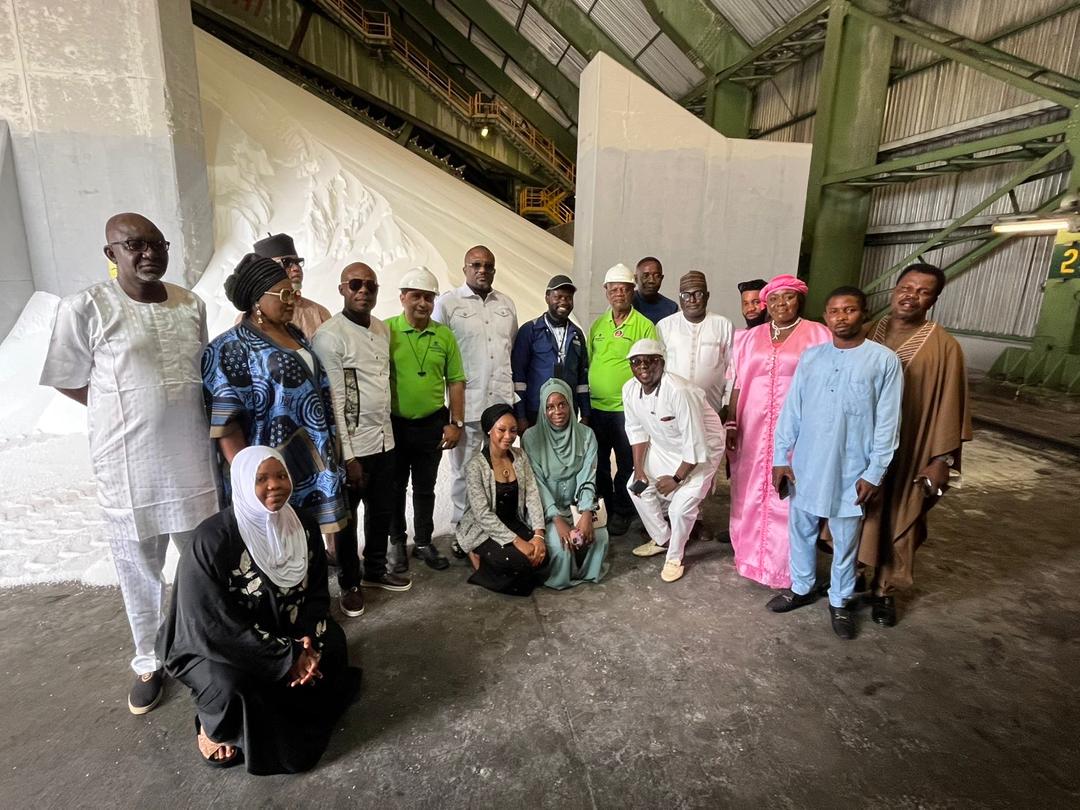
Dangote Refinery, national asset every Nigerian must defend — BAVCCA President declares
President of the Bloggers and Vloggers, Content Creators Association in Nigeria (BAVCCA), Ikechukwu Chukwunyere, has charged Nigerians on the need to protect Dangote Refinery, describing it as a “national asset that every citizen must protect, nurture, and defend against any form of sabotage or doubt.”
Chukwunyere made this declaration on Wednesday at BAVCCA’s National Secretariat in Abuja, following a visit by a 15-man delegation of the association to Dangote Industries in Lagos.
Adding that the visit to the Dangote Refinery was more than a familiarization tour but “a pilgrimage to witness firsthand the embodiment of Nigerian ingenuity, resilience, and vision.”
According to him, the team’s interaction with Dangote Industries’ Vice President, Mr. Edwin Devakumar, provided deep insight into the sacrifices and determination behind what he described as one of Nigeria’s greatest industrial achievements.
While recalling Devakumar’s powerful testimony about believing in Alhaji Aliko Dangote’s vision for the refinery, even when many investors doubted its feasibility.
“Despite the doubts from potential backers, Mr. Devakumar provided crucial support, backing Alhaji Dangote’s dream every step of the way,”
Chukwunyere said. “Alhaji Dangote himself made extraordinary sacrifices, selling most of his assets to fund the project amid those investor doubts.”
He said the refinery, valued at over $20 billion, was “a testament to this unyielding faith” and a model of how personal commitment can turn vision into reality.
Quoting Devakumar, he said Aliko Dangote’s motivation was rooted not only in business ambition but in a “deep prioritization of Nigerians’ well-being.”
“This passion fuels his endeavors, placing the welfare of our people at the heart of every decision,” he added.
The BAVCCA President noted that despite setbacks such as the closure of the Arewa Textile Industry in Kaduna, Dangote “persevered, keeping his vision alive against all odds.”
He described the refinery as the largest in the world, with the capacity to refine 650,000 barrels of crude oil per day, set to expand to 1.4 million barrels daily. The project, he said, has created over 65,000 jobs, saved billions in foreign exchange, and generated an estimated $55 billion in annual revenue potential.
Chukwunyere also highlighted the achievements of the Dangote Fertilizer Plant, which he said has “an impressive production capacity of 3 million metric tonnes per annum of urea,” positioning Nigeria as a key player in global agriculture.
During the visit, Chukwunyere said he personally expressed appreciation to the Dangote Group on behalf of BAVCCA and recounted the association’s efforts in defending the refinery against social media misinformation.
“We amplified the truth, countered misinformation, and rallied public support to ensure this vital project was not undermined,” he stated.
In response, he said, the Dangote Vice President “expressed his pleasure with the bloggers’ efforts and commended the good work being done by our community.”
The BAVCCA leader also announced that the association’s forthcoming national conference, scheduled for October 31 in Abuja, would highlight “the achievements of the Dangote Refinery, showcase the visionary behind it—Alhaji Dangote—and celebrate the transformative role of such initiatives in Nigeria’s development.”
He emphasized that content creators have a patriotic role to play in defending national investments.
“Dangote Industries is not just about refining petroleum; it’s about refining our nation’s future—creating jobs, boosting our economy, and reducing dependency on imports,” he said. “Every Nigerian—bloggers, vloggers, content creators, citizens—must rise to protect Dangote Industries.”
Chukwunyere reaffirmed BAVCCA’s commitment to “lead this charge, using our platforms to educate, inspire, and unite,” while calling on Nigerians to honor the sacrifices of Alhaji Dangote and the faith of leaders like Devakumar.
“Join us at our conference on 31st October, and let’s build a Nigeria where national assets like Dangote Industries thrive unhindered,” Chukwunyere concluded.
-

ALSTDI Commends President Tinubu for Extending Adebomehin’s Tenure, Hails Progress in Geospatial Intelligence and National Mapping Reforms
- ….Says extension reflects confidence in performance and continuity
- ….Urges Surveyor-General to sustain momentum and deliver lasting institutional transformation.
A foremost civil society organization, African Leadership Strategy and Transparency Development Initiative (ALSTDI) has commended President Bola Ahmed Tinubu for approving a two-year tenure extension for the Surveyor-General of the Federation (SGoF), Surv. Abudulganiyu Adebomehin, describing the move as a strategic and well-deserved decision that underscores the administration’s commitment to performance, innovation, and continuity in public service.
In a statement issued on Tuesday in Abuja and signed by its Executive Director, Nelson Ossaieze, the organization lauded the President for recognizing Adebomehin’s achievements, particularly his leadership in advancing geospatial intelligence, digital mapping, and sustainable land administration reforms across Nigeria.
According to ALSTDI, Adebomehin’s tenure has brought renewed dynamism and visibility to the Office of the Surveyor-General of the Federation (OSGoF), repositioning it as a key national institution supporting effective policy planning, infrastructure development, environmental management, and internal security operations.
“Under Surv. Adebomehin, the OSGoF has made significant strides in deploying geospatial technologies to enhance government decision-making and promote data-driven governance. His leadership has bridged the gap between traditional surveying and the modern demands of national development,” the statement said.
The group highlighted several initiatives spearheaded by Adebomehin, including the drone-based topographical mapping project of the Federal Capital Territory, the digital twin model for Abuja, and the strengthening of the National Geospatial Data Infrastructure (NGDI), all of which have improved spatial data accuracy and accessibility for government and private-sector use.
ALSTDI also commended Adebomehin for deepening inter-agency collaboration through partnerships with the military, emergency management agencies, and research institutions, initiatives that have elevated the role of geospatial intelligence in national security, urban planning, and climate resilience.
“These are the kinds of reforms that align with President Tinubu’s Renewed Hope Agenda, where innovation, efficiency, and accountability drive public service delivery,” Ossaieze added.
The organization emphasized that Adebomehin’s renewed tenure offers an opportunity to consolidate the gains recorded so far and to fast-track the completion of major geospatial projects that will further enhance Nigeria’s digital and economic transformation.
“President Tinubu’s decision is both strategic and symbolic, it sends a strong message that excellence and commitment are recognized and rewarded in the Nigerian civil service,” the statement continued. “We therefore urge the Surveyor-General not to rest on his oars, but to use this opportunity to deepen reforms and justify the President’s confidence in his leadership.”
It further, reaffirmed its support for national policies that promote sustainable land use, data transparency, and innovation, noting that Nigeria’s development goals depend largely on how well spatial data and intelligence are integrated into governance.
“Geospatial intelligence remains central to sustainable development, and Surv. Adebomehin has shown capacity and vision in this regard. We are confident that with this extension, OSGoF will reach greater heights and deliver even more impactful results for the nation,” the statement concluded.
-
BUA Cement Faces Legal Showdown as Imiokpe Community Cries Exploitation, Issues 7-Day Ultimatum
The Imiokpe community in Okpella, Etsako East Local Government Area of Edo State, has accused BUA Cement Plc of deliberate manipulation, exploitation, and continued illegal mining operations without accountability or transparency.
In a petition and demand notice addressed to relevant authorities, the community alleged that BUA Cement is attempting to impose a “One-Centre” Community Development Agreement (CDA) across Okpella — a move they say violates Section 116(1) of the Nigerian Minerals and Mining Act, 2007, which mandates companies to sign CDAs directly with their actual host communities.
“Ownership of land rests squarely on kindreds in Okpella, who by law are recognized as host communities. It is our client, as host community, that BUA Cement Plc is mandated to execute a CDA with — not the entire Okpella clan or any so-called central group,” the petition stated.
Under Nigerian mining law, a Community Development Agreement (CDA) defines the obligations of mining companies to their host communities in areas such as social investment, infrastructure, and local employment. These agreements are intended to ensure that communities directly impacted by mining activities receive fair and lawful benefits.
The Imiokpe community further alleged that despite the expiration of the previous “aberrated” CDA in November 2024, BUA Cement has continued to extract limestone, laterite, clay, and iron ore from the Ikpe-Obia and Oke-Igholi mining sites without a valid agreement in place.
They described the ongoing operations as “daylight exploitation,” accusing the company of paying inadequate royalties while deliberately excluding community representatives from employment opportunities, decision-making processes, and infrastructure benefits.
“BUA’s pattern is to delay, exploit, and profit without fulfilling its legal and moral obligations to its host communities. This aberration will no longer be tolerated,” the kindred declared.
In a final demand notice, the Imiokpe community issued a seven-day ultimatum to BUA Cement to cease attempts to impose a centralized CDA and instead conclude a lawful agreement directly with the legitimate host community.
They warned that continued defiance or attempts to manipulate community representation would trigger an immediate legal response.
“We are prepared to defend our rights through every lawful means available,” the statement read. “If BUA Cement fails to comply with the Minerals and Mining Act by executing a proper CDA with its rightful host communities, we will proceed without hesitation to a court of competent jurisdiction to halt all illegal operations, revoke its mining licence, and demand full restitution for years of exploitation and neglect.”
The community concluded with a stern warning that no corporate influence or political alliance would shield BUA Cement from the consequences of lawlessness.
“The era of intimidation and exploitation is over. Either BUA obeys the law or faces the full weight of justice,” the kindred declared.
-
China achieves fruitful results in high-quality development during 14th Five-Year Plan period
By Ren Zhongping
The 20th Central Committee of the Communist Party of China (CPC) has started its fourth plenary session in Beijing on Oct. 20. The four-day meeting aims at studying the proposals for formulating the 15th Five-Year Plan (2026-2030) for national economic and social development, making the top-level design and strategic blueprint for China’s development in the coming five years.
Formulating and implementing five-year plans in a science-based way is an important approach for the CPC in governance, and serves as a vital key to understanding Chinese modernization. Academic observers globally recognize these plans as exemplary models of long-term strategic governance.
Throughout the ongoing 14th Five-Year Plan period (2021-2025), China has advanced economic and social development through technological innovation while accelerating its transition toward sustainable development. This integrated approach has yielded enhanced economic quality alongside measurable environmental gains.
China’s annual production of new energy vehicles surpassed 13 million unites, while its shipbuilding industry achieved milestone capabilities in constructing large LNG carriers, aircraft carriers and luxury cruise ships – collectively regarded as the “three crown jewels” of advanced vessel manufacturing. Concurrently, China established 6,340 nationally certified green factories and now operates the world’s largest renewable energy infrastructure and clean technology supply chain, positioning it among global leaders in reducing energy intensity.
According to the recently released Global Innovation Index 2025, China entered the world’s top ten innovators for the first time. With the world’s largest pool of R&D personnel and scientific talent, the nation has strategically prioritized innovation in its modernization agenda, evolving from the “world’s factory” to a global innovation hub.
During the 14th Five-Year Plan period, per capita disposable income in formerly impoverished rural counties grew at an average annual rate of 7.8% (real terms) – surpassing the national rural average. This progress narrowed the urban-rural income gap from 2.56:1 (2020) to 2.34:1 (2024), while final consumption expenditure contributed approximately 60% annually to economic growth.
China’s domestic market, powered by over 1.4 billion people including more than 400 million middle-income consumers, demonstrates significant scale advantages and growth potential through its diverse, multi-tiered demand structure.
The 2025 Edelman Trust Barometer, released in March this year, showed that Chinese citizens’ trust in their government remains the highest in the world, while their overall optimism about the future also ranks first globally.
In July, the fifth volume of “Xi Jinping: The Governance of China” was published. International observers believe that China’s governance model is more capable of delivering stability, prosperity, and freedom for its people. Since the new era began, China’s institutional framework has become more complete, science-based and effective, and institutional strengths have been better transformed into governance efficiency.
In May, the Private Sector Promotion Law came into effect, marking the first time that the principle of “unswervingly consolidating and developing the public sector and unswervingly encouraging, supporting and guiding the development of the non-public sector” has been written into law, and the first time the legal status of the private economy has been explicitly defined. Foreign media described this as a “milestone.”
China continues strengthening its market foundations through rule of law, exemplified by the Foreign Investment Law boosting investor confidence and fair competition regulations enforcing institutional constraints. These measures advance a unified national market, creating a rule-of-law environment that attracts global resources – a crucial element in Chinese modernization.
During the drafting of the 15th Five-Year Plan, online public consultations garnered over 3.11 million submissions, illustrating China’s whole-process people’s democracy in practice. By improving democratic institutions and integrating top-level design with public participation, China aims to build consensus for advancing modernization goals.
During the 14th Five-Year Plan period, China maintained high-level openness despite global headwinds. As of July this year, China’s actual use of foreign investment during the period reached $714.87 billion, with 235,000 new foreign-invested enterprises established, an increase of 32,000 from the 13th Five-Year Plan period.
High-quality Belt and Road cooperation has become the world’s broadest and largest platform for international cooperation. At the Tianjin summit of the Shanghai Cooperation Organization, Chinese President Xi Jinping proposed the Global Governance Initiative, calling on all countries to work together to build a more just and equitable global governance system. United Nations Secretary-General Antonio Guterres said that the future of humanity largely depends on China.
Having transformed from a peripheral player to a central force in global development, Chinese modernization offers a distinct pathway to socialist advancement and national rejuvenation. This model presents a new paradigm for human progress and civilization. -
Ulanqab, gateway to grassland Silk Road and cradle of Qahar culture
By Wu Yong from People’s Daily
After entering China through the Erenhot Port in Xilingol league, north China’s Inner Mongolia autonomous region, many Mongolian tourists make their way directly to Ulanqab. There, they find a welcoming stopover – a place to unwind and begin a journey of leisure and discovery.
Centuries ago, Ulanqab was already a thriving trading post along the Silk Road of the grasslands and the “Tea Road of the North.” Along the historic Zhangku Avenue – from Zhangjiakou on China’s northern frontier to Kulun (present-day Ulaanbaatar, the capital of Mongolia) – a continuous stream of merchants once traveled, facilitating trade and cultural exchanges.
Today, Ulanqab remains a vital gateway linking China with Mongolia, Russia, and beyond. With six railways, seven expressways, and eight national highways converging in the region, the city has evolved into a major transportation hub. It serves as a crucial non-provincial capital node for both the Belt and Road Initiative and China-Europe freight train routes.
From the iconic Phoenix Tower, visitors are treated to panoramic views of verdant boulevards and meandering rivers. Hot spring resorts in the area offer a full suite of amenities – from therapeutic baths to wellness spas. “I came for the long history and incredible cuisine,” said 80-year-old Mongolian tourist Dabuge Sumberel.
“Many Mongolian travelers make Ulanqab their first destination in China,” said local tour guide Husileng. “Thanks to its excellent connectivity and diverse attractions, the city has become an ideal gateway for cross-border tourism.”
Ulanqab’s Jining district is home to the largest leather goods distribution center in northern China. The bustling scene of customers selecting fur and leather products evokes memories of the city’s commercial prosperity in centuries past. “Jining’s fur trade has a long and well-established history, attracting many Mongolian visitors,” said Yang Jun, who manages tourism operations at the center.
Seventeen-year-old Mongolian girl Hulan visited Ulanqab for the first time and was captivated by the city’s offerings. After buying leather boots for herself and her parents, she continued browsing. “The craftsmanship is excellent, the designs are beautiful, and the prices are affordable. It’s hard not to fall in love with the place.”
At the core of Ulanqab’s cultural appeal lies Qahar culture, a distinct and vital strand of the grassland civilization that remains deeply embedded in local life and plays an important role in fostering people-to-people exchanges.
“‘Qahar’ refers to a Mongolian tribe originally formed as a guard unit during the reign of Genghis Khan,” explained Ou Jun, a professor with Jining Normal University. “Its cultural essence is defined by openness, inclusiveness, kindness, and integrity.” As one of the earliest Mongolian tribal cultures to blend with agrarian traditions, Qahar heritage has flourished in Ulanqab, a major center of its development.
“Ulanqab has developed rapidly, and tourism here is booming. I believe this has much to do with the local people, who are hard-working, sincere, and warm-hearted,” said 37-year-old Mongolian tourist Uyuntsetseg.
On the grasslands of Qahar Right Wing Rear Banner, rows of modern yurts rise gracefully above the prairie, resembling clouds suspended above the earth. “These yurts are slightly elevated from the ground, and from a distance, they look like floating clouds,” said Tonrig, an inheritor of Mongolian yurt craftsmanship. “That’s why I named them Ulunggeri, meaning ‘cloud houses’ in Mongolian.”
Traditional Mongolian yurts, though iconic, are typically small, lack privacy, and have no built-in sanitation facilities. To adapt the tradition to contemporary life, Tonrig has reimagined the structure, integrating modern design and digital technology with traditional techniques.
While preserving the circular silhouette of the classic yurt, he reconstructed its framework using Russian Scotch pine and added modern polyurethane insulation to enhance thermal performance. Solar panels now crown the roofs, and each yurt is equipped with an integrated mobile biological wastewater treatment system, combining ecological preservation with modern convenience.
Now, Ulunggeri yurts are making their way beyond Chinese borders. In 2024, a 30-meter-diameter yurt covering nearly 1,000 square meters was completed at a resort in Ulaanbaatar. That same year, Tonrig shipped a computer numerical control (CNC) machine from Shandong, China, to Mongolia and sent a technician to facilitate local production of Ulunggeri yurts.
At the manufacturing facility, components like central skylights and roof beams, adorned with auspicious Mongolian motifs, are precisely carved by the CNC machine. Tonrig now simply sketches the design on paper, and the machine faithfully replicates the intricate beauty of traditional craftsmanship.
In Ulanqab, inclusiveness continues to weave a new tapestry of cultural exchanges and mutual learning – stitch by stitch, across time and space. -

Fengyun meteorological satellites highlight robust China-Arab cooperation
By Zhou Shanshan, People’s Daily
Operating around the clock to monitor global weather patterns and forecast temperature and precipitation changes, Fengyun meteorological satellites are widely regarded as integral to daily life.
These satellites represent an important milestone in China’s meteorological modernization and exemplify the spirit of win-win cooperation between China and the Arab states under the Belt and Road Initiative (BRI).
At the recently concluded seventh China-Arab States Expo in Yinchuan, northwest China’s Ningxia Hui autonomous region, smart meteorology displays highlighted how Fengyun satellites serve international users and strengthen disaster prevention and mitigation capacities. An AI weather presenter, proficient in both Chinese and Arabic, engaged with visitors at a meteorological technology exchange salon, showcasing advances in cross-border scientific collaboration.
Beyond exhibitions, China-Arab cooperation in meteorology continues to deepen, encompassing customized services, knowledge sharing, and talent development. These efforts reflect a longstanding dialogue in science, technology and culture that extends well beyond individual events.
Since Chinese President Xi Jinping proposed the eight major cooperation initiatives for China-Arab cooperation in 2022, concrete progress has been made across various sectors, including meteorology. The steady expansion of trade in services highlights China’s commitment to high-level opening up and underscores the tangible results of Belt and Road cooperation, contributing positively to the global economy.
Despite the geographical distance, China and Arab countries face shared challenges such as water scarcity and climate change, and shoulder common responsibilities in global climate governance and food security. Their complementary strengths in resources, industries, and technologies have enabled deeper alignment between the BRI and the development strategies of Arab countries, fostering broader, more resilient cooperation.
China brings not only goodwill but also strong capabilities to global collaboration. At the seventh China-Arab States Expo, QR codes embedded with data on green agriculture and hydrogen energy linked participants directly to experts and technologies, streamlining access to new partnership opportunities.
The expo served as a platform for forging such connections. From delivering Chinese-grown cucumbers and eggplants to supermarkets in the United Arab Emirates within just 36 hours to contributing to major infrastructure like Saudi Arabia’s King Abdulaziz Port, China leverages its industrial base, technological prowess, and vast market to promote high-level cooperation.
Through integrated industrial chains, coordinated R&D, and demand-driven solutions, China and Arab countries are building new “chains of shared opportunity.”
Shared benefits and inclusiveness remain central to this cooperation. Spearheaded by Ningxia, the China-Arab States Technology Transfer Center has launched demonstration projects in Mauritania, Morocco, and other countries, providing comprehensive, system-level solutions. Research teams from Ningxia University have developed advanced irrigation technologies now deployed in Oman and Egypt.
Science and technology cooperation has become a strategic priority for Arab countries pursuing economic diversification. Chinese innovation is increasingly embedded in local development, offering scalable, transferable solutions that enhance local capacity and independent development. This approach reflects China’s philosophy of “teaching people how to fish,” propelling China-Arab cooperation from “project addition” to “capacity multiplication.”
China has remained the largest trading partner of the Arab states. Today, collaboration has expanded from trade and project contracting to regulatory alignment, knowledge transfer, and institutional innovation. This reaffirms that the potential of openness is boundless, that win-win cooperation is the path forward, and that collective progress is essential for global advancement. -
China’s economic transformation presents global opportunities
By Zhong Caiwen, People’s Daily
China’s economy has demonstrated long-term stability and sustained growth, contributing certainty and positive momentum to the global economic landscape. Despite recent assertions that China’s “golden age” of investment and development has passed, and that opportunities are diminishing, the reality is markedly different. China remains a market of immense potential. As the country accelerates its economic transformation and industrial upgrading, it will create unprecedented opportunities for global stakeholders.
Industrial transformation and upgrading
China’s industrial sector continues to demonstrate remarkable vitality, underpinned by a comprehensive industrial system and unparalleled scale.
For 15 consecutive years, China has remained the world’s largest manufacturing country, with 80 percent of capacity concentrated in traditional sectors such as metallurgy, chemicals, machinery, light industry, and textiles. As these industries advance toward more advanced, intelligent, and green development models, a wave of new investment opportunities is emerging.
Simultaneously, strategic emerging industries and growth drivers, such as AI, robotics, and biopharmaceuticals, are gaining momentum. Several Chinese AI models rank among the world’s top performers, and China has been the world’s largest industrial robot application market for 12 consecutive years. Innovation in pharmaceuticals is also experiencing a surge in innovation, with new drugs reaching the market at an accelerated pace. China’s commitment to openness ensures that the benefits of industrial transformation are shared globally.
Sci-tech innovation and human capital
In 2024, China’s total R&D expenditure exceeded 3.6 trillion yuan (about $500 billion), with R&D intensity approaching the average of OECD economies. The country ranks first globally in both high-level academic publications and invention patent filings. Scientific and technological advances are increasingly integrated into industrial applications, resulting in more diverse commercial use cases and a rising rate of patent commercialization. These developments are rapidly translating into new quality productive forces.
China also boasts one of the world’s largest pools of high-level scientific and technological talent, producing more than 5 million STEM graduates annually. This growing talent base – particularly the so-called “engineer dividend” – is becoming a key force behind sustained innovation and industrial upgrading.
Expanding and upgrading consumption
With per capita GDP exceeding $13,000, China’s consumer market is entering a critical phase of consumption upgrading. The dynamic interplay between evolving consumer demand and innovative supply is creating strong investment momentum.
Commodity consumption continues to expand in both volume and quality. In 2025, China’s total retail sales of consumer goods are expected to exceed 50 trillion yuan, reaffirming the country’s position as the world’s second-largest consumer market. The country has led global online retail sales for 12 consecutive years and ranks first globally in automobile and air-conditioner sales.
Service consumption is emerging as a new growth engine. In 2024, services accounted for 46.1 percent of household consumption expenditure, highlighting substantial potential for further expansion compared with developed economies.
Traditional and new infrastructure construction
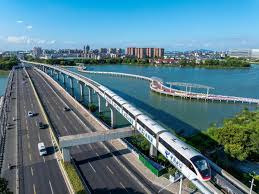
China’s vast geographic expanse continues to generate significant demand for infrastructure development, particularly to support balanced regional growth. Railway and highway densities in central and western regions remain well below those in the eastern coastal areas, indicating substantial potential for continued investment in traditional infrastructure with long-term economic and social returns.
The development of intercity railways and cross-river or cross-sea bridges is vital for enhancing logistics efficiency and stimulating regional economies, representing substantial investment opportunities.
At the same time, China’s rapid advances in new infrastructure, including digital networks, mobile communications, and smart city technologies, are opening up expansive and globally relevant market opportunities.
New-type urbanization and urban renewal
China’s urbanization is transitioning from rapid expansion to a phase of stable, high-quality development. While growth has moderated, the process is gaining in depth and complexity.
Efforts are underway to enhance the quality of urbanization through improved spatial planning, accelerated development of city clusters and metropolitan areas, and the construction of modern, people-oriented cities. Concurrently, the city is advancing urban renewal projects to revitalize urban villages, upgrade aging residential communities, and modernize infrastructure such as flood control systems, disaster prevention networks, underground pipelines, and utility corridors. These initiatives aim to improve urban living standards while generating significant new investment opportunities across multiple sectors.
Ensuring and improving people’s well-being
China’s rising Human Development Index reflects steady growth in demand for services such as childcare, education, elderly care, and healthcare. These expanding needs are driving both social progress and economic opportunity.
By the end of 2025, China plans to offer 4.5 child care places for children under the age of three per 1,000 people. This represents notable improvement, though still below levels seen in developed economies. With over 300 million people aged 60 and above, China also faces gaps in the availability of elderly care beds, physicians, and nursing staff per thousand elderly individuals.
Meeting these essential needs will not only enhance quality of life but also generate substantial employment and investment opportunities across the healthcare and social services sectors. -
China continues to unlock the potential of its ocean economy
By Jiang Xiaodan, People’s Daily
In waters south of Zhuhai, south China’s Guangdong province, China’s first independently developed megawatt-scale floating wave energy generation device “Nankun” rises and falls with the swells. It generates an average of 10,000 kilowatt-hours of electricity per day, enough to meet the daily electricity needs of about 1,500 households.
In Lingshui Li autonomous county, south China’s Hainan province, a commercial underwater data center has operated stably for more than two years, using seawater as a natural coolant to cut energy consumption and boost efficiency.
In recent years, as China strengthens its capacity to develop and harness ocean resources, regions across the country have been unlocking the vast potential of the “blue economy,” opening broad prospects for a new era of modern “marine farming.”
For much of human history, humanity’s interaction with the sea centered on the benefits of fisheries and salt, and the convenience of navigation. In the traditional sense, “marine ranching” evokes fishing boats skimming the waves, dense arrays of aquaculture cages, or swaying kelp fields. Today, with the continued high-quality development of the ocean economy, the concept has taken on a broader and deeper meaning.
New methods are taking hold. Guoxin 1 2-1, the world’s first 150,000-ton intelligent aquaculture vessel, pioneers a ship-based tank-farming model designed to produce about 3,600 tons of high-quality fish annually. The salmon-farming vessel Suhai-1 is equipped with water-quality monitoring, automated feeding, and intelligent control systems, enabling on-board processing and rapid distribution, improving freshness, stabilizing supply, and enhancing the market competitiveness for domestically farmed salmon.
The Internet of Things, big data, and artificial intelligence are being deeply integrated into modern marine ranching. Empowered by technology, traditional fisheries are shifting from relying on nature’s mercy to working with nature through knowledge. Large truss cages and aquaculture engineering systems precisely regulate feeding; satellite remote sensing and maritime communications give vessels far-seeing “eyes” and keen “ears.” The digital, intelligent transformation is strengthening China’s “blue granary.”
New resources are being explored. Ocean energy is far more diverse than many imagine – from generating power via temperature differences between surface and deep waters to harnessing salinity gradients between freshwater and seawater. This year, Guangzhou launched construction of a national major research facility – the Cold-Seep Ecosystem Research Facility – to explore the immense potential of methane and cold-seep biota.
Accelerating breakthroughs in deep-sea exploration and operations, and in the R&D of marine technologies and equipment, is bringing previously inaccessible or undeveloped deep-sea energy resources into practical use, injecting fresh vitality into the ocean economy.
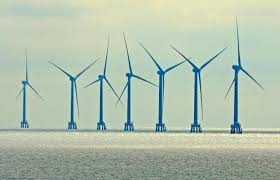
New industries are emerging. From a domestically developed, marine-origin Class I immuno-oncology drug entering Phase II clinical trials, to China’s first large cruise ship carrying some 600,000 inbound and outbound passengers in its inaugural year, and to the country’s first integrated offshore wind power and marine ranching demonstration project generating over 2 billion kilowatt-hours of electricity and nearly 100 million yuan ($14.04 million) in annual aquaculture revenue, the ocean economy is rapidly diversifying, with emerging sectors and innovations driving growth.
With the goal of building marine industries that are stronger, more competitive, and more dynamic marine industries, China is turning its vast seas into thriving industrial hubs. The “blue engine” of the ocean economy is powering the country’s high-quality development with renewed momentum.
The deeper China ventures into the oceans, the more it enters uncharted waters, where there are no ready-made roadmaps. To open new frontiers in the marine economy, local governments across China are making innovation the key driver, advancing original and pioneering research to achieve greater self-reliance and strength in marine science and technology.
At the same time, by rejecting the old path of development at the cost of pollution, and by upholding a balanced approach that values both utilization and protection, pollution control and ecological restoration, China is caring for the ocean as it care for life itself.
Through these efforts, the nation is striving to foster harmony between humanity and the sea and to contribute more to the sustainable development of the global ocean community. -

Small innovations, big impact: How China leverages technology to enhance daily life
By Meng Fanzhe, People’s Daily
At a recently held home service robot conference, humanoid robots captivated audiences with lifelike demonstrations across a variety of household scenarios – preparing sandwiches, cleaning tables, folding clothes, and even teaching children English. These advanced technologies offered a vivid preview of how innovation is reshaping everyday life.
China has long viewed improving people’s well-being as the central aim of scientific and technological innovation. In recent years, an increasing number of “small yet beautiful” innovations have been seamlessly integrated into daily routines, reflecting the public’s growing aspiration for a better quality of life.
On farmlands, intelligent harvesters now process up to 600 kilograms of grain per minute, significantly enhancing harvest efficiency. In operating rooms, Chinese domestically developed orthopedic and endoscopic surgical robots are now in active use. At eldercare institutions, smart wristbands and canes are improving the quality and responsiveness of services for seniors.
As German philosopher Friedrich Engels once observed, “Once a technical need arises in society, it will advance science more than ten universities would do.” With a population of over 1.4 billion and a middle-income group exceeding 400 million people, China boasts a vast market and rich scenarios for application. As everyday demands grow and industries seek innovation, the synergy between supply and demand fuels rapid technological advancement, unlocking new opportunities for emerging industries.
The introduction of the Fuxing CR450 high-speed train is expected to significantly boost travel efficiency and help China’s rail equipment sector surpass the trillion-yuan ($140.37 billion) threshold. Frequent satellite launches by commercial space enterprises are enabling smarter agricultural practices, with China’s commercial space industry projected to reach 2.8 trillion yuan by 2025. Meanwhile, nuclear power units such as the Hualong One and Guohe One each generate over 10 billion kilowatt-hours of electricity annually, enough to power millions of households.
These developments underscore how a market-oriented approach, driven by application, integration, and iterative advancement, transforms scientific and technological capabilities into tangible development advantages, ensuring broader access to innovation.
“China is investing more and more resources to ensure that people with disabilities can live the lives they want,” said Jose Maria Viera, executive director of the International Disability Alliance. His observation highlights how technological applications are opening up new paths for improving public well-being.
Hospitals have launched AI-assisted navigation systems to streamline medical visits. The widespread adoption of digital social security cards allows individuals to access benefits, transfer pension accounts, and apply for payments online, reducing in-person visits and enabling data-driven efficiency. Through pragmatic innovation, China is addressing everyday challenges and long-standing livelihood issues, steadily enhancing people’s sense of fulfillment, happiness, and security.
At a deeper level, advancing technology for the public good is not only about improving living standards, but also defines the trajectory of innovation itself.
Emerging technologies such as AI, biomedicine, and gene editing are becoming new growth engines while also raising complex ethical and governance challenges. Large language models, for instance, may pose privacy risks, and technologies like face-swapping or voice cloning carry the potential for fraud or misinformation.
As a result, technological innovation is no longer merely a technical endeavor. It carries ethical, governance, and societal implications. To maximize the benefits of innovation while managing its risks, a commitment to “technology for good” must be paired with sound legal and regulatory frameworks.
Ultimately, innovation must serve humanity. China continues to prioritize the practical application of advanced technologies to ensure the benefits of progress are widely shared, building a foundation for a better life for all.