By He Yin, People’s Daily
On Oct. 20, China’s National Bureau of Statistics released data on the country’s economic performance for the first three quarters of 2025.
The figures indicate China’s GDP grew by 5.2 percent year on year, 0.2 and 0.4 percentage points higher than the growth rates for the whole of last year and the same period last year, respectively, laying a solid foundation for achieving the year’s main targets.
At a time when global growth momentum remains weak and uncertainty is mounting, China’s steady and sustained economic performance has become a valuable source of certainty for the world economy.
With a growth rate of 5.2 percent, China remains among the top performers among major economies and continues to serve as one of the most stable and reliable engines of global economic growth.
Despite mounting external pressures and internal challenges, China’s economy has demonstrated remarkable resilience: maintaining overall stability while achieving structural improvements in key sectors.
China’s total imports and exports of goods rose by 4 percent year-on-year in the first three quarters, underscoring strong resilience. As Reuters noted, this reflects China’s progress in diversifying both its export markets and product portfolio.
Amid headwinds against globalization, China’s emerging trade drivers continue to grow, market diversification advances steadily, and exports increasingly shift toward higher-value, technologically sophisticated goods. These developments contribute significantly to stabilizing global industrial and supply chains.
This economic stability stems from China’s disciplined focus on domestic priorities, leveraging high-quality development strategies to navigate global uncertainties.
Proactive and targeted macro policies have boosted consumption, upgraded industries, fostered new growth drivers, and kept economic circulation smooth while advancing high-standard opening up. These efforts have not only stabilized the economic fundamentals in the short term but also built momentum for long-term growth.
Notably, final consumption expenditure accounted for 53.5% of China’s GDP growth during this period, confirming its role as the economy’s primary driver.
The continued effects of major policies to strengthen the economy and foster new drivers, including those aligned with major national strategies, building up security capacity in key areas, as well as the large-scale renewal of equipment and the trade-in of consumer goods, have extended to the production side, stimulating sectors such as equipment and consumer goods manufacturing, and promoting green manufacturing and digital technology upgrades.
Efforts to build a unified national market have accelerated cross-regional flow of goods, talent, and capital, enhancing supply chain efficiency. With ample policy space, diverse tools, and well-prepared reserves, China has the capacity to ensure steady and sound economic performance.
At the recent 138th edition of the China Import and Export Fair, or the Canton Fair, booths showcasing robotics, smart manufacturing, and other high-tech products drew long lines of international visitors. As the integration of science, technology, and industry continues to deepen, more innovations are moving from laboratories to production lines, turning innovation potential into real economic momentum.
China is developing new quality productivity adapted to local conditions, optimizing economic structures, and facilitating orderly transitions between traditional and emerging growth drivers.
Traditional industries are embracing digital transformation through internet, AI, and digital technologies, accelerating equipment renewal and technological upgrades to gain new dynamism.
Wind and solar power generation recorded double-digit growth during the reporting period. Production of new energy vehicles surged 29.7% year-on-year, while automotive lithium-ion battery output increased 46.9 percent, making China’s economic growth greener.
As the 14th Five-Year Plan period (2021-2025) concludes, China’s economy has surpassed milestones of 110 trillion ($15.44 trillion), 120 trillion, and 130 trillion yuan, contributing around 30 percent of global growth annually. This makes China one of the world’s most important drivers of economic progress.
Despite profound changes unseen in a century, China has maintained overall economic stability, strengthened development foundations, and achieved new milestones in economic and social progress, laying a more solid groundwork and building greater confidence for the upcoming 15th Five-Year Plan period (2026-2030).
Amid global uncertainties, the fundamentals underpinning China’s economic stability, growth momentum, and resilience remain unchanged. Going forward, by giving full play to policy effectiveness, advancing high-quality development, and accelerating the development of new quality productive forces, China has both the confidence and the capability to sustain steady growth, and will continue to provide strong support for global economic recovery and development.
Blog
-
Steady progress of China’s economy adds precious certainty to world
-
Harmonious, beautiful picture of rural revitalization unfolds in China
By He Yin, People’s Daily
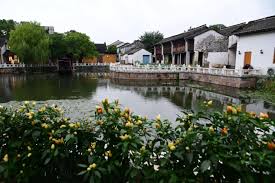
China adds four villages to the United Nations World Tourism Organization’s (UNWTO) “Best Tourism Villages” list in 2025, bringing its total to 19 since the program’s inception. These villages – each distinct in landscapes, cultural heritage, and development models – collectively demonstrate China’s commitment to ecological conservation and comprehensive rural revitalization.
The 2025 announcement coincided with the 20th anniversary of the “lucid waters and lush mountains are invaluable assets” principle (known as the “Two Mountains” theory). Significantly, the unveiling occurred in Huzhou, east China’s Zhejiang province, where this very concept was put forward.
Each newly recognized village embodies this philosophy.
Digang Village in Zhejiang preserves the world’s most complete mulberry-dyke fish-pond system, achieving zero ecological pollution.
Jikayi village in Sichuan, southwest China, located near the World Natural Heritage Site Sichuan Giant Panda Sanctuaries and the World Network of Biosphere Reserves, has developed a highland three-dimensional agricultural ecosystem.
Huanggang village in southwest China’s Guizhou province boasts an 85 percent forest coverage rate and 2,300 mu (about 153 hectares) of terraced fields, protecting its pristine natural scenery.
Dongluo village in Jiangsu, east China, with its interlaced waterways and picturesque raised fields, looks like a painting brought to life.
Each of these villages has pursued a development path suited to its local conditions, one that harmonizes ecological beauty, industrial vitality, and rural prosperity.
Guided by the “Two Mountains” theory, China always prioritizes ecological protection, conserves resources and uses them efficiently, and pursues green and low-carbon development. As millions of people embrace this path, they reap the benefits of sustainable growth. Across China, a modern landscape of harmony between humanity and nature is unfolding.
At the heart of rural revitalization lies industrial revitalization. Drawing on their own strengths, rural communities across China have tapped into local culture and unique resources to foster new industries such as rural tourism, eco-agriculture, and cultural creativity. This “one industry driving many others” approach has offered valuable lessons for sustainable rural development worldwide.
In Shibadong village, central China’s Hunan province, the Miao embroidery industry, local homestays, and specialty agricultural products have all flourished. Huanggang village has promoted comprehensive rural revitalization through holistic preservation of intangible cultural heritage. Jikayi village has explored a model where ecology and ethnic traditions complement each other.
Rural tourism has not only made villages more beautiful but also made villagers more prosperous. Today, staying in village guesthouses, tasting local delicacies, and buying local specialties have become new trends among Chinese urban and rural residents. In 2024, China’s leisure agriculture sector generated nearly 900 billion yuan ($126.57 billion) in revenue, an increase of about 50 billion yuan compared with 2020.
UNWTO secretary-general Zurab Pololikashvili noted that the Best Tourism Villages initiative has injected strong momentum into rural transformation and is helping build a more sustainable future.
As China advances the construction of beautiful villages, it has woven traditional Chinese aesthetics into rural development and preservation. Efforts have been made to enhance the comfort of living environments, improve infrastructure, and upgrade public services, bringing new vitality, deeper cultural richness, and a more vibrant local life to ancient villages.
Foreign visitors frequently observe: “These villages preserve their traditional charm while exuding a modern and artistic touch. It’s where the past and present meet in harmony.”
Energetic “village galas,” popular “village songs” and lively “square dances” that bring together both urban and rural residents, all these scenes, born from everyday life, reflect the uplifting spirit of the Chinese people and the deep cultural vitality of China’s countryside.
The beauty of rural China lies in the harmony between ecological protection and economic development, in the fusion of traditional culture and modern civilization, and in the steady rise of people’s sense of fulfillment, happiness, and security.
During the 14th Five-Year Plan period (2021-2025), China has prioritized agricultural and rural development, implemented the rural revitalization strategy in depth, and achieved historic progress, laying a solid foundation for transforming itself from a major agricultural country into an agricultural powerhouse.
The fourth plenary session of the 20th Central Committee of the Communist Party of China called for accelerating agricultural and rural modernization and taking solid steps to advance all-around rural revitalization. Staying true to this vision, China will continue to contribute its wisdom and experience to advancing sustainable rural development across the world. -
Helping fish navigate dams: one engineer’s mission to restore the Yangtze River ecosystem
By Tian Doudou, People’s Daily
“When it comes to the fish of the Yangtze River, I’m likely the most water-savvy among fish experts, and the most fish-savvy among hydraulic engineers,” said Shi Xiaotao, president of the College of Hydraulic and Environmental Engineering at China Three Gorges University.
With a background that bridges aquatic biology and hydraulic engineering, Shi has spent the past 16 years applying his interdisciplinary expertise to help millions of fish in the Yangtze River overcome dam barriers, enabling migration, spawning, and population recovery.
As China’s longest river, the Yangtze supports a rich diversity of fish species, including the critically endangered Chinese sturgeon, which relies on upstream migration to spawn. To protect and replenish its population, authorities in cities such as Yichang and Jingzhou, central China’s Hubei province, organize annual release programs for artificially bred Chinese sturgeon. This April alone, more than 220,000 juvenile sturgeons were returned to the river.
Beyond release programs, the development of fish passages has become a growing priority. China’s revised 2002 Water Law stipulates that dam developers build facilities to accommodate migratory fish, vessels, and timber passage, or implement approved alternatives. These measures, including protections during dam construction and reservoir impoundment, must be fully funded by the developers.
However, many companies lack the technical knowledge to implement effective fishways. To bridge this gap, Shi turned construction sites into field laboratories. He and his team have conducted fieldwork at dozens of hydropower stations across Xizang autonomous region, Sichuan province, Guizhou province, Xinjiang Uygur autonomous region, and Qinghai province, covering over 40,000 kilometers.
“We transport our experimental equipment by truck and build temporary field labs along the riverbanks,” Shi explained. Their research revealed that migratory fish swim upstream against the current, but cannot surmount dams if the passages are too steep. As a result, most fishways are designed with baffles that create a stepwise, zigzag flow, reducing water pressure and allowing fish to ascend more gradually.
“Different rivers host different species with varying swimming abilities, and factors like water temperature, flow speed, and eddy currents all differ. So we collect data scientifically, capture local fish species, and conduct experiments in facilities that simulate natural water flows. We’re constantly optimizing variables like height and width for each section,” he explained.
Shi’s team is also integrating digital technology into fishway design. But despite these advancements, they still spend at least three months a year conducting field experiments. “Nature is ever-changing. Digital models can support our work, but they cannot replace on-site experiments,” Shi noted.
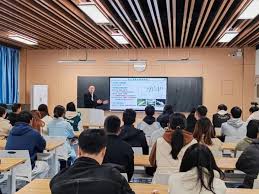
In early September, Shi taught a class at a fishway monitoring station near the Three Gorges Dam, the world’s largest hydropower project, located in Hubei province. The lecture was part of his widely attended elective, Innovative Practices for Yangtze River Conservation, which attracts over 100 students each semester from disciplines including hydraulic engineering, environmental engineering, and law.
“Field-based teaching is central to this course,” Shi said. “I want students to connect with nature, learn about species such as the Yangtze finless porpoise, and grow into stewards of river conservation.”
Beyond teaching, Shi has organized volunteer programs and runs a science communication social media account dedicated to Yangtze River conservation. His team works to educate the public, raising awareness through videos, campaigns, and community engagement.
“Since the fishing ban was introduced, the number of Yangtze finless porpoises in the Yichang section has increased, and locals have grown fond of them. But some still feed them or fly drones nearby, which disturbs their habitat. Through our outreach efforts, these behaviors have decreased significantly,” Shi said.
Popular videos on his platform, such as How Fish Cross Dams and Major Threats to Aquatic Life in the Yangtze River, present ecological science in accessible, engaging formats, building public support for conservation efforts.
“I hope our work inspires broader public awareness and encourages more people to participate in protecting the Yangtze River’s ecosystem,” Shi said. -
Jointly safeguarding hard-won outcomes of China-U.S. trade talks
By Zhong Sheng, People’s Daily
On Oct. 25 and 26 local time, China and the United States held a new round of economic and trade consultations in Kuala Lumpur, Malaysia.
Guided by the important consensuses reached by the two heads of state in their phone conversations since the beginning of this year, the two sides had candid, in-depth and constructive exchanges of views on important trade and economic issues of mutual concerns, and reached basic consensuses on arrangements to address respective trade concerns.
These outcomes did not come easily. They once again demonstrate that while it is natural for two major countries like China and the U.S. to have differences on economic and trade matters, these differences can be properly handled and the two sides can find the right way to get along as long as the two sides sit down for talks based on equality and constructiveness.
This round of consultations covered a wide range of topics, including the U.S. Section 301 measures on China’s maritime, logistics and shipbuilding sectors, extension of the suspension of reciprocal tariffs, fentanyl-related tariff and law enforcement cooperation, trade in agricultural products, and export controls.
These are issues of mutual concern that also bear on the stability of global industrial and supply chains. The two sides agreed to work out specific details and follow the domestic approval processes of each side.
While each side has long-term interests and concerns at stake, neither allowed these differences to obscure the bigger picture. Both remained solution-oriented, continued to make full use of the China-U.S. economic and trade consultation mechanism, and worked to create conditions for ultimately resolving issues. Such efforts not only help ease concerns but also benefit the development of both countries and the global economy as a whole.
To properly manage differences and advance cooperation, the most important task is to faithfully implement the important consensus reached between the two heads of state.
Since the beginning of this year, Chinese President Xi Jinping and U.S. President Donald Trump have held several phone conversations, setting the tone and direction for improving and developing China-U.S. relations.
Under this guidance, the two countries’ economic and trade teams have held five rounds of consultations and reached positive understandings. This fully demonstrates that to ensure the two giant ships of China and the U.S. sail forward together without veering off course or losing speed, it is essential to unwaveringly adhere to the strategic guidance of the two heads of state, fully implement the important consensus they have reached, and uphold the principles of mutual respect, peaceful coexistence, and win-win cooperation.
The economic and trade relations between China and the U.S. are mutually beneficial and win-win in nature. Cooperation benefits both sides, while confrontation harms both – a truth repeatedly proven over decades of bilateral relations.
Maintaining the stable development of China-U.S. economic and trade relations serves the fundamental interests of both countries and peoples, and meets the expectations of the international community. Looking back at the five rounds of consultations, each positive signal from the talks has brought a welcome warmth to global markets.
As a responsible major country, China has demonstrated composure and wisdom, advocating a broad vision and a sense of responsibility in handling China-U.S. relations, firmly opposing “decoupling and severing supply chains,” and working to safeguard the security and stability of global industrial and supply chains.
The U.S. side, for its part, has repeatedly stated that “it has no intention to decouple from China” and that “the U.S.-China economic and trade relationship is the most influential bilateral relationship in the world.”
With such a common understanding in place, the two sides should move toward each other, cherish every outcome achieved through consultations, build mutual trust, manage differences, and keep China-U.S. economic and trade relations on a steady, long-term path of mutually beneficial cooperation.
On its modernization journey, China remains committed to expanding high-standard opening up, which will create more opportunities for countries around the world, including the United States.
The recently concluded fourth plenary session of the 20th Central Committee of the Communist Party of China reviewed and approved the proposals for formulating the 15th Five-Year Plan, outlining the blueprint for China’s development in the next five years.
From a long-term perspective, China’s pursuit of socialist modernization is a step-by-step historical process of continuous advancement. By pursuing progress while ensuring stability, China can counter any external challenge with the certainty provided by its own development.
The plenary session emphasized the need to expand opening up at the institutional level, safeguard the multilateral trading system, and promote broader international economic flows. It also stressed the need to advance reform and development through greater openness and seek to share opportunities and achieve common development with the rest of the world.
The international community generally believes that, amid today’s uncertainties, China’s formulation and implementation of medium- and long-term plans demonstrate strategic foresight and strong stability, injecting valuable certainty into global development.
The hard-won outcomes of this round of consultations should be jointly cherished and safeguarded. China and the U.S. have both the capability and wisdom to find a path toward coexistence and common prosperity.
When dialogue replaces confrontation and cooperation transcends differences, the two countries can find appropriate ways to address each other’s concerns, promote the healthy, stable, and sustainable development of their economic and trade relations, and deliver greater benefits to the peoples of both nations and the wider world.
(Zhong Sheng is a pen name often used by People’s Daily to express its views on foreign policy and international affairs.) -
The historical significance and global implications of Taiwan’s restoration to China
By Wang Yingjin
This year marks the 80th anniversary of Taiwan’s restoration to China. On October 25, 1945, at Taipei’s Zhongshan Hall, the representative of the Chinese government solemnly proclaimed that, as of that day, Taiwan and the Penghu Islands had officially been restored to China, and all land, people and administration were put under Chinese sovereignty.
This marked the end of half a century of Japanese colonial occupation and the island’s return to the embrace of the motherland.
For China, Taiwan’s restoration extended beyond territorial recovery. It symbolized the Chinese nation’s rebirth after a century of humiliation inflicted by foreign aggression.
Beginning with the Opium War, China endured repeated incursions and territorial losses. The forced cession of Taiwan and the Penghu Islands following the First Sino-Japanese War in 1895 left an indelible scar on the nation’s collective memory. Their return in 1945 not only erased the humiliation of the Treaty of Shimonoseki but also marked a significant step toward the restoration of national dignity.
Taiwan’s restoration was the fruit of the Chinese people’s unwavering struggle to defend national sovereignty and territorial integrity. Since ancient times, Taiwan has been an inalienable part of the Chinese territory. In 1895, the Japanese government forced the defeated Qing government to cede Taiwan and the Penghu Islands, placing them under colonial rule for half a century and compromising China’s southeastern maritime defenses. The restoration of Taiwan rectified this historical injustice and brought China’s territorial sovereignty back to its rightful state.
Taiwan’s restoration also strengthened Chinese national unity. Despite prolonged occupation, cross-strait bonds endured. During the Chinese People’s War of Resistance Against Japanese Aggression, more than 50,000 patriotic Taiwanese crossed the Strait to join their compatriots on the Chinese mainland in the fight against the invaders. The solidarity forged in this shared struggle became a powerful source of collective strength, contributing to national defense and postwar reconstruction.
From a global perspective, Taiwan’s restoration was an important outcome of the victory of the World Anti-Fascist war and an essential component of the postwar international order. It epitomized the triumph of the international anti-fascist united front and recognized China’s critical role as the main Eastern battlefield, where it fought for 14 years and made immense sacrifices in defense of human civilization and world peace. Allied support for Taiwan’s return to China acknowledged these sacrifices and reflected the anti-fascist coalition’s collective will.
The postwar international order legally mandated this restoration. Documents such as the Cairo Declaration and the Potsdam Proclamation, both carrying legal force under international law, explicitly required Taiwan’s return to China. The principles enshrined in these documents were later institutionalized through the establishment of the United Nations, built on core notions of “sovereign equality” and “non-interference in internal affairs.” Taiwan’s restoration served as a tangible manifestation of these principles and the postwar consensus.
The restoration of Taiwan also confirmed at the international level the illegitimacy of colonial rule. Together, the Cairo Declaration, the Potsdam Proclamation, and the Japanese Instrument of Surrender form a complete legal framework in international law, stipulating that territories seized through aggression must be returned to their rightful owners. This marked a decisive break from the imperialist logic of “might makes right” and helped enshrine a new norm for resolving territorial issues in the postwar world.
Today, as the world undergoes profound changes unseen in a century and the situation across the Taiwan Strait grows increasingly complex, commemorating the 80th anniversary of Taiwan’s restoration holds significant practical significance. It is essential to acknowledge the historical importance of this event in the process of the great rejuvenation of the Chinese nation and its lasting impact on the postwar international order.
On the one hand, such commemoration helps evoke the shared historical memory across the Taiwan Strait, strengthen national unity, and consolidate collective strength for national rejuvenation. On the other hand, it serves to reaffirm historical facts and counter the false narrative of the so-called “undetermined status of Taiwan” fabricated through U.S.-Taiwan collusion.
For the Chinese nation, Taiwan’s restoration stands as unequivocal historical evidence against the separatist fallacies of “Taiwan independence.” The Democratic Progressive Party (DPP) authorities’ distortion of textbooks, glorification of Japanese colonial rule, and promotion of “de-Sinicization” represent a deliberate departure from the historical truth of Taiwan’s restoration.
For the international community, Taiwan’s restoration exposes the absurdity of the so-called “undetermined status” narrative. Foundational international legal instruments such as the Cairo Declaration and Potsdam Proclamation clearly affirm China’s sovereignty over Taiwan. Taiwan’s return to China in 1945 is an undeniable historical fact. Any attempt to challenge this fact not only denies the victory of World War II but also undermines the integrity of the postwar international order.
(Wang Yingjin is the director of the cross-Strait relations research center of the Renmin University of China.) -
Three observations on China’s top 500 enterprises
By Zhang Boling
The recent release of the annual list of China’s top 500 Chinese enterprises not only highlights the increasing scale and quality of Chinese firms, but also the resilience and vitality of the country’s high-quality economic development.
For the 23rd consecutive year, the entry threshold for the list has risen. This year, 267 companies reported annual revenues exceeding 100 billion yuan ($14.04 billion), while 15 surpassed the 1 trillion yuan mark.
As primary economic actors, enterprises drive job creation, propel innovation, and shape industrial advancement. Serving as sector leaders, China’s top 500 enterprises function as a key indicator of broader economic performance.
What sets this year’s data apart? Three notable trends offer insight into the underlying momentum of China’s economic transformation.
China’s market vitality is reinforced by dual-engine growth from both state-owned and private enterprises.
Among the top 500 companies, ownership distribution shows near parity: 251 state-owned enterprises (SOEs) and 249 private firms. This equilibrium reflects the complementary strengths of both models and demonstrates China’s adherence to its established policy of “unswervingly consolidating and developing the public sector while actively encouraging, supporting and guiding the non-public sector.”
SOEs continue to drive strategic advancements: CRRC Corporation Limited pioneers high-end rail technology, with the CR450 trainset establishing new global benchmarks. State Grid Corporation of China is constructing next-generation power system to support the transition to renewable energy. These initiatives underscore the strategic role SOEs play in critical sectors tied to national development and public welfare.
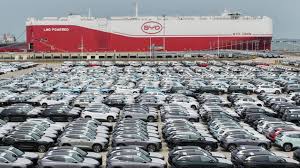
Meanwhile, private enterprises are injecting vitality into emerging industries. Automakers like BYD are driving innovation and leading global new energy vehicle (NEV) sales, while internet technology companies are transforming consumer behavior and supply chain ecosystems through digital innovation. The collaborative and competitive dynamics between SOEs and private firms enhance China’s overall capacity for innovation and resilience.
Synergy between manufacturing and services is redefining industrial competitiveness in China.
Revenue data shows a balanced economic structure: manufacturing contributed 40.48 percent and services 40.29 percent to the total revenue of the top 500 enterprises. This near-parity debunks the traditional view that manufacturing and services compete for dominance, instead demonstrating how manufacturing provides the foundation while services enhance value.
High-end equipment manufacturing has created demand for specialized services such as industrial design and operational management. Meanwhile, the booming NEV sector is fostering new business models in battery recycling and intelligent connectivity, opening a broad space for service-sector growth.
At the same time, digital technologies are accelerating the transformation of traditional manufacturing toward smart production. Supply chain finance is alleviating capital constraints for small and medium-sized enterprises, while upgraded logistics networks support lean operations and real-time delivery, enabling “zero inventory” manufacturing. The integration of manufacturing and services is creating a more efficient and globally competitive industrial system.
Coordinated domestic and international development expands growth potential.
The entry threshold for the 2025 list of the top 500 Chinese enterprises has risen by 11.76 percent from last year, while the overseas assets of listed companies reached 11.96 trillion yuan. The steadily rising transnational index of these firms, combined with solid domestic performance, reflects a development model that balances strong domestic development with expanding overseas presence.
Chinese companies are no longer simply exporting products but exporting value by embedding themselves deeper into global industrial chains. Smartphone manufacturers such as VIVO and Transsion have established significant market shares in emerging markets. This international expansion strengthens domestic development by building more resilient supply chains and enhancing industrial competitiveness.
This dual approach – anchored in domestic stability and bolstered by global engagement – enables Chinese enterprises to maintain strategic momentum amid global uncertainties.
From the complementary roles of public and private enterprises, to the convergence of manufacturing and services, and the interplay between domestic strength and international expansion, China’s top enterprises are powering the country’s economic transformation.
Looking ahead, continued optimization of resource allocation and stronger collaborative innovation will further empower Chinese companies to grow and lead industrial transformation, driving China’s economy steadily along the path of high-quality development. -
Asia-Pacific to strengthen cooperation and build an open world economy
By Huan Yuping, People’s Daily
As the world undergoes profound and accelerating changes unseen in a century, the Asia-Pacific stands at a critical crossroads. With complex challenges reshaping the global landscape, the upcoming 32nd APEC Economic Leaders’ Meeting has drawn global attention as observers look to discern the trajectory of regional cooperation and development.
A recent People’s Daily report titled “An Asia-Pacific of Vitality: Public Opinion Across 16 Countries” revealed that over 80 percent of respondents believe their countries have benefited from cooperation under the APEC framework. Seventy-five percent support more active and deeper participation in APEC cooperation, and more than half say their economies are becoming more open and cooperative. The message is clear: openness and cooperation remain the aspirations of the people and the prevailing direction of the times.
At a time marked by mounting unilateralism and protectionism, the enduring belief in openness stems from both historical experience and current realities. Since its inception during a wave of economic globalization, APEC has championed open cooperation. Over the past three decades, the Asia-Pacific has cut its average tariff rate from 17 percent to 5 percent, and contributed 70 percent of global economic growth. Per capita income in the region has more than quadrupled, and one billion people have been lifted out of poverty. This is an important contribution to human progress and global sustainable development.
Today, protectionism remains one of the most severe challenges to regional development. In response, economies across the Asia-Pacific are doubling down on openness and cooperation. The high-quality implementation of the Regional Comprehensive Economic Partnership, the upcoming signing of the China-ASEAN Free Trade Area 3.0 Upgrade Protocol, and the growing number of economies seeking to join the Comprehensive and Progressive Agreement for Trans-Pacific Partnership and the Digital Economy Partnership Agreement all underscore the region’s firm commitment to openness and its collective capacity to meet shared risks and challenges.
The fast-growing China-ASEAN cooperation offers a vivid example. In the first three quarters of this year, China’s total imports and exports with ASEAN were valued at 5.57 trillion yuan (about $785 billion), up 9.6 percent year on year.
Openness fosters prosperity, while isolation hinders progress. Looking ahead, openness and cooperation will remain the driving forces shaping the future of the Asia-Pacific.
Innovation-driven transformation for sustainable development
Across the region, new partnerships are emerging to drive innovation and sustainability. In Malaysia, Chinese enterprises are building a regional hub for new energy vehicle manufacturing. In Indonesia, China and its local partners are jointly developing a green industrial chain to advance the battery sector. In Chile, China’s green technologies are empowering the growth of clean energy and electric mobility. A new industrial ecosystem is quietly taking shape across the Asia-Pacific, underpinned by collaboration and a shared vision for the future.
Inclusive development as a foundation for cooperation
Sustainable and resilient Asia-Pacific cooperation requires inclusiveness, a people-focused approach, and equitable sharing of growth benefits across all regional economies. Recently, the China-assisted permanent demonstration base for the Juncao and upland rice technology project was completed in Papua New Guinea. Juncao cultivation has significantly boosted local farmers’ incomes and enhanced food security through increased agricultural productivity.
Prime Minister of Papua New Guinea James Marape remarked, “China’s support for our Juncao and upland rice project has achieved remarkable results, playing an important role in our agricultural development and poverty reduction efforts.”
Strengthening governance to secure openness and cooperation
Sustainable development requires upholding the WTO-centered multilateral trading system and rejecting all forms of protectionism. Any attempt to obstruct or dismantle the region’s long-established industrial and supply chains will undermine the foundation of Asia-Pacific economic cooperation. As a major force in the global economy, the Asia-Pacific must demonstrate responsibility and leadership in preserving global trade norms and ensuring a stable, rules-based economic order.
“Building a Sustainable Tomorrow: Connect, Innovate, Prosper,” the theme of the 32nd APEC Economic Leaders’ Meeting, captures the spirit of the times. As APEC members gather in South Korea, the international community widely expects the Asia-Pacific to continue standing at the forefront and playing a greater role in upholding an open world economy.
Moving forward, all parties should remain committed to the original aspiration of cooperation, follow the trend of history, and work together to build an Asia-Pacific community with a shared future of openness, inclusiveness, innovation-driven growth, greater connectivity and mutually beneficial cooperation, thereby contributing greater certainty and momentum to regional and global development. -
Safeguarding security, stability of global industrial, supply chains requires joint efforts
By Zhong Sheng, People’s Daily
Economic and trade relations between China and the United States remain a focal point of international attention. The U.S. has repeatedly threatened to impose additional tariffs in an attempt to coerce China, an approach that has consistently proved counterproductive.
China, acting in accordance with its domestic laws and regulations, has continued to refine its export control system, which is a legitimate exercise of sovereign rights. The U.S. should adopt a rational and pragmatic stance, work in the same direction with China, and jointly safeguard the security and stability of global industrial and supply chains.
Since the China-U.S. talks in Madrid, the U.S. has introduced a series of restrictive measures against China. It has put multiple Chinese entities to the Entity List and Specially Designated Nationals List, arbitrarily expanded the scope of control over businesses with the Affiliates Rule that affects thousands of Chinese companies, and persisted with the implementation of Section 301 measures targeting China’s maritime, logistics and shipbuilding industries in disregard of China’s concerns and goodwill.
Such moves have seriously undermined China’s interests, damaged the atmosphere for bilateral economic and trade consultations, disrupted international trade rules, and destabilized global industrial and supply chains. They have also had a chilling effect on bilateral economic relations and the broader global economy.
The U.S. criticism of China’s export control measures on rare earths and related items exemplifies a double standard. As a responsible major country, China seeks to balance national security with international common security. Amid an increasingly volatile international landscape and recurring military conflicts, and considering the potential use of medium and heavy rare earth materials in weapons of mass destruction and other sensitive fields, China’s export controls on these items aim to better safeguard world peace and regional stability while fulfilling its international non-proliferation obligations.
It must be emphasized that these measures are regulatory in nature and do not constitute a ban. China will continue to approve regulatory-compliant applications and is committed to working with other nations to maintain the stability of global industrial and supply chains.
In stark contrast, the U.S. has long overstretched the concept of national security and abused export control measures, imposing discriminatory restrictions against China and arbitrarily exercising long-arm jurisdiction on products ranging from semiconductor equipment to chips.
While China’s export control list covers just over 900 items, the U.S. list covers more than 3,000. As China lawfully improves its export control system, the U.S. continues to rely on coercion through tariff threats and export control measures, triggering market turbulence and undermining global economic stability.
In the face of unreasonable suppression and threats, China maintains a consistent and clear stance: if the U.S. wants a fight, China will fight till the end; if the U.S. wants to talk, China will keep the door open.
Coercion or forming cliques and exerting pressure on China are counterproductive and misguided. China possesses sufficient tools and capabilities to safeguard its interests and will take necessary countermeasures against actions that undermine them.
China’s responses are not only to defend its legitimate rights and interests, but also to uphold international fairness and justice. China has always adhered to the principle of equality and mutual benefit. In the interest of the international community as a whole, it is committed to promoting mutual trust, reducing misunderstandings, and strengthening cooperation with the U.S. through dialogue and consultation. In doing so, China strives to play its role as a major country in safeguarding the security and stability of global industrial and supply chains.
Having provoked a series of disruptions, the U.S. now expresses a desire to restore stability. If this intention is truly sincere, the path forward is clear. In the past four rounds of consultations, China and the U.S. reached several important consensuses, which effectively stabilized bilateral economic and trade relations and sent positive signals to global markets. This fully demonstrates that with mutual respect and equal consultation, both sides are fully capable of managing differences and finding solutions. The prerequisite, however, is that the U.S. side must align its actions with its stated commitments. It cannot call for engagement while simultaneously imposing new restrictive measures and threats. Should the U.S. continue on this unilateral path, China will respond with firm countermeasures to protect its legitimate rights and interests.
According to a People’s Daily report titled “An Asia-Pacific of Vitality: Public Opinion Across 16 Countries,” over half of U.S. respondents believe their country is becoming increasingly closed and protectionist – a sentiment far more prevalent than in other nations. About half view U.S. protectionist policies as major barriers to global free trade, and nearly 80 percent hope to see lower tariffs and greater liberalization and facilitation of trade and investment. These findings reflect a clear public desire for openness and cooperation.
Maintaining a sound international economic and trade order and ensuring the security and stability of global industrial and supply chains are shared responsibilities of all parties. It is hoped that the U.S. will demonstrate sincerity for dialogue and return to the right track of consultation at an early date. A stable, healthy, and sustainable China-U.S. economic relationship will not only strengthen global supply chains but also bring much-needed certainty and positive momentum to the world economy.
(Zhong Sheng is a pen name often used by People’s Daily to express its views on foreign policy and international affairs.) -
Xinjiang turns from inland heartland to frontier in China’s opening up
By Ouyang Jie, People’s Daily
At 10 a.m. in the inspection yard of the Horgos highway port in northwest China’s Xinjiang Uygur autonomous region, a steady stream of vehicles rolled through the border. Among them were trucks transporting 80-meter-long wind turbine blades and refrigerated vans carrying fresh fruits and vegetables. New energy vehicles (NEVs) were also being exported to Central Asian countries, while honey, fruits, and wheat arrived from across the border.
At the Urumqi International Land Port Area, China-Europe freight trains were being loaded with garments, household goods, machinery, and auto parts from manufacturing centers such as Guangzhou and Yiwu. These goods, following customs inspection and sealing, would be shipped aboard the Tianshan train toward destinations across Central Asia.
Leveraging its position as the core area of the Silk Road Economic Belt, Xinjiang has become a driving force for China’s high-level opening up. According to Urumqi Customs, Xinjiang’s total imports and exports grew by an average of 40 percent annually between 2021 and 2024. In the first eight months of 2025, Xinjiang’s foreign trade reached 356.31 billion yuan (about $50 billion), up 25.4 percent year on year, 21.9 percentage points above the national average.
As a key gateway for China’s westward opening up, the China (Xinjiang) Pilot Free Trade Zone, established in 2023, further accelerated growth. In 2024 alone, it attracted over 9,000 new enterprises, which accounted for more than 30 percent of the region’s total import and export volume.
In Horgos, the growing demand for Chinese NEVs in Central Asia has created new cross-border job opportunities. Wang Xianguo, one of nearly 4,000 so-called “ferryman,” transports Chinese NEVs to Kazakhstan, returning to China via cross-border bus service. “The job is flexible, and the income is stable,” he said. “I can take these trips during the off-season for farming.”
The cars he drives are exported by Horgos Haocheng International Freight Forwarding Co., Ltd. “Chinese electric vehicles are highly popular in Central Asia and the Middle East, especially among younger consumers, due to their advanced features and reliable performance,” said Liang Hao, general manager of the company.
As China’s largest land port for automobile exports, Horgos handled 258,000 vehicle exports between January and August this year, up 8.5 percent year on year and reaching a record high. Exports of electric vehicles surged by 45.2 percent during the same period.
“The ‘ferryman’ model offers greater flexibility and cost-efficiency compared to traditional carrier-truck transport, making it increasingly attractive to foreign importers,” Liang said.
The evolving needs of enterprises have driven customs to innovate clearance models. To enhance efficiency, Horgos Customs introduced China’s first dedicated clearance model for ferrymen. Each vehicle is assigned a QR code for automatic recognition by smart cameras, reducing customs processing time from over 30 hours to under five, a more than 80 percent improvement in efficiency.
Meanwhile, transport connectivity in Xinjiang continues to advance. Urumqi Tianshan International Airport now operates 285 passenger and cargo routes connecting 27 countries and 40 cities, with international air cargo volume rising 446 percent this year.
Rail networks are increasingly busy. As a key hub linking European and Asian economies, the Urumqi International Land Port Area operates 21 Tianshan China-Europe freight train routes to 19 countries and 26 cities across Central Asia, the Middle East, and Eastern Europe, carrying over 200 categories of goods.
Road connectivity in Xinjiang continues to strengthen. Of the region’s 21 officially approved ports of entry, 19 are operational, including 14 highway ports, positioning Xinjiang as a critical bridge linking China with its western neighbors. The region currently operates 119 bilateral international road transport routes to Europe, accounting for more than a third of China’s total.
As trade volumes surge, local governments and customs authorities across Xinjiang are streamlining business processes and enhancing service efficiency. At the Alashankou railway port in Xinjiang, large container scanners now complete inspections in under five minutes, over 90 percent faster than manual checks. At Urumqi International Land Port Area, enhanced customs facilitation measures have improved train efficiency by more than 30 percent and reduced container handling costs by 200 yuan.
At the Torugart port, the development of the China-Kyrgyzstan-Uzbekistan railway has significantly increased cross-border passenger flows. In response, customs have introduced appointment-based clearance and intelligent inspection systems, enabling smoother and faster border crossings.
With continuous improvements in cross-border trade infrastructure and logistic efficiency, Xinjiang is rapidly transforming from a remote inland region into a dynamic frontier of China’s opening up. -

Bridges that connect: a window into China’s development
By Long Guoyi
From towering mountains to boundless seas, bridges now span across China’s vast land, transforming once-isolated regions into seamlessly connected landscapes. In recent months, a string of new bridges have come into service, drawing wide public attention.
In southwest China’s Guizhou province, the Huajiang Grand Canyon Bridge, hailed as the world’s tallest and longest-span bridge, has become a new tourist attraction following its inauguration.
In Badong county, central China’s Hubei province, the newly completed Yesanguan Bridge has shortened the travel distance between Yesanguan township and the Yesanguan railway station by approximately 10 kilometers.
In Jilin city, northeast China’s Jilin province, the Hongqi Bridge spans the Songhua River, easing rush-hour congestion and improving urban mobility.
Bridge by bridge, these monumental structures now stretch across rivers, lakes, seas, and valleys, linking mountain ranges and communities. Each serves not only as critical infrastructure but also as a powerful symbol of China’s economic and social progress.
These record-breaking projects underscore China’s emphasis on self-reliance and technological innovation. The Shenzhen-Zhongshan Link in the southern province of Guangdong, with a clearance of 91 meters above sea level, is now the world’s highest sea bridge. The Aizhai Bridge in central China’s Hunan province has set multiple world records, while the Tian’e Longtan Bridge in Guangxi Zhuang autonomous region is the world’s first steel-reinforced concrete arch bridge exceeding 600 meters in span.
Such engineering milestones have filled key technical gaps, established China’s own engineering standards, and strengthened a fully independent industrial chain. At the core of these achievements is a strategy-driven commitment to original scientific research and breakthrough innovation in critical technologies.
China’s bridge boom also reflects the vibrancy of its vast domestic market. Each new bridge resolves logistical bottlenecks and enhances regional connectivity. Since its opening, the Hong Kong-Zhuhai-Macao Bridge has repeatedly broken traffic records and become a crucial artery of regional integration in the Guangdong-Hong Kong-Macao Greater Bay Area. The total import and export value through Zhuhai port had exceeded 1 trillion yuan ($140.4 billion).
The Changtai (Changzhou-Taizhou) Yangtze River Bridge in Jiangsu province has reduced travel time between Changzhou and Taizhou from 80 minutes to just 20, sharply increasing regional mobility. Within a month of its opening, cargo throughput at Changzhou’s Lu’anzhou Yangtze terminal recorded double-digit growth.
By bringing regions closer together, these projects accelerate economic activity and reinforce efforts to create a unified national market.
Beyond economics, China’s bridges reflect a deep commitment to inclusive development. In remote areas, bridges link urban and rural communities, embodying the principle that “no one should be left behind on the road to socialism.”
Over a decade ago, an iconic image captured two sisters crossing the roaring Nujiang River in Nujiang Lisu autonomous prefecture, southwest China’s Yunnan province, via a ropeway to reach school. That scene epitomized the challenges faced by remote communities. Today, with initiatives like “ropeways-to-bridges,” such perilous crossings have been replaced. The completion of the Qiaoma Bridge transformed local access, enabling communities to pursue new development opportunities.
“We’re living a life we never dared to dream of,” the sisters said. Each bridge serves as a passage to progress, transforming local landscapes, facilitating trade, and integrating remote communities into the national modernization process.
Across the country, many bridges are under construction. As more of them open to traffic, they will continue to tell new stories of innovation, connection, and shared development.