Category: News

  • China Launches Two-Month Crackdown on Social Media Content

    China Launches Two-Month Crackdown on Social Media Content

    China’s top internet regulator has announced a sweeping two-month crackdown on social media platforms, pledging to curb what it describes as “malicious incitement of conflict” and “negative outlooks on life such as world-weariness.”

    The Cyberspace Administration of China (CAC) said the campaign is designed to regulate harmful online activity and promote a “more civilised and rational” digital environment. However, the notice did not specify when the initiative will officially begin.

    The move follows penalties imposed this month on three major platforms — Weibo, Kuaishou, and Xiaohongshu (known in English as Rednote) — which authorities accused of neglecting content management duties. On Saturday, the CAC revealed that Weibo and Kuaishou would face “disciplinary and punitive measures” for amplifying celebrity gossip and what it called “undesirable” material. Officials have yet to clarify what punishments will be applied.

    In its statement, the regulator outlined several online issues under scrutiny, including the spread of rumours about the economy, finance, welfare, and public policy. The campaign also targets content linking identity, region, or gender to sensitive issues in ways authorities deem stigmatising, as well as posts that exaggerate negative events or encourage defeatist attitudes.

    Observers note the crackdown could extend to popular youth trends such as “lying flat” or “letting it rot,” phrases that reject China’s demanding work culture in favour of a more relaxed lifestyle.

    This is not the first time officials have warned against online speech that challenges social norms. In July, authorities in Zhejiang province cautioned comedians against making jokes that stir gender discord. Similarly, Weibo has previously flagged content expressing “pessimistic” views on China’s economy.

    The CAC maintains the campaign is aimed at protecting public order online, but critics say it underscores Beijing’s tight grip on digital expression and its intolerance for narratives that diverge from state priorities.

  • K1 De Ultimate Inspires Wasiu Haruna Ishola L1’s Upcoming Album Masterpiece

    K1 De Ultimate Inspires Wasiu Haruna Ishola L1’s Upcoming Album Masterpiece

    Fuji and Apala fans are in for a treat as contemporary Apala-Fuji star, Wasiu Haruna Ishola L1, prepares to release his highly anticipated double album, Masterpiece, in Lagos this November. Supported by Big Bodeyy Promotions, the launch is scheduled for the second week of the month.

    The album offers two distinct listening experiences — one side rooted in Fuji rhythms and the other in pure, original Apala music — giving audiences a fresh yet authentic take on indigenous Nigerian sounds.

    Popularly known as Lagunja 1, Wasiu Haruna Ishola is the son of late Apala legend Haruna Ishola Bello and brother to renowned musician Musiliu Babatunde Haruna Ishola. With Masterpiece, he both honours his lineage and recognises the influence of his mentor, Alhaji Wasiu Ayinde K1 De Ultimate, whose artistry helped shape his approach to music.

    “This album is both a tribute to tradition and a bold step into the future,” Lagunja 1 said. “It is dedicated to my late father and to my mentor, Alhaji Wasiu Ayinde K1 De Ultimate, while embracing digital innovation.”

    He stressed that Nigerian musicians must embrace global advancements to rejuvenate audience tastes:

    “We have to explore more, acquire new knowledge and take advantage of the ever-evolving digital world,” he added.

    With its seamless blend of heritage and modern artistry — and inspired by K1 De Ultimate’s groundbreaking style — Masterpiece is positioned to be one of the standout Nigerian music releases of the year.

  • WIELD-I to Protest Against NAFDAC Over Alleged Toxic Chemicals, Fake Drugs

    WIELD-I to Protest Against NAFDAC Over Alleged Toxic Chemicals, Fake Drugs

    Calls for Removal of Prof. Mojisola Christianah Adeyeye

    The Women’s Inclusion, Empowerment and Leadership Development Initiative (WIELD-I), in collaboration with allied civil society organizations, has announced plans for a peaceful protest at the National Agency for Food and Drug Administration and Control (NAFDAC) headquarters in Abuja on Thursday, September 26, 2025, and is calling for the immediate removal of the agency’s Director-General, Prof. Mojisola Christianah Adeyeye.

    In a statement signed by its Coordinator, Okeke Amarachi, and released to journalists on Friday, WIELD-I said the demonstration will begin at 10:00 a.m. and will focus on what it described as “alarming regulatory failures” within the agency.

    The group accused NAFDAC of allowing the infiltration of banned agrochemicals, particularly atrazine and paraquat, into Nigerian markets, exposing farmers, consumers, and the environment to severe risks. It further alleged that the circulation of fake and substandard drugs has reached “epidemic levels,” citing warnings from the Association of Community Pharmacists of Nigeria (ACPN) that over half of the medicines in circulation may be counterfeit.

    “These lapses amount to institutional negligence and compromise. Millions of Nigerians are at risk because NAFDAC has failed in its core mandate of safeguarding public health. We therefore demand the immediate removal of the Director General,” the statement read.

    The organizers stressed that the march will be peaceful and confirmed that the FCT Commissioner of Police has been officially notified to provide security and ensure order during the protest.

    Farmers, pharmacists, students, activists, and concerned citizens have been invited to participate in what the coalition described as “a historic stand for the right of Nigerians to safe food and medicines.”

  • Disambiguating Jurisdictional Boundaries of Federal and State Governments in Electricity Regulation

    Disambiguating Jurisdictional Boundaries of Federal and State Governments in Electricity Regulation

    By Emmanuel Ukera, Esq

    The enactment of the Constitution of the Federal Republic of Nigeria (CFRN),1999 (Fifth Alteration) (No.17) Act,2023 and the Electricity Act, 2023 which paved way for full devolution of intra-state electricity regulatory powers to state governments have stirred up a lot of contestations amongst stakeholders than ever imagined.

    The bone of contention appears rooted in the misconception amongst stakeholders regarding the extent of the regulatory powers available to state governments under the current multitier regulatory regime recognized by the CFRN (Fifth Alteration) (No.17) Act,2023 and the EA,2023. One of such misconceptions which has gained traction in the media is that the recent constitutional alteration and the consequent enactment of the EA, 2023 have for the first time devolved electricity regulatory powers to sub-nationals to the extent that the newly established State Electricity Regulatory Commissions (SERCs) can now regulate ( in all its ramifications), electricity generation, transmission and distribution activities within state boundaries to the exclusion of the Nigerian Electricity Regulatory Commission ( NERC), which hitherto regulated electricity activities nationwide.

    Relatedly, there are those who are of the strong opinion that under the current legal regime, power plants located within state boundaries should fall under the overriding regulatory powers of SERCs including full takeover and control of the eight (8) power plants now operated by the eight successor generating companies (GENCOs) that emerged after the conclusion of privatization in 2013.

    It has also been argued that the EA,2023, is an iniquitous and needless piece of legislation which has abolished cross-subsidization and provided the framework for promotion of energy inequalities especially considering the disproportionate distribution of electricity infrastructure between the northern and southern states of Nigeria.

    The instant intervention seeks to disambiguate the jurisdictional boundaries of the SERCs and NERC under the current legal regime and shed light on recent debates.

    To fully understand the jurisdictional confines of the two levels of governments regarding electricity regulation in Nigeria, it must be stated that the Constitution of the Federal Republic of Nigeria, 1999 (as altered) and the Electricity Act, 2023 constitute the primary sources of electricity law in Nigeria currently. Furthermore, there are other federal enactments that must be taken into consideration when discussing the regulatory powers of the two levels of government.

    These include the Standard Organization of Nigeria (Establishment)Act which is the general legislation on national technical standards; Federal Competition and Consumer Protection Commission Act which is the general legislation on competition, consumer protection, and anti-trust; Climate Change Act ,2021 which deals with climate change mitigation and adaptation bearing in mind Nigeria’s international commitment to climate change; Water Resources Act, CAP W2, Laws of the Federation of Nigeria (LFN) ,2004 which regulates the planning, development and use of water resources that affects more than one state; National Environmental Standards and Regulations Enforcement Agency (Establishment) Act; and the Environmental Impact Assessment Act, CAP.E12, LFN,2004 which are relevant in the area of environmental impact of electricity projects or related activities in the power sector. Additionally, licensed electricity entities operating under the regulatory purview of state regulators are expected to comply with extant federal enactments on company income tax, personal income tax and value added tax etc .

    The above, amongst others constitute the gamut of laws that are critical in disambiguating the legislative and regulatory competences of the two levels of government in Nigeria on the issue of electricity and should be well understood by key players in the power sector.

    With respect to the powers of the two levels of government under the Constitution, one must recall that prior to 1999, the business of electricity generation, transmission and distribution was for decades under the sole control of the defunct National Electric Power Authority (NEPA) as a vertically integrated monopoly.

    The defunct NEPA operated a redial national grid system comprising of on-grid power plants, high voltage transmission lines and distribution lines through which electricity albeit epileptically was supplied to Nigerian nationwide without regard to geographic boundaries of state governments.

    This integrated high voltage system of interconnected generation plants, transmission lines, substations and related facilities crisscrossing states of the Federation and beyond that was operated by NEPA as a unified network is what is essentially referred to as the national grid system.

    However, following the promulgation of the CFRN,1999, electric power was included as an item on the concurrent list. In this regard, item F, paragraphs 13,14, and 15, Part II, Second Schedule to the CFRN,1999 (“the Constitution”) defined the legislative competence of the respective levels of government regarding electricity.

    The implication of the aforementioned constitutional provisions is that, since 1999, state governments were at liberty to invest in electricity within their domains including the power to set up of state grids and regulate intra-state electricity where they possess the wherewithal. No state government took advantage of this constitutional provision either due to lack of the political will or some other inexplicable reasons.

    It is, however, important to note that prior to constitutional alteration in 2023, the powers of State Houses of Assembly to legislate on intra-state electricity generation, transmission and distribution activities was greatly impeded by the restriction under paragraph 14 (b), Part II, Second Schedule to the Constitution “to areas not covered by the national grid system within that State”.

    It was this restrictive phrase “to areas not covered by the national grid system within that State” that was essentially deleted through the enactment of the CFRN,1999 (Fifth Alteration) (No.17) Act,2023. According to the long title to the CFRN,1999 (Fifth Alteration) (No,17) Act,2023, the constitutional alteration was intended to “allow states to generate, transmit and distribute electricity in areas covered by the national grid”…. What is apparent from the foregoing is that it is not correct to say that the CFRN,1999, (Fifth Alteration) Act (No.17) Act,2023 for the first time transferred “electric power” from the exclusive list to the concurrent list as it is often reported in some sections of the media. Electric power was an item in the concurrent list to the CFRN 1999 and remains so even after the said constitutional alteration of 2023.

    What the CFRN,1999 (Fifth Alteration) (No.17) Act,2023 did is to simply delete the inhibitive words “to areas not covered by the national grid system within that State” to allow state governments legislate on and regulate intra-state electricity activities and most fundamentally “generate, transmit and distribute electricity in areas covered by the national grid” as expressly stated in the long title.

    In other words, the constitutional alteration was not aimed at empowering state governments to embark on far reaching regulatory measures that would conflict or undermine the regulatory powers of the Nigerian Electricity Regulatory Commission (NERC) such as taking over NERC licensed on-grid power plants, setting tariffs or slashing tariffs for electricity procured through the National Wholesale Electricity Market(NWEN) or regulation of other activities on the national grid .

    The constitutional alteration was primarily intended to promote investments within state boundaries without being inhibited by the presence of the national grid or component of it within such state boundaries.

    In simple terms, by virtue of this constitutional alteration, state governments can now embark on embedded generation, mini-grids, licensing and regulation of independent electricity distribution networks (IEDNs) and independent electricity distribution network operators (IEDNOs), and even set up state grid even if such activities have bearing on the national grid.

    Unfortunately, most state governments have since focused on issuing controversial regulatory measures that will throw the Nigerian Electricity Supply Industry (NESI) in disarray and put the state regulators at cross-purposes with NERC instead of taking initiatives that will boost investments and ultimately improve electricity access to their citizens, the latter being the primary intendment of the constitutional alteration.

    Furthermore, the powers of state governments to legislate on and regulate intra-state electricity activities without being inhibited by the presence of the national grid as recognized by the CFRN (Fifth Alteration) (No.17) Act,2023 must be understood against the preeminence powers of the federal government to ” make laws for the Federation or any part thereof with respect to — electricity and establishment of electric power stations, generation and transmission, damming of water for electricity generation, cross-border electricity trading and distribution, promotion and establishment of the national grid system, regulation of right of any person to use, work, operate any plant, apparatus, equipment or work designed for the supply or use of electrical energy as provided under paragraph 13 (a)(b)(c)(d)(e)and(f) part II, Second Schedule to the Constitution all of which remains unaffected by the recent constitutional alteration.

    The implication is that it will amount to constitutional infraction for any state government to set or approve parallel technical standards and operational codes or set up an agency for enforcement of technical standards under the guise exercising intra-state electricity regulatory powers.

    Similarly, while state governments are at liberty to invest around the national grid presence within their state boundaries, in deference to the powers of the federal Government to regulate the national grid system as indicated above, any investment around the national grid including activities, transactions and services that have bearing on the national grid system will still require the authorization (not license) of NERC before such can legally take place. Such activities, transactions and services that will require NERC authorization may include : interconnection to, injection into, wheeling of electricity over, withdrawal of electricity from the national grid; sale and purchase of electricity, the delivery of which requires the use of the national grid; provision and receipt of ancillary services to or from the national grid; use of metering, control, dispatch and other systems required by the Grid Code for interconnection and wheeling services etc.

    The law is trite, the apex court has held in the case of **AG. Ogun State v.Aberuagba &Ors (1985)LPELR-3164** that the powers of state governments to legislate on matters in the concurrent list to the Constitution is limited by the constitutional doctrines inconsistency and covering the field.

    One other issue that requires clarification here is the claim in some quarters that the EA,2023, is an iniquitous and needless piece of legislation which has abolished cross-subsidization and provided the framework for promotion of energy inequalities. This is an erroneous impression borne out of lack proper understanding of the objectives, principles and rigorous processes that culminated into the enactment of the EA,2023.

    To begin with, the issue of cross-subsidization was introduced through the Power Consumer Assistance Fund (PCAF) and first given statutory recognition under the Electric Power Sector Reform Act,2005 (now repealed) but retained under part XV of the EA,2023.

    However, with the full decentralization of electricity including policy matters, the framework for subsidy administration in the NESI is currently undergoing review in the National Assembly bearing in mind the need to allow for the two levels of government to take independent policy decisions on matters of electricity subsidy and also determine fairly, which categories of electricity consumers should bear the brunt of cross subsidization under the current multitier electricity industry.

    It must also be added that the Electricity Act,2023 is not a framework for promotion of energy inequalities but was introduced following a rigorous stakeholder engagement including the Nigerian Governors Forum (NGF) to replace the EPSRA,2005, the latter being a reform legislation that became unsuitable for the next phase of the electricity market after conclusion of the privatization exercise in 2013.One of the key features of the EA,2023 as a compelling framework for addressing energy inequalities is the provision of Section 110 which imposes an obligation on NERC to ensure fair spread of transmission and other electricity infrastructure across the country. Similarly, the EA,2023 for the first time made provision for integrated resource planning and leveraging on this provision the Federal Executive Council recently approved the National Integrated Electricity Policy and Implementation Plan,2024 which takes into consideration the peculiar strengths and weaknesses of the various state governments. It is expected that state governments will take advantage of this paradigm shift that recognizes a robust role for wind,biomas, solar and other renewable sources of energy in addressing perceived or existing energy inequalities.

    From the foregoing, it can be safely concluded that the current legal regime for regulation electricity in Nigeria as articulated above leaves no room for confusion or controversy. With about 14 states already enjoying regulatory autonomy within their respective state boundaries, NERC should focus on regulation of the NWEN and activities on the national grid system while states should focus on retail activities within their respective boundaries without encroaching on the jurisdiction of NERC.

    The primary focus of state governments at this stage of the market should be to adopt state integrated electricity policies and plans that will among other things leverage on potentials for generation and consumption of electricity from renewable sources such as wind, solar and biomass and as a priority integrate a large number of big self-generation consumers into the emerging state markets. A robust plan for integration of self-generation consumers into the nascent state electricity markets can in the short and medium terms be achieved through embedded generation, issuance of licenses for IEDNs/IEDNOs and mini-grids etc.

    The Federal Government through the Ministry of power should equally fast track and streamline ongoing transmission and distribution upgrades under the auspices of FGN Power to allow for efficient evacuation of generated power across state boundaries where such states are in position to execute bilaterals that recognize NERC tariffs. State governments should avoid toying with the idea of unstructured tariffs which has left the National Wholesale Electricity Market in crippling debts.

    The weakest links in the Nigerian power value chain today remains the transmission and distribution segments and with concerted efforts being made by President Bola Ahmed Tinubu,GCFR to settle legacy debts owed GENCOs, radical actions need to be taken to conclude ongoing upgrade of the transmission and distribution assets for operational and financial synergy along the national grid.

    Barrister Ukera, Esq can be reached on emmauks@yahoo.com

  • CSGGG Hails Rivers Sole Administrator’s Leadership

    CSGGG Hails Rivers Sole Administrator’s Leadership

    • Says Peace Brokered, Trust Restored
    • …Lauds Transformative Governance, Credits Tinubu’s Foresight in Critical Appointment

    The Civil Society Groups for Good Governance (CSGGG) has commended the Sole Administrator of Rivers State, Vice Admiral Ibok-Ete Ekwe Ibas, for what it describes as a “remarkable display of leadership, vision, and national commitment” that has restored peace and stability to the state.

    In a statement issued on Monday and signed by its President, Chief Ogakwu Dominic, the group praised Ibas decisive and inclusive leadership style, which it said helped defuse long-standing political tensions and rebuild public trust in the state’s governance structures.

    “Through his forthright vision and uncommon commitment, the Sole Administrator has successfully neutralized conflict situations, restored harmony across communities, and stabilized the political landscape of Rivers State,” the statement read.

    CSGGG particularly noted the peaceful and credible conduct of the recent local government elections, describing it as a milestone achievement that underscored the Administrator’s competence and statesmanship.

    “Despite widespread doubts, the elections were held in an atmosphere of calm, fairness, and inclusivity. This success brought together divergent political interests and fostered reconciliation among previously polarized factions,” Chief Dominic said.

    The group also lauded the Administrator’s continued service to the nation, even after his formal retirement, describing it as an act of rare patriotism and national sacrifice.

    “His unwavering dedication to national assignments, even after meritorious retirement from service, reflects true statesmanship and a selfless devotion to Nigeria’s unity and progress,” the statement added.

    CSGGG further commended President Bola Ahmed Tinubu for what it called a “strategic and visionary” appointment, made at a time when the state was grappling with political uncertainty.

    “At a time when decisive leadership was needed to calm the storm in Rivers State, the President acted wisely by appointing someone with the right credentials, experience, and political acumen,” Chief Dominic stated.

    He urged citizens and stakeholders in the state to rally behind the Administrator’s efforts and ensure that the hard-won peace is sustained through continued cooperation and dialogue.

    “Today, Rivers State is no longer a symbol of division, but a beacon of hope, unity, and governance done right,” the statement concluded.

  • Open Manhole Alert: Lagos Govt’s Swift Response Laudable, Says Coalition

    Open Manhole Alert: Lagos Govt’s Swift Response Laudable, Says Coalition

    The Coalition of Good Governance Promoters and Pan Africanism has commended the Lagos State Government for promptly repairing an open manhole along the Ikeja axis less than 24 hours after a citizen raised the alarm in a viral video.

    The intervention was prompted by broadcast journalist Deji Badmus, who set up a warning billboard over the open manhole last Saturday to draw attention to the danger.

    Olufemi Daramola, the Special Adviser to Governor Babajide Sanwo-Olu on Infrastructure, confirmed on Sunday that relevant agencies were mobilized overnight to address the safety hazard.

    Reacting to the development in a press statement, the National Organiser of the Coalition, Ola Adarabioyo, on Monday in Lagos, commended the Sanwo-Olu-led administration for its prompt response to citizen concerns and for its mature handling of the issue regarding the manhole.

    The organization characterized Governor Sanwo-Olu as a listening leader with exceptional qualities that other leaders and aspiring politicians should emulate. They noted that his developmental efforts in the state are commendable, and his ability to respond quickly to citizens’ concerns is admirable.

    The group expressed full support for the Lagos State Government, emphasizing that it acts in the best interest of the populace and is committed to delivering good governance. They encouraged the youth to emulate Governor Sanwo-Olu’s leadership qualities and cautioned against the dangers of vandalizing public infrastructure, such as manhole covers.

    “First, we must commend Governor Babajide Sanwo-Olu and his dedicated team for swiftly responding to the concerns raised by a responsible citizen regarding the manhole in the Ikeja area.

    “While we applaud Deji Badmus’s civic action in highlighting this public danger, it is heartening to see the state respond so quickly once the issue was brought to their attention.

    “We commend the Lagos State Public Works Corporation, the drainage team, and the General Manager for their tireless efforts to ensure the manhole was repaired promptly.

    “It is also important to remind residents of the consequences of road vandalism and the misuse of public infrastructure. These manholes are usually covered when constructed, but may later be vandalized by individuals with malicious intent. Therefore, we urge the Lagos government to hold those responsible for such acts accountable.

    “We will continue to support Governor Sanwo-Olu’s administration as he has assured us of his commitment to respond promptly to the concerns of the people.

    “Additionally, politicians and other governors should learn from Governor Sanwo-Olu’s approach to this issue. Unlike others, he did not suggest that the call for repairs was politically motivated; he simply addressed the problem, serving as a lesson for others.

    “Sanwo-Olu stands as a mentor to young people, and his developmental strides in the state resonate with every resident and visitor in Lagos.” Adarabioyo said.

  • Design Her Future Vocational Hub Launches in Benin City to Empower Women and Girls Across Edo State

    Design Her Future Vocational Hub Launches in Benin City to Empower Women and Girls Across Edo State

    The *Design Her Future Vocational Hub* was officially launched today in Benin City, Edo State, marking a milestone for women’s empowerment and economic inclusion in Nigeria. The hub, founded and implemented by *Women Helping Women for a Sustainable Tomorrow Foundation (WHW)*, will serve as a transformative space where women and girls can access vocational training, mentorship, and opportunities to design sustainable futures for themselves and their communities.

    “At today’s opening of the Design Her Future Vocational Hub in Benin City, we are not just unveiling a facility—we are unlocking opportunities for women to design their own future. This hub is the result of powerful partnerships. With the leadership of the Edo State Ministry of Women Affairs, the Edo State Diaspora Agency, and the Edo State Government Board for Technical and Vocational Education, the vision and drive of WHW as the founding organization and implementing arm, the mentorship and community grounding of Victorious Living Fellowship, and the strategic guidance of Capital Pulse LLC, we have created a space where women can gain skills, confidence, and independence. When women thrive, families grow stronger, communities prosper, and our economy flourishes. Together, we are writing a new story for Edo State—one where no woman is left behind, and every dream has a chance to shine.” — Professor Elizabeth Pedro

    Partners in Impact

    The Design Her Future program is a collaborative effort bringing together diverse expertise:

    – Women Helping Women for a Sustainable Tomorrow Foundation (WHW): Founding organization and implementing arm of the initiative.

    – Edo State Ministry of Women Affairs: Providing policy alignment and support.

    – Edo State Diaspora Agency: Strengthening global-local linkages.

    – Edo State Government Board for Technical and Vocational Education: Ensuring accreditation and alignment with state education standards.

    – Victorious Living Fellowship: Offering mentorship, faith-based guidance, and community empowerment.

    – Capital Pulse LLC (USA): Providing strategic advisory, business development, and blended finance expertise.


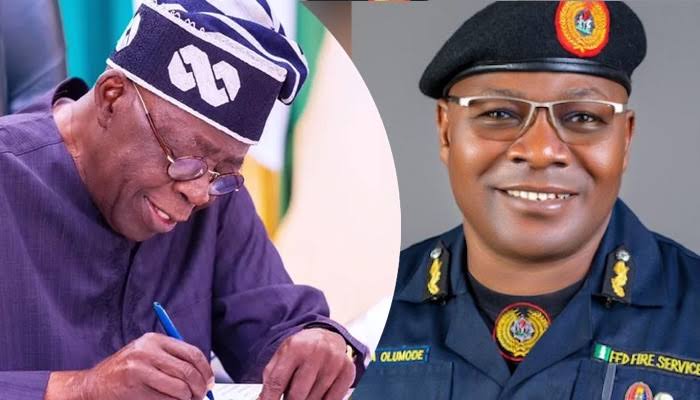
  • Olumode’s Appointment: A Round Peg in a Round Hole — CWAI

    Olumode’s Appointment: A Round Peg in a Round Hole — CWAI

    The recent appointment of the Controller-General of the Federal Fire Service (FFS), CG Olumode Samuel Adeyemi by the President, Bola Ahmed Tinubu on the 14th August, 2025, is indeed a remarkable turnaround in the annals of the service and a change agent who is a welcome development.

    Since the inception of the Federal Fire Service, this is the first time such an appointment has been made, which is hailed by all and sundry, including well-meaning Nigerians who have watched the present CG grow from the ranks and file to the highest office in the service with a lot of work experience transcending various departments and courses from both within and outside the country.

    In a press release signed in Lagos by the Executive Secretary and Senior Research Fellow, Omoba Aigbegbele, it was stated that the appointment of CG Olumode has raised great expectations from Nigerians and in the diaspora, as it is seen by many to restore confidence, integrity, and credibility in an institution weakened by low morale and distrust.

    As the helmsman comes in with an experience of unblemished record and sound professional background coupled with competence and commitment to service delivery and a knack for excellence, his career history and trajectory have been serviced by discipline, hard work, and a passion to reposition and rebrand wherever he finds himself, which has rekindled the hopes and aspirations of not only Nigerians but officers and men who have worked with the new CG over time.

    The Chief Fire Officer carries a historic service burden to right the wrongs, enhance staff welfare, promote, mitigate fire disasters across the country, and is bound not to disappoint but to transform, reposition, and rebrand the office like never before seen and restore faith in the institution.

    According to the release, throughout his illustrious career, he has consistently demonstrated exceptional leadership, integrity, and good character, which had earned him the respect and admiration of his peers and the public to be able to reform and drive the paradigm shift from what it used to be to a global international standard that Nigerians can be proud of.

    The statement re-emphasized the new Controller-General’s tireless efforts in promoting transparency, accountability, and good governance, having shown exemplary leadership particularly with his previous schedules, roles, collaboration, and work-related partnership with NGOs, CBOs. Therefore, it is no surprise that he has risen to this enviable and esteemed position.

    The appointment of CG Olumode is a testament to his efforts and unwavering dedication to the Federal Fire Service. As he assumes the mantle of this office, Citizens Watch Advocacy Initiative (CWAI) and other civil society organizations have every confidence that he will continuously uphold the highest standards of professionalism, integrity, and service delivery.

    While CWAI looks forward to a tenure marked by unprecedented success and that the CG will continue to inspire and motivate his team and management to achieve greatness and a transformative philosophy which will lead to having a long-lasting impact in the service.

    CWAI therefore endorses and thanks Mr. President for the appointment of the new Chief Fire Officer for enhanced productivity henceforth, timely response to fire emergencies, including awareness, sensitization, and collaboration with sister agencies to achieve the set mandate of the service, improved fire policies, and rebuild public trust and stakeholders’ engagement in the institution like never before seen for the overall betterment of the country.

  • NUPENG threatens to withdraw services over alleged monopoly by Dangote Refinery  

    NUPENG threatens to withdraw services over alleged monopoly by Dangote Refinery  

    The Nigerian Union of Petroleum and Natural Gas Workers (NUPENG),which is the mother body of Petroleum and Tanker Drivers (PTD) , have described the decision by Dangote Refinery to deploy 10,000 CNG tankers for the movement of petroleum products around the country as monopoly of the Nigerian petroleum sector.

    They also, stated that the action is anti-labour and inimical to the survival and means of livelihood of members of PTD branch of NUPENG.

    The tanker drivers posited that drivers recruited by Dangote Refinery for the operations of the CNG tankers will not be allowed to join any trade union, saying Dangote Refinery’s action is an affront to the provisions of the 1999 constitution and the international labour laws.

    Some of the drivers who spoke with journalists and craved anonymity said the situation at hand, if not urgently and properly addressed by the Nigerian Midstream and Downstream Petroleum Regulatory Authority, may escalate and could pose a very serious threat on the Nigerian economy which in turn affect the livelihood of a good number of Nigerians.

    The tanker drivers listed the following as looming dangers associated with the move by Dangote Refinery: Majority of tanker owners who earn their livelihood will become jobless; Truck drivers, motor boy, wife and children who rely on this occupation will lose their source of income; Truck mechanics, painters, rewire, welder, tank fabricator will also lose their source of income; Dealers of tyres, batteries, spare parts and all other accessories will lose their businesses which will aNect their dependants; Depot representatives, artisans, food vendors will eventually lose their jobs; Transporters who have invested heavily in this sector through finance homes and banks will go into bankruptcy; As a result of this, millions of jobs will be lost, and this will lead to social insecurity, poverty and high rate of unemployment.

  • Akoshile Declares For NYCN Presidency, Pledges Youth-Focused Reform

    Comrade Akoshile Mukhtar, the current vice president (North Central) of the National Youth Council of Nigeria (NYCN), has officially declared his intention to contest for the position of National President of the Council, citing “the urgency of now” and a pressing need for transformative leadership that truly represents the hopes and aspirations of Nigerian youths.

    Speaking at a press briefing yesterday in Abuja, Akoshile addressed youth stakeholders, civil society groups, and the media with a passionate call to “repurpose” the NYCN to meet modern challenges confronting the youth demographic in Nigeria.

    “I address you this morning with a heart brewing with humility, purpose and indebtedness to the visions of the founding fathers of the NYCN,” he said. “The innovative power of young people remains the driving force behind the greatness of our country.”

    Founded in 1964 and officially recognized by the Nigerian government in 1990, the NYCN is the umbrella body for youth organizations across the country and serves as the statutory body responsible for youth policy formulation and implementation.

    However, Akoshile emphasized that the Council now stands at a critical juncture where it must go beyond “ceremonial leadership” to champion real, measurable change.

    He described his declaration not as an ambition but as a call to duty.

    “This declaration is compelled by the emergency to match words with action, replace mediocrity with distinction, and revive dying hopes with renewed hope,” he stated.

    Akoshile’s campaign is centered around the theme, “The Urgency of Now,” which underscores the pressing need to reposition Nigerian youths at the core of national development efforts.

    He lamented the growing challenges confronting young people in the country, from unemployment and insecurity to exclusion from governance and economic planning.

    He unveiled his leadership vision as “empowering Nigerian youths to actively participate in national development and shape the country’s future.”

    His mission, he said, would be to provide effective leadership and expand access to opportunities that ignite youth potential and drive positive change.

    Akoshile also introduced a values-based leadership agenda using the acronym YOUTHS, which stands for:” Youthful – Harnessing energy, dynamism, and fresh perspectives.

    “Opportunity – Providing access to growth and development, Unity – Promoting inclusivity and togetherness.

    “Transparency – Upholding accountability in governance, Honesty – Demonstrating integrity in leadership, Service – Prioritizing service to others and the nation.”

    Highlighting his extensive background in youth development, Mukhtar noted that he has served with passion, influenced policy, and built bridges between young people and the government.

    He said his candidacy represents both continuity and change. “I present my humble self to you, not as a new face but as the face of change,” he said. “At this hour, I vow to serve better as President of the National Youth Council of Nigeria.”