Category: News

  • Slow-traffic systems sprouting across China, making cities more livable

    Slow-traffic systems sprouting across China, making cities more livable

    By Wang Haonan, Yang Yanfei, Shen Jingran, People’s Daily

    Active transportation – whether through leisurely walks or eco-friendly cycling – has become an increasingly popular choice in Chinese cities. Urban “slow-traffic systems,” defined as non-motorized networks prioritizing walking and cycling, are expanding nationwide with locally tailored designs. These systems enhance urban livability while reducing environmental impact.
    At dawn in Beijing, traffic on the Second Ring Road began to pick up. Nearby, 63-year-old Zhang Jianguo, who lives in Andingmen in Dongcheng district, started his morning exercise on a greenway along the road. “This path makes both exercise and daily travel so much easier,” he said. The 35.5-kilometer corridor, fully opened last year, connects parks, heritage sites, and commercial districts like an emerald ribbon encircling the city.
    By 2024, walking and cycling accounted for 50.1% of trips in Beijing, with bicycles representing 20%. The city has constructed 60.6 kilometers of segregated bike lanes and widened 329.9 kilometers of existing routes.
    “The optimal solution for short-distance travel and transit connections,” notes Wang Shuling of the Beijing Transport Institute. “They’re also vital for reducing transport emissions.” Wang emphasizes that well-planned systems – ensuring safety, continuity, and dedicated spaces for pedestrians, cyclists, and vehicles – boost overall urban mobility efficiency.
    On Beijing’s first bicycle-only expressway (6.5 km linking Huilongguan to Zhongguancun), commuters like Mr. Zhang report: “Travel time dropped from one hour to under 30 minutes. Dedicated lanes make cycling faster than buses and less stressful than driving.”
    At 6 am in Nanchang, capital of east China’s Jiangxi province, cycling enthusiast Wang Qing set off from beneath the Yingxiong Bridge and pedaled along a greenway by the Ganjiang River. “Previously I cycled in suburbs – now scenic routes like Fenghuangzhou Park and Qiushui Square are minutes from home,” he says. Honggutan District’s 28-kilometer integrated trail system – featuring rest stations and segregated paths – has transformed the riverside into an ecological retreat elevating residents’ quality of life.
    Through interconnected trails, smart facilities, and open green spaces, Nanchang has unified parks, cultural landmarks, and wetlands into a cohesive “lifestyle belt” where citizens exercise amidst nature.
    In Yuzhong district, Chongqing municipality in southwest China, a woman surnamed Chen took a short walk along a local slow-traffic system to reach Jiukengzi wet market. “I used to take a big detour to buy groceries. Now it’s just a few steps away!” she said with a smile.
    In a mountainous city like Chongqing, walking has never been simple. Differences in elevation and winding roads mean public spaces are often scattered. In recent years, Chongqing has fully tapped into its local topography to develop high-quality slow-traffic systems. Using the city’s signature hillside trails, it has linked communities, parks, schools, and metro stations into a network. To date, more than 840 kilometers of hillside trails have been built in downtown area, forming a multi-functional system that is interconnected, convenient, efficient, and accessible to people of all ages.
    In Chongqing’s Daijiaxiang, trails have even reshaped the community’s social and economic landscape. Along the winding stone steps, more than 40 cafes, cultural shops, and bookstores have sprung up, reviving the once quiet neighborhood. With annual output exceeding 100 million yuan ($14.05 million), this is not only a commercial revival but also a community rebirth.
    “Trails are not just pathways. They connect people’s daily routines, commercial activities, and cultural memories. Our goal is to revitalize communities through trails and promote integration through slow travel,” said Tang Baijun, director of Yuzhong district’s key project construction affairs center.
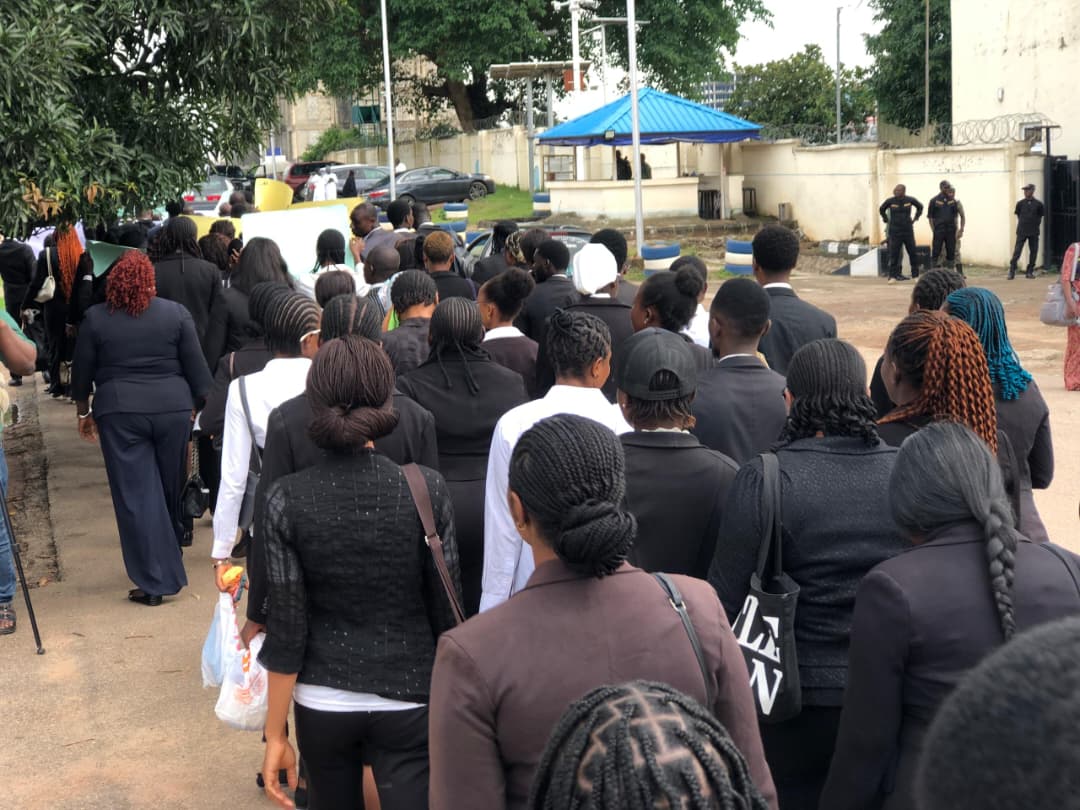
  • $4 Billion Refinery Fraud: Protesters Storm ICPC Headquarters, Call for Probe of MSM Group’s Connection to Missing Funds

    $4 Billion Refinery Fraud: Protesters Storm ICPC Headquarters, Call for Probe of MSM Group’s Connection to Missing Funds

    Hundreds of protesters, led by the Concerned Lawyers and Citizens Network (CLCN), stormed the headquarters of the Independent Corrupt Practices and Other Related Offences Commission (ICPC) in Abuja on Thursday demanding an immediate investigation into what they described as a massive $4 billion fraud involving the MSM Group and missing funds meant for Nigeria’s refinery rehabilitation.

    In a speech delivered by Sambari G. Benjamin, Esq., the CLCN accused the MSM Group, a conglomerate with ties to Engineer Mele Kolo Kyari, former Group Managing Director of the Nigerian National Petroleum Company Limited (NNPCL), of being a front for laundering stolen public funds.

    The group pointed to the mysterious disappearance of $2.896 billion allocated for the rehabilitation of the Port Harcourt, Warri, and Kaduna refineries, which remain non-functional despite the massive investment.

    “We are here because something is deeply wrong,” Benjamin declared to a crowd of supporters and journalists.

    “MSM Group is not just a business; it is a vessel of money laundering, a shell of secrecy, and a front for repurposing stolen public funds.”

    The CLCN highlighted MSM Group’s recent $2.4 billion deal with the Kebbi State Government to build a cement plant, questioning the source of the funds and the company’s sudden emergence in industries ranging from oil and gas to cement and agriculture.

    The protesters raised concerns about a conflict of interest, noting that a former bank account officer of Kyari is now a director at MSM Group, and the conglomerate has refused to disclose its investors or funding sources.

    “How did MSM Group secure $2.4 billion with no prior footprint in cement?” Benjamin asked.

    “Why do these funds correspond with the missing money meant for our refineries? This is not coincidence. This is corruption with a family name.”

    The protesters demanded that the ICPC launch a full-scale investigation into MSM Group’s financial operations, uncover its links to Kyari’s tenure at NNPCL, expose its investors and directors, and recover every kobo diverted from the refinery funds.

    They also called for accountability for all individuals involved, regardless of their influence.

    “We speak for the mechanic in Kaduna, the mother in Warri, and the youth in Port Harcourt who have been robbed of opportunity, dignity, and truth,” Benjamin said.

    “This is about justice and restoring faith in our institutions.”

    The CLCN vowed to continue their agitation until the truth is revealed and justice is served, warning that Nigerians will not be silenced or intimidated.

    “Let this day be remembered as the moment Nigerians stood up and said: Enough is enough with the theft of our commonwealth,” Benjamin concluded.

  • CSOs knock DAPPMAN over alleged attempt to exploit citizens

    CSOs knock DAPPMAN over alleged attempt to exploit citizens

    Coalition of Civil Society Organisations in Nigeria (COCSON) and Nigerian Interfaith Forum (NIF) on Friday accused the Depot and Petroleum Products Marketers Association of Nigeria (DAPPMAN) of seeking to exploit citizens and plunge the nation back into subsidy fraud.

    According to the civil society groups, DAPPMAN’s demand of ₦75 per litre for coastal freight and ops cost, translating to ₦1.505 trillion, is self-serving and nothing but greed. While calling on President Bola Tinubu’s administration to beam its searchlight on DAPPMAN, as the activities are undermining local refining, sabotaging Dangote Refinery from the start and threatening the Federal Government’s Reform Agenda.

    The CSOs made this known in a statement jointly signed by Comrade Ibrahim Suleiman and Mrs. Grace Okonkwo, President and National Secretary of COCSON, respectively; As well as Rev. Dr. Matthew Ayodele and Imam Musa Abdullahi, National Chairman and Secretary of NIF, respectively, in Abuja.

    The concerns raised by the group were accompanied by a protest march in the nation’s capital on Friday, September 26, 2025.

    While backing the Dangote Refinery’s genuine efforts in transforming the Petroleum Industry, the groups vowed to file a suit against DAPPMAN in the Federal High Court for economic sabotage, conspiracy, and deliberate attempt to reintroduce subsidy through the backdoor.

    The statement reads: “We condemn the shameful attempt by the Depot and Petroleum Products Marketers Association of Nigeria (DAPPMAN) to blackmail Nigerians into paying a backdoor subsidy of ₦1.505 trillion annually.

    “This demand is not just outrageous; it is treachery against the Nigerian people. It is economic sabotage disguised as business.

    “At such a critical time, for DAPPMAN to demand that Nigerians underwrite their inefficiencies with ₦1.5 trillion yearly is nothing but wickedness. It would rob our hospitals of funding, deny schools resources, cripple infrastructure development, and keep our nation shackled to poverty. This is not subsidy — it is extortion.”

    On why DAPPMAN must be checked by the government, the groups maintained that the body had become a national threat.

    “They Undermine Local Refining: Dangote Refinery has exported over 3.2 million metric tonnes of refined products in three months, proving capacity. Meanwhile, DAPPMAN imported 3.6 million metric tonnes, promoting dumping and sabotaging Nigeria’s economy.

    “They Sabotaged Dangote from the Start: When Dangote Refinery was completed, the refinery had over 500 million litres of products in stock, and Dangote himself had to plead publicly with NNPC, marketers, and transporters to patronize him. Instead, they deliberately imported products from abroad to frustrate his operations.

    “Faced with this sabotage, Dangote was forced to buy over 4,000 trucks to enter the oil transport sector. Who pushed him into this? Not Nigerians, but the very marketers and transporters now crying foul.

    “Today, these same actors accuse him of chasing them out of the market to create a monopoly. Where is the monopoly?

    “They abandoned him, tried to strangle his refinery, and left him no option but to strategize for survival. If they are not careful, he may enter retailing, and then he will fully integrate production, transport, and retail. That is not a monopoly; that is resilience and strategy in the face of cartel sabotage.

    “They Threaten Tinubu’s Reform Agenda: Entertaining such demands would roll back the government’s courageous removal of fuel subsidy and tarnish Nigeria’s international credibility.

    “Fellow Nigerians, this is not just a fight for Dangote Refinery. This is a fight for Nigeria’s future. This is a battle between nation-builders and nation-wreckers, between patriots and profiteers, between hope and despair.

    “DAPPMAN’s demand for ₦1.505 trillion subsidy is a declaration of war on the Nigerian people. Our response is clear: we will resist, we will mobilise, we will litigate, and we will not rest until this cartel is defeated.

    “We urge the Federal Government to stand firm, Nigerians to stand united, and Dangote Refinery to stand strong. Together, we will ensure that no group, no cartel, and no vested interest will derail Nigeria’s refining revolution.”

  • ICPC, Master Agent Show Unveil Nationwide Anti-Corruption Debate to Empower 50,000 Students

    ICPC, Master Agent Show Unveil Nationwide Anti-Corruption Debate to Empower 50,000 Students

    In a groundbreaking effort to combat corruption through education, the Independent Corrupt Practices and Other Related Offences Commission (ICPC), in partnership with Master Agent Show, has launched the Basic Education Anti-Corruption Debate (BEAD), a nationwide initiative that will engage more than 50,000 junior secondary school students across Nigeria.

    The program, unveiled in Abuja on Thursday, is designed to instill values of integrity, accountability, and transparency in young Nigerians by engaging them in structured debates on pressing civic and ethical issues. According to Osigbeme Enike, Managing Director of Master Agent Show, BEAD represents more than a competition.

    “BEAD is not just a debate series, but a movement,” Enike said. “By equipping students with the tools of critical thinking, civic responsibility, and public speaking, we aim to raise a generation that will resist corruption and drive sustainable progress in Nigeria.”

    Over 5,000 schools across Nigeria’s 36 states and the Federal Capital Territory are expected to participate, debating on themes such as “Citizens’ Character” and “Who Ends Corruption?” The debates will be broadcast on Federal Radio Corporation of Nigeria (FRCN) FM stations, BE TV’s digital platforms, and other media outlets, potentially reaching an audience of more than 10 million listeners and over one million online viewers per episode.

    The ICPC, under the leadership of Chairman Musa Adamu Aliyu, SAN, has pledged technical support and oversight to ensure the program aligns with Nigeria’s broader anti-corruption strategies. Speaking on behalf of the Chairman, Mr. Okoh Odey, Deputy Director of Education at ICPC, emphasized the commission’s commitment to sustainability.

    He explained that beyond classroom debates, structures such as Vanguard Clubs and Community Development Service (CDS) groups will reinforce the lessons, while teachers and non-teaching staff will play an active role in guiding students. Monitoring and evaluation mechanisms will also ensure the program remains relevant and impactful.

    The initiative is further anchored by a Memorandum of Understanding between ICPC and Master Agent Show, which also supports complementary campaigns like the “5 Principles Against Corruption” Poster Campaign and the “Pillars of Anti-Corruption” Sponsorship Initiative.

    Ogakwu Dominic, Director of Marketing and Advertising, highlighted the role of investment and support in sustaining the project. “The time is now to catch our young ones early and expose them to activities that instill lifelong principles of integrity and accountability. We cannot leave them at the mercy of content with little or no value,” he stressed.

    For more information please kindly, visit the website link… http://bead.com.ng

  • President Tinubu’s Birthday Message to Senator Saliu Mustapha

    President Tinubu’s Birthday Message to Senator Saliu Mustapha

    I extend my warm felicitations to Senator Saliu Mustapha @RealMallamSaliu, the Turaki of Ilorin Emirate and the Aare Atunluse of Oro-Ago Kingdom, on his birthday.
     
    In his service to our nation, Senator Mustapha has exemplified the virtues of humility, loyalty, and dedication. As Senator representing Kwara Central and Chairman of the Senate Committee on Agriculture, Production Services, and Rural Development, he has brought to bear his passion for food security and agricultural transformation, sponsoring and advancing impactful legislation that speaks to the future of our great country.
     
    In just two years in the Senate, he has distinguished himself as one of the bright lights of the legislature, a loyal party man, a team player, and a role model for the younger generation of leaders who seek inspiration in selfless service and commitment to the common good.
     
    As he marks his birthday today, I join his family, friends, associates, and the people of Kwara Central in celebrating him. I wish him renewed strength, wisdom, and good health for years of fruitful service to the nation.
     
    Happy birthday, Turaki.
     
    Bola Ahmed Tinubu, GCFR
    President & Commander-in-Chief,
    Federal Republic of Nigeria
    September 25, 2025

  • Youth Key to AfCFTA Success, Africa’s Growth, Says Senator Umar

    Youth Key to AfCFTA Success, Africa’s Growth, Says Senator Umar

    Chairman of the Senate Committees on Trade and Investment, and Rules and Business, Senator Sadiq Suleiman Umar, has urged African youth to take the lead in driving the continent’s economic growth through trade, innovation and leadership under the African Continental Free Trade Area (AfCFTA).

    Speaking at the 2025 Africa and the Middle East Senate Association (AMESA) Summit hosted by Junior Chamber International (JCI) Nigeria Senate Association in Abuja, Umar said Africa’s youthful population is a critical asset that must be harnessed to unlock prosperity.

    “With over 60% of Africa’s 1.4 billion people under the age of 25, and by 2035 more people joining the workforce annually than the rest of the world combined, the AfCFTA is not just a policy document, it is a call to action,” he said.

    The senator lamented that intra-African trade remains only 15% of total trade, compared to 68% in Europe and 59% in Asia, but cited World Bank projections that AfCFTA could lift 30 million Africans out of poverty and raise incomes by $450 billion by 2035.

    Highlighting Nigeria’s leadership role, Umar said: “With a population of over 220 million, a vibrant entrepreneurial ecosystem, and abundant resources, Nigeria is strategically positioned to lead Africa’s economic transformation.” He also pointed to President Bola Tinubu’s reforms in the digital economy, infrastructure and trade facilitation.

    He called for stronger collaboration in agriculture, renewable energy, technology and infrastructure, stressing that trade should be seen as “the exchange of ideas, opportunities and hope.”

    Also speaking, AfDB Lead Economist for West Africa, Jacob Oduor, warned that Africa’s growing youth population could become a “ticking time bomb” if not empowered with jobs and skills.

    JCI Nigeria Senate Chairperson and AMESA 2025 host, Senator Dupe Ogunbiyi, emphasized that Africa’s challenge is not lack of policies but weak implementation, adding that leadership and partnerships remain crucial to driving change.

  • Kenneth Okonkwo Declares ADC Will Take Power in 2027

    Kenneth Okonkwo Declares ADC Will Take Power in 2027

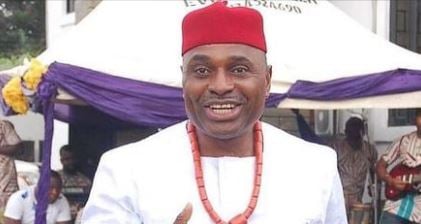
    Nollywood veteran and politician, Kenneth Okonkwo, has declared that the African Democratic Congress (ADC) will win the 2027 general elections and unseat President Bola Tinubu’s administration.

    Okonkwo made the statement on Monday during an interview on Channels Television’s Sunrise programme.

    He dismissed concerns over the party’s recent electoral performance, noting that the ADC should not be judged solely by the outcome of the August 16 by-elections, in which the party failed to secure a seat while the ruling All Progressives Congress (APC) claimed 12 of the 16 contested constituencies.

    “We stand a chance in every election in Nigeria,” Okonkwo insisted, adding that the real test of the ADC’s strength would come in 2027 under the leadership of the party’s new chairman, David Mark.

    He said: “We are going to form the next government in Nigeria. And send Tinubu to Bourdillon.”

    The politician further stressed that the ADC had established presence across all 36 states, pointing to former Minister of Transportation, Rotimi Amaechi, as the key figure for the party in Rivers State.

    Okonkwo maintained that with its nationwide structure and renewed leadership, the ADC was strategically positioned to emerge as Nigeria’s next ruling party.

  • Okpebholo Arrives UK for Edo Global Investment Summit

    Okpebholo Arrives UK for Edo Global Investment Summit

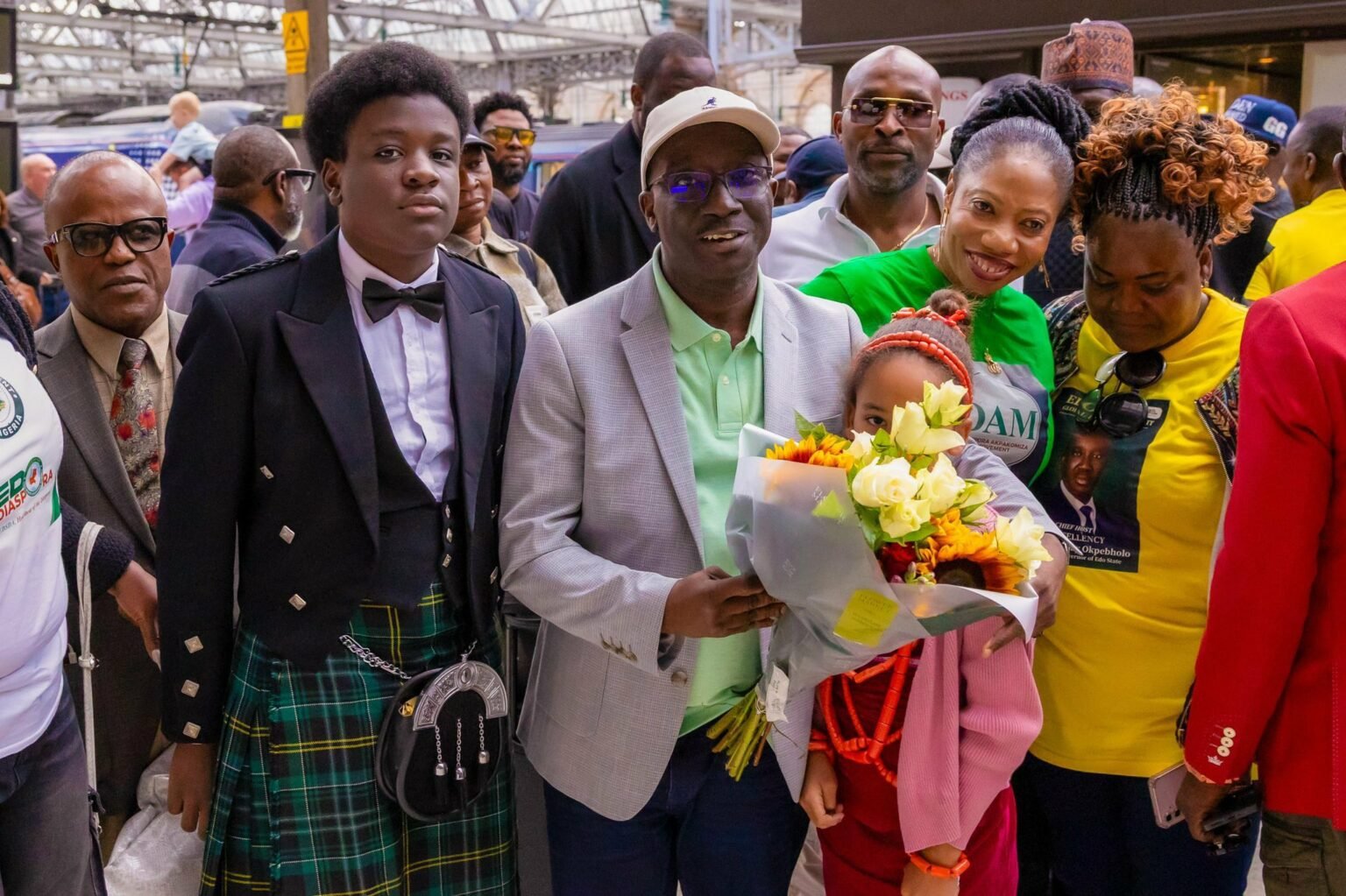
    Governor Monday Okpebholo of Edo State has arrived in Glasgow, United Kingdom, for the 2025 Edo State Global Investment Summit.

    The summit, themed “Catalytic Partnerships: Global Funding & Local Impact,” is a key initiative aimed at attracting foreign direct investment, boosting public-private partnerships, and highlighting the state’s economic reforms to international stakeholders.

    In a post on X, the governor expressed optimism about the engagement, saying:

    “I’ve arrived at the Edo State Global Investment Summit 2025 in Glasgow, U.K. The theme, ‘Catalytic Partnerships: Global Funding & Local Impact,’ resonates as I connect with Edo’s diaspora and global partners, presenting our story of reforms, progress, and investment opportunities. A New Edo is rising.”

    Okpebholo noted that the summit provides an opportunity to deepen ties with the diaspora while positioning Edo as a viable investment destination.

    The event brings together investors, policymakers, and development partners to explore strategies that will drive sustainable growth and economic transformation in the state.

  • Bugaje Insists Obasanjo Pushed for Third Term Despite Denial

    Bugaje Insists Obasanjo Pushed for Third Term Despite Denial

    Political activist and former federal lawmaker, Dr. Usman Bugaje, has faulted former President Olusegun Obasanjo’s recent denial of seeking a third term in office, insisting that the former leader “did everything within his power” to extend his stay.

    Obasanjo, speaking at a democracy dialogue organised by the Goodluck Jonathan Foundation in Ghana last week, dismissed the long-standing controversy. “I’m not a fool. If I wanted a third term, I know how to go about it. And there is no Nigerian dead or alive that would say I called him and told him I wanted a third term,” he said.

    However, appearing on Arise Television’s Morning Show on Monday, Bugaje, who served in the National Assembly during Obasanjo’s tenure, countered the claim. He maintained that lawmakers at the time were directly aware of the third-term plot.

    “I can confirm to you that Obasanjo looked for a third term. He did everything that he could within his power to get it, but he failed,” Bugaje said.

    The former lawmaker accused Obasanjo’s agents of intimidation, alleging that many legislators were threatened. He cited the case of Senator Victor Lar, then leader of the Northern caucus in the House of Representatives, who, according to him, was forced into hiding before a crucial meeting to resist the plan.

    “Those who distributed the money and threatened us are alive. Those who received the money are alive. Those who refused are alive. There is sufficient evidence. This is incontrovertible,” he stressed.

    The controversy over a “third term agenda” dominated Nigeria’s politics in 2006 when the National Assembly debated an amendment to the 1999 Constitution that would have allowed presidents to serve three consecutive terms.

    The amendment, widely believed to be sponsored by allies of Obasanjo, was rejected after a heated debate, despite including other proposed constitutional changes. The rejection ended speculation about Obasanjo seeking another term and cleared the way for the 2007 election, which produced the late Umaru Musa Yar’Adua as president.

    In the years since, the matter has remained a point of contention. Obasanjo, in a 2023 New Year message, reiterated that he never lobbied for a third term, insisting he could have secured it if he wanted.

    But other political figures have backed Bugaje’s position. Former Senate President Adolphus Wabara claimed he turned down a ₦250 million bribe to support the amendment, while ex-vice president Atiku Abubakar has said his close ties with lawmakers helped block the alleged agenda.

  • FG Sets Up Committee to Probe Kaduna Arms Factory Explosion

    FG Sets Up Committee to Probe Kaduna Arms Factory Explosion

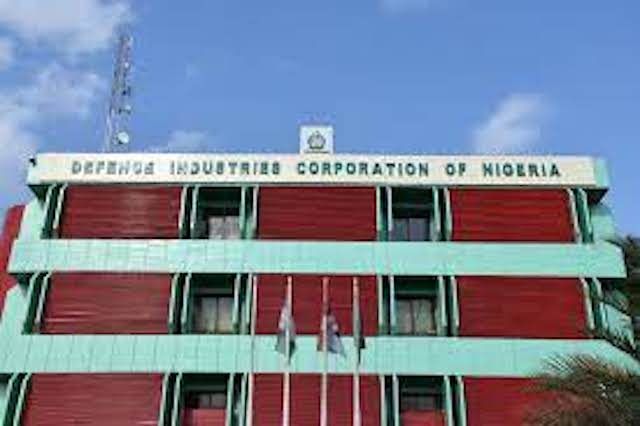
    The Federal Government has set up a committee to investigate the explosion that occurred at the Defence Industries Corporation of Nigeria (DICON) complex in Kaduna State.

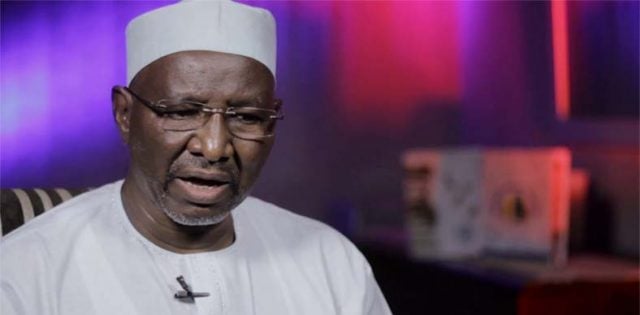
    Security expert Kabir Adamu, Managing Director of Beacon Security and Intelligence Ltd. and former Head of Security at the Senate, confirmed this during an appearance on Channels Television’s The Morning Brief.

    The blast, which struck the factory in the Kurmin Gwari area of Kaduna metropolis on Saturday, killed at least two people, including a military officer, and injured four others.

    DICON’s spokesperson, Maria Sambo, explained that the incident happened during the final phase of a controlled destruction of expired explosives and hazardous materials such as ammonium nitrate, primer caps, and propellants. She assured the public that the situation was under control.

    Adamu described the incident as “worrisome” but praised the government’s response. He noted that while there is no evidence yet of sabotage, a formal investigation has been launched to establish the cause.

    He stressed that the explosion could have been prevented, highlighting safety lapses in the collection, storage, and disposal of explosive materials. According to him, Nigeria’s drive to boost local weapons production has increased activity at DICON, making safety standards even more critical.

    “The explosion could have been prevented, but until the committee concludes its investigation, it would be premature to draw conclusions,” he said.

    Adamu also pointed to broader risks tied to weapons manufacturing, recalling the 2002 Ikeja cantonment explosion as a reminder of the importance of strict safety procedures.

    While official figures put fatalities at one, some sources reported higher casualties. Authorities have urged patience until the investigation is complete.