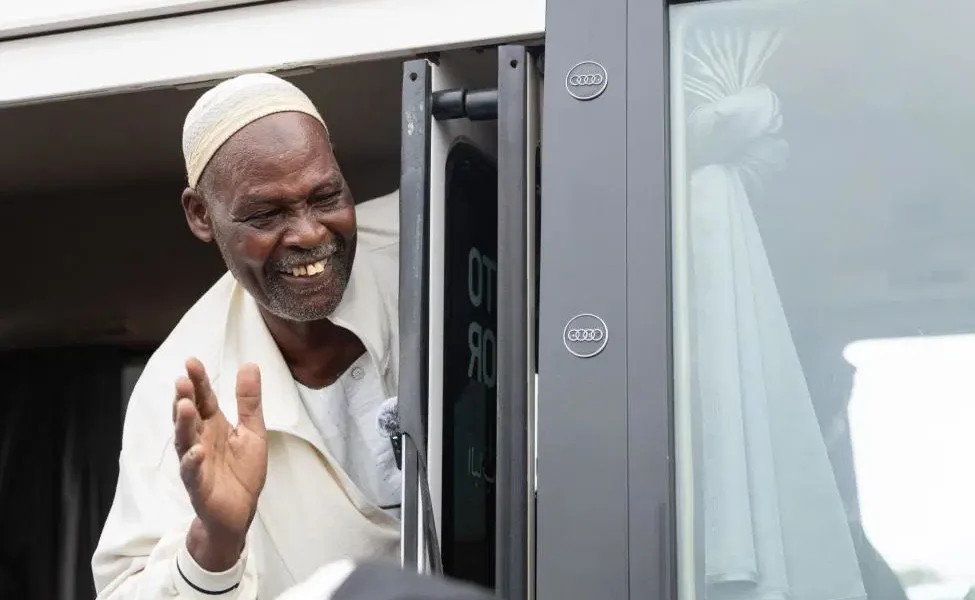
A total of 140 Nigerians stranded in Sudan for months have been successfully repatriated under the International Organization for Migration’s (IOM) Voluntary Humanitarian Return (VHR) programme.
The returnees, including 64 women, 36 children, and four infants, arrived at Mallam Aminu Kano International Airport on February 27 aboard a chartered flight—the first since the Sudan crisis began. Some of the migrants had health conditions and required immediate assistance.
Upon arrival, they received post-arrival support, including counselling, medical care, mental health services, and transportation to their final destinations. IOM also pledged further reintegration assistance based on individual needs.
Bashir, one of the returnees, shared his ordeal: “After the war, we found ourselves out in the open with no accommodation and no food. Things kept getting tougher, and the problem was that there was no hope because the war kept going on. We are grateful to be back home.”
Since Sudan’s conflict erupted in 2023, over 12 million people have been displaced, including many migrants who lost their homes, documents, and belongings. IOM Sudan Chief of Mission Mohamed Refaat highlighted the dire situation: “Migrants who have transited through or are living in Sudan since the conflict began have found themselves stranded as the humanitarian situation deteriorates. For many, Voluntary Humanitarian Return remains the best option for a safe journey home.”
The repatriation effort was coordinated by Nigerian and Sudanese authorities, including the Nigerian Embassy in Sudan, Sudan’s Ministry of Interior, and Nigeria’s National Commission for Refugees, Migrants, and Internally Displaced Persons.
Paola Pace, IOM Nigeria’s Chief of Mission a.i., praised the collaboration: “We are happy to see the positive results of partnerships and cooperation in saving lives. IOM remains committed and will continue to work tirelessly to extend support to all migrants and ensure no one is left behind.”
The initiative was made possible with support from the European Union through the Migrant Protection, Return, and Reintegration Programme for Sub-Saharan Africa.
Leave a Reply