

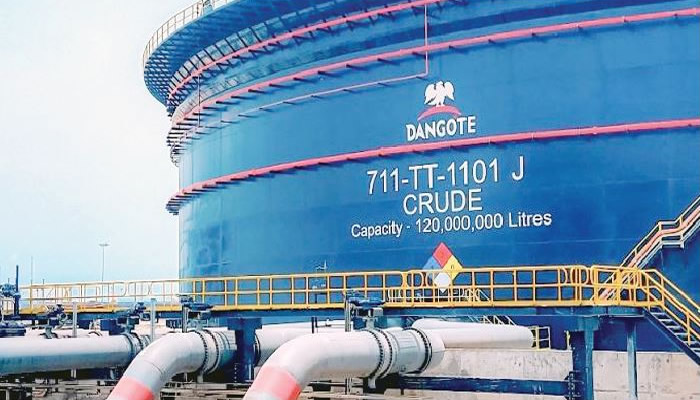
The Nigerian National Petroleum Company Limited (NNPCL) has officially halted the importation of refined petroleum products, now sourcing fuel exclusively from local refineries, including the Dangote Petroleum Refinery. This marks a significant shift in Nigeria’s energy strategy, as disclosed by NNPC’s Group Chief Executive Officer (GCEO) Mele Kyari at the Nigerian Association of Petroleum Explorationists conference in Lagos.
Kyari explained that the NNPC is no longer involved in importing fuel, focusing instead on securing supply from domestic refineries. This development follows President Bola Tinubu’s earlier statement on Nigeria’s heavy spending on fuel imports, estimated at N2 trillion monthly, or about N24 trillion annually.
Despite being an oil-producing nation, Nigeria has long faced a reliance on imported fuels due to a lack of domestic refining capacity. The move to purchase fuel from local sources, including Dangote’s refinery, marks a shift toward self-sufficiency in the sector. Kyari emphasized that the NNPC is a part-owner of Dangote refinery, highlighting the strategic decision to supply crude oil to local refineries for processing, ensuring long-term benefits for the country.
Kyari also addressed concerns regarding the pricing of Nigerian crude, noting that it is a high-quality resource, which can result in higher product costs. He stated that refining Nigerian crude domestically would drive up prices due to its premium quality but emphasized the importance of increasing local refining capacity for national energy security.
Additionally, Kyari confirmed the settlement of NNPC’s $2.4 billion cash-call debt to international oil companies, a milestone made possible after the removal of fuel subsidies, which had previously strained the company’s finances.
Looking ahead, Kyari also shared plans for expanding the country’s use of compressed natural gas (CNG), with the establishment of 12 CNG mother stations expected by the first quarter of 2025, further bolstering the country’s energy security and reducing dependence on imported fuel.


