

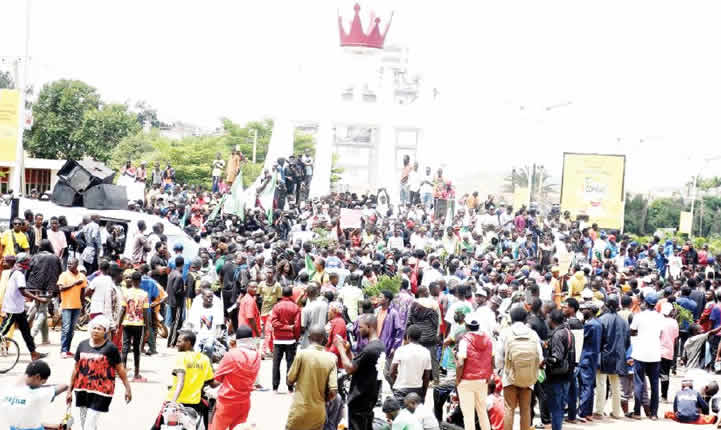
As the #EndBadGovernance protests wind down, many Nigerians, especially those in the northern regions, are left grappling with the aftermath of injuries, losses, and emotional scars.
The demonstrations, which began on August 1, were fueled by mounting economic hardships, including inflation at a 28-year high and the sharp devaluation of the naira. Despite President Bola Tinubu’s call to end the protests, they continued, particularly in the North, where security forces reportedly opened fire on protesters.
In the initial days of the protest, at least 17 people were killed, and many more were injured across Abuja, Kano, Niger, Borno, Kaduna, and Jigawa states. In Suleja, Niger State, six individuals were reportedly killed during an attempt to storm a police station, with two dying from gunshot wounds en route to the hospital.
Security forces have been widely criticized for their excessive use of force during the protests. While the Nigeria Police Force denied involvement in the fatalities, the Nigerian Army admitted that one of its soldiers killed a teenager in Zaria, Kaduna State. This admission contradicts earlier claims by the Inspector-General of Police that no live bullets were used by security agencies.
Amnesty International condemned the lethal response, alleging that at least 21 protesters were killed by security personnel during the protests. Nobel Laureate Professor Wole Soyinka also criticized the government for using live ammunition against unarmed citizens, calling it a gross misuse of state power.
The protests, which have now subsided, left many injured, some of whom narrowly escaped with their lives. Femi Kuku, a cameraman for African Independent Television, recounted how he was shot at by security forces while covering the protests in Abuja, resulting in a dislocated leg after he fell into an uncovered manhole while fleeing.
In Gombe, eight people were brought to the Federal Teaching Hospital for treatment, with six still receiving care for multiple injuries, including gunshot wounds. Among them was 18-year-old Mohammed Abdulrawuf, who was hit by a bullet despite not participating in the protests. He pleaded with the government for assistance, fearing that his dream of becoming a military officer could be jeopardized.
In addition to physical injuries, the protests led to widespread looting and vandalism. In Katsina State, a Living Faith Church was ransacked by hoodlums, who stole chairs, musical instruments, and other valuable items.
One particularly disturbing incident involved a physically challenged man, Hamza Waziri, who was assaulted by police while protesting peacefully in Bauchi State. The National Commission for Persons with Disabilities has demanded justice, condemning the police’s actions as a violation of human rights.
The pan-Yoruba socio-political group Afenifere has called on the Federal Government to investigate the killings of protesters and hold those responsible accountable. Similarly, Kaduna State Governor, Senator Uba Sani, pledged to ensure justice for Ismail Muhammad, the teenager killed by a soldier during the protests in Zaria.
These incidents underscore the need for accountability and support for the victims as the nation grapples with the consequences of widespread discontent and violence.


